The similar phrase 'Worldly Christianity' is one used by Bonhoeffer. It's J Gresham Machen that I want to line up most closely with. See his Christianity and culture here. Having done commentaries on Proverbs (Heavenly Wisdom) and Song of Songs (Heavenly Love), a matching title for Ecclesiastes would be Heavenly Worldliness. For my stance on worldliness, see 3 posts here.
Showing posts with label Archive. Show all posts

Archive 10b Barren Fig Tree

Last part of the article
In order to do true justice to the passage one has to accept the following three propositions:
1. It was not possible for edible fruit to be on the tree regardless of how much foliage it had put forth
There are two crops for the fig tree, one early and one late. The first is in May or June and the second is in August or later still (consensus of the commentaries and dictionaries consulted). The incident occurs, of course, in April or even March, when, as Mark points out, ‘it was not the season for figs’. It was too soon for the early crop to be ready and too late for anything edible to he remaining from the previous year. ‘There was then no reason to expect fruit upon this tree beyond the promise of its leaves’ (H B Swete, Greek Testament with notes and indices Gospel according to Mark, 1902, 254)
2. Jesus knew that this was the case
Kenneth Wuest suggests that Jesus 'at least hoped to find figs on the tree' and stresses the 'self-imposed human limitations' of the incarnation, while warning against any denial of Christ's basic omniscience. (West, Word Studies Mark, 1950, 219). However, here common sense, a knowledge of his own land, would have been enough to convince Jesus that, regardless of appearances, there could be no fruit on the tree. Gould says ara is illiative here (ie denoting motion into) (Ezra Gould, ICC St Mark's Gospel, 1896, 211) and R Alan Cole states ‘The Greek particle ara suggests that the finding of figs was an unlikely possibility contemplated by the Lord; he was thus in no sense surprised the tree's unfruitfulness as he would have been had it been the time of the regular fruit crop.' (R Alan Cole, Tyndale NTC Mark, 1971, 177).
3. Jesus’ hunger was nevertheless real
J A Alexander fulminates, ‘That this was a simulated hunger, is not only unworthy and irreverent but a perfectly gratuitous assumption as our Lord, by his incarnation, shared in all the innocent infirmities of human nature’ (Alexander, Mark, 1858, reprint 1960, 303). This is where the Lord’s humanity appears, in his hunger not in his supposed ignorance.
An important Scripture for unravelling the remaining difficulties is one apparently ignored by everyone except Calvin. (Harmony of the synoptics Vol 3, Baker ed, 18). That is John 4:31-34. On that occasion Jesus dealt with his hunger by doing the work of God. It is the same here.
After spending the night in Bethany Jesus and his disciples set off for Jerusalem early in the morning. Had he skipped breakfast as Henry suggests? (Commentary Vol 5, MacDonald ed, 526). Being an area rich in figs, dates and olives it was reasonable for him to think of getting something on the way.
Jesus them looks up and sees a leafy fig tree in the distance, ‘a derelict perhaps of some old garden or vineyard’. Perhaps it was in some sheltered hollow and so was more leafy, more precocious (Alford's word in his Greek Testament Vol 1, 1849, 275). Jesus is aware, however, that it is not the season for figs. Immediately, his mind is turned from the natural to the spiritual. A number of Scriptures may have come to mind. Micah 7:1, 2 seems the most likely suggestion.
(Cf Lane, 401, 402. Following Bird he argues that the final clause of v 13 should translate 'and the significant thing about this is that it was not the season for figs'. Such passages come where 'Jesus alludes to the Scriptures without explicitly quoting them.')
What misery is mine!
I am like one who gathers summer fruit
at the gleaning of the vineyard;
there is no cluster of grapes to eat,
none of the early figs that I crave.
The godly have been swept from the land;
not one upright man remains.
All men lie in wait to shed blood;
each hunts his brother with a net.
Christ weeping over Jerusalem is vividly brought to mind (Mt 23:37; Lk 13:13:34). Seeing the beautiful foliage and knowing it all means nothing reminds him of the judgement about to fall on his own people. Cranfield is one of many commentators who notice the careful way Mark has woven the clearing of the Temple into the narrative, 'The best commentary on vv 12-14 and 20f is found in the narrative these verse enframe' (Cranfield, 357).
Many other Old Testament references identify God's people with the fig tree (see list, Lane, 400). Hosea 9, and especially verses 10 and 16, echoes the sentiments found here. Israel was not short of 'foliage' – the Temple and it spiritual, outward and legalistic acts of virtue, a form of godliness. But what was lacking was actual fruit, the fruit of righteousness. Like the fig tree they were 'louder than all the rest in profession, yet behind in performance' (Glover, 208). This was the very thing that John the Baptist had warned about (Mt 3:7-10) and that Jesus too had spoken of (Mk 7:6). Israel's sin was not just the sin of barrenness but of barrenness with the appearance of fruitfulness.
The warning of the enacted parable, for such it was, is still needed today. J C Ryle, in his Expository Thoughts on the Gospels applies it admirably (Mark, 1856, reprint 1973, 234)
There was a voice in it for the JEWISH CHURCH. Rich in the leaves of a formal religion, but barren of all fruits of the Spirit, that Church was in fearful danger, at the very time when this withering took place. Well would it have been for the Jewish Church if it had had eyes to see its peril!
There was a voice in the fig tree for all the branches of Christ's VISIBLE CHURCH in every age, and every part of the world. There was a warning against an empty profession of Christianity unaccompanied by sound doctrine and holy living, which some of those branches would have done well to lay to heart.
But above all there was a voice in that withered fig tree for all CARNAL, HYPOCRITICAL, AND FALSE-HEARTED CHRISTIANS. Well would it be for all who are content with a name to live while in reality they are dead, if they would only see their own faces in the glass of this passage.
Let us take care that we each individually learn the lesson that this fig tree conveys. Let us always remember, that baptism, and church-membership, and reception of the Lord's Supper, and a diligent use of the outward forms of Christianity, are not sufficient to save our souls. They are leaves, nothing but leaves, and without fruit will add to our condemnation. Like the fig leaves of which Adam and Eve made themselves garments, they will not hide the nakedness of our souls from the eye of an all-seeing God, or give us boldness when we stand before Him at the last day. No! we must bear fruit, or be lost forever. There must be fruit in our hearts and fruit in our lives, the fruit of repentance toward God, and faith toward our Lord Jesus Christ, and true holiness in our conversation. Without such fruits as these a profession of Christianity will only sink us lower into hell.

Archive 10a Barren Fig Tree

It's an age since we've had anything from the archive. In 1991 an article of mine appeared in Foundations (Issue 26) in their exegesis series. It looks at Mark 11:12-14. It had 29 footnotes. I have incorporated these into the text.
The one thing that all the commentators do agree about regarding Mark 11:12-14 is that it is difficult. ‘This narrative bristles with difficulties’, says Cranfield. (Cambridge NT Commentary St Mark 1972, 354) ‘One of the most perplexing in the Gospels’, wrote A M Hunter. (Torch Bible Commentary St Mark, 1949, 110)
For many exegetes problems arise from their approach to Scripture. For Hunter and others like him the story is ‘frankly incredible’. (Hunter, 110) They have two main problems the incident. They find it both 'irrational and revolting' (Bundy, quoted in Nineham, Pelican Commentary St Mark, 1963, 225). Revolting, because the story ‘does not ring true’ (Barclay, Daily Study Bible mark's Gospel, 1975, 314) with their ideas on Jesus’ character. William Barclay speaks of his ‘petulance’ and J B Phillips of Jesus ‘venting his feeling of frustration and despair upon the fig tree.‘ (Peter's portrait of Jesus, 1976, 104). But there is need neither to accuse Jesus of sin nor to see the story as a legendary concretising’ of Luke 13:6-9 for aetiological purposes. (Cf A W Blunt, Clarendon Bible St Mark, 1939, 226 & Hugh Anderson, New Century Bible Commentary, 263f). As Bengel asserts ‘Whatever does not serve Jesus Christ is unworthy to serve any one of mortals.’ (Gnomon Vol 1, 553).
Then there is verse 13 which, for some, makes Jesus’ behaviour irrational. Certainly there is a problem. ‘The juxtaposition of the two seemingly contradicting assertions heightens the difficulties, for the explicit statement that it was not the season for figs appears to make Jesus’ action arbitrary and meaningless’ (William Lane, NICNT Gospel of Mark, 1974, 399). Of course, some are willing to cut the Gordian knot and remove verse 13, even though it is typical of Mark’s asides. (Cf eg 3:30; 5:42; 7:3,4, etc). Surely the better path is to take comfort in the belief the problem is one ‘which evidently the Evangelist did not feel as he deliberately makes it for us.’ (Richard Glover, A Teacher's Commentary on the Gospel of St Mark, 1957, 208). But what is the solution to this apparent difficulty?
A number of evangelical commentators want to find the solution in the possibility of very late or very early figs. (Eg Barnes, Bengel, Cole, Hendriksen, Ryle and Swift in the New Bible Commentary Revised). However, the idea that Jesus would not have looked for figs without some hope of there being any ‘assumes too much’. Vincent Taylor is scathing about such a line of argument and says it has ‘nothing to commend it’. (Gospel according to Mark, 1952, 458). Bengel’s idea that Jesus may have been looking for inedible figs to miraculously transform is fanciful and bizarre (Bengel, 553).

Archive 9b Why twice?

Continued
4. At most churches the two meetings are quite distinctive. Failure to attend both may create an imbalance. In many places one meeting features teaching for ‘saints’ and the other a gospel message for ‘sinners’. Anyone receiving only one of these is getting an imbalanced diet. Even where this is not strictly followed there is usually a commitment to expository preaching morning and evening. Rarely will a minister preach on a book of the Bible in the later meeting that he has already expounded in the morning and vice-versa. Oncers are likely never to hear some parts of Scripture expounded even though a little effort would give them the opportunity. Listening to the message on tape is hardly the same thing as being there under the Word and worshipping with the people.
5. By coming to both meetings you may avoid the ‘Service’ mentality. Perhaps it is the word ‘service’ that gives the wrong impression. Undoubtedly some look on the church as providing a service for the public’s convenience. Services at different times of the day mean that one can come when it best suits. If you are a late riser or you like to have an elaborate Sunday lunch, fear not, you can always catch ‘the late show’. Or if you like to stop in on Sunday evenings watching TV or you go to see friends or family after lunch ‘the first sitting’ should be enough to keep you up to the mark. Full involvement in all the meetings of the Lord’s people should help to dispel that sort of consumer mentality which does so much harm to Christians.
6. Paradoxically it will enable you to be aware of everyone in the church orbit, even the Oncers. I have a friend whose church had a large number of Oncers, some the morning sort and some the evening type. Thus the morning and evening congregations were quite different. Some never met even though they went to the same church and heard the same men preach! While Oncers continue to exist the only way to know all those who attend the same place of worship, you cannot do the same.
7. You will be a great encouragement to your pastor and the rest of the congregation who have no doubt put as much effort into the earlier meeting as the later one if you will make the effort to come to both. The super-spiritual will reply that they do not come to church to please men but to please God. However, in Hebrews 10:25 the writer has no embarrassment in urging the people to meet more often in order to encourage one another. What an encouragement it might be, under God, if you decided to give up your lie in, your walk in the countryside, your cosy evenings in or whatever and started coming twice on Sundays. It will do you some good too if you stay humble. What about it?

Archive 9a Why twice?

This article appeared in Grace magazine some years ago. Similar points are made in the opening article in the latest Banner mag.

Sadly, we hear increasingly of churches giving up having two preaching meetings on the Lord’s Day. Thankfully most Grace churches continue to have two meetings and sometimes more. Yet not everyone wants to be at both meetings. Let me introduce you to that exotic but hardly rare species of churchgoer sometimes known as The Oncer.
Oncers come in 3 main varieties. Most common are Morning Oncers. They are very faithful on a Lord’s Day morning, never miss. But as for any later meetings they are nowhere to be seen. Of course, sometimes older people are a little weary or wary of venturing out at night. Legitimate duties keep some away but, sad to say, even when a lift is arranged or circumstances change the Morning Oncer often still refuses to venture out a second time. Evening Oncers are rarer but, especially in some parts of the country where the tradition is strong, you will see such people without fail in the evening or afternoon meeting though they hardly ever come in the morning. Most exotic of all are Random Oncers. With these you never know quite what will happen until the day is over. If they are not there in the morning they may be there in the evening, but then again, you may not see them at all.
Such people are often unbelievers but plenty of men and women who profess faith in Christ almost never think of coming along to church twice on the Lord’s Day, even though there are always two meetings and they are well able to come to both. The idea of coming twice on the Lord’s Day is a form of fanaticism they dare not contemplate. When I was converted as a teenager, no-one told me to come to both Sunday meetings I just assumed it was the right thing to do. Not everyone finds it so simple. What arguments might induce them to come more often?
1. Remember, each meeting is a ‘public means of grace’. Therefore all healthy believers will want to be at both. At church the Word of God is read and expounded, the sacraments of the Lord’s Supper and baptism are often administered, there is prayer and praise and fellowship. All these are means of receiving blessing from God. How odd that any serious believer should deliberately throw up half the opportunities they have for such things each Lord’s Day.
2. It is a Scriptural command to meet often with God’s people. Hebrews 10:25 shows us that there were problems with attendance even in the earliest days. However, the writer urges his readers not to give up meeting together as some have done but to do so more and more as you see the Day approaching. The nearer we get to the Day of Judgment and the Lord’s Return the more eager we ought to be to meet with God’s people.
3. Coming to both meetings will greatly help you to honour the Lord’s Day. Christians certainly differ in their understanding of the Lord’s Day but there is a general recognition that Sunday should be different, separate from the other days of the week. Surely this should be so not merely for part of the day but for the whole day. If you properly prepare yourself for and properly take part in the two meetings, you will find that most of your day has been wisely filled. One sometimes wonders what Oncers do with the rest of their day.

To be continued

Archive 8c Princess Diana


Evil and Madness
Then think of the evil and madness surrounding Diana in life and death.
Think of the divorces that marred her life; the adulteries; the way she was photographed and turned into an ‘icon’; the way her presence could totally transform the presentation of issues.
Think of the bizarre circumstances of her death - the jet-set romance that led up to that night, the paparazzi, the excessive speed, the apparently drunken driver, the furore that has followed.
Think of the massive TV and radio coverage - and scarcely a word of biblical truth and sense.
Think of the supposedly Christian funeral that centred on the one created not on the Creator, its high point not a hymn but a secular song from an avowed homosexual, no sermon from God’s Word but a powerful scathing speech that mentioned God but once. Great is Diana taken out of the pagan stadium and into the church itself.
Think of the banishing of the National Lottery from the TV screen, hiding in a corner as it were until the coast was clear!
Think of supermarkets and sportsmen respecting the Princess but not the Prince of Glory.
Think of the madness and evil of a nation spiritually empty with a religious hierarchy so bankrupt as not to have a word of genuine comfort for the spiritually starving.


Meanwhile from ‘above the sun’ it has been made clear: After death, the judgment. Diana, Dodi Al-Fayed and the chauffeur are all either in heaven or hell. We are all headed to one or other too. In the madness and evil of this present time let’s look to the Lord and pray for mercy.

Archive 8b Princess Diana

(Regarding death)

Beauty exempts no-one
Diana was lovely and benefited from the best beauty treatments of the day. But beauty is fleeting. Beautiful or ugly, all die. The same destiny overtakes all.


Fine clothes exempt no-one
It is tempting to think a person in fine clothes will never wear a shroud. Sharp dressers or slobs, all die. The same destiny overtakes all.


Youth exempts no-one
She was only 36. One can die at any age. Babies die, children, teenagers .... The same destiny overtakes all.


Personality exempts no-one
Diana had personality, charisma. But it could not save her from death. Life and soul of the party or rather lacklustre, we all die. The same destiny overtakes all.


Fame exempts no-one
She was the most famous woman in the world. Celebrities and nobodies die. The same destiny overtakes all.

Riches exempt no-one
Wealth could not save her either. Man, despite his riches, does not endure; he is like the beasts that perish. Rich or poor, all die. The same destiny overtakes all.


Power exempts no-one
Politicians failed to get land mines on to the political agenda; Diana succeeded. Yet your power cannot deliver from death. The same destiny overtakes all.


Troubles exempt no-one
Her life was certainty not without its troubles. But no matter how many troubles we face we still have to face the last enemy. The same destiny overtakes all.


Overcoming troubles to find happiness exempts no-one
She seems to have overcome many of her troubles. It is easy to get a false sense of security when that happens but only Christ has conquered death. Winners and losers in life, all die. The same destiny overtakes all.


Good works exempt no-one
A great deal has been said about Diana’s compassion and concern. There is no denying her good works but they have not preserved her from death. Good works or none, all die. The same destiny overtakes all.


Religion exempts no-one
Sadly, there is no evidence that Diana knew the Lord. One of her last reported brushes with anything remotely spiritual was to consult an astrologer. Was she told what would happen? Even the true religion of faith in Christ leads to the glory of heaven by way of death. Whatever your religion you will die. The same destiny overtakes all.

Archive 8a Princess Diana

This article appeared in Grace Magazine (which I then edited) just over 10 years ago under the heading here. This is the first of three parts.

Madness, evil and death
This is the evil in everything that happens under the sun. The same destiny overtakes all. The hearts of men, moreover, are full of evil and there is madness in their hearts while they live, and afterwards they join the dead. Ecclesiastes 9:3
I was only 4 years old on 22 November 1963, but I remember it. It was the day President Kennedy died in Dallas. I guess my young sons will remember equally well 31 August 1997. It was the day Diana, Princess of Wales, died in Paris. Certainly they will remember 6 September 1997, when we walked the two streets from our door to where thousands had gathered to see the hearse containing Diana’s coffin pass. The outpouring of grief that has followed this tragic death has been unparalleled. Not even the deaths of Eva Peron, Elvis Presley or other so-called ‘icons’ have caused such widespread grief. Even Mother Teresa’s death has not been met with the same world-wide attention.
We were all stunned by the news. Sometimes God shocks us. You do not know what a day may bring forth he says. At the same time no doubt, our hearts went with compassion to the families involved and especially to the young princes, William and Harry.
But such a death also makes us stop and think. We need to consider, when God does such shocking things. Consider what God has done ... When times are bad consider (Ecc 7:13,14). There is no point in seeking to pry into God’s inscrutable providence. We cannot say, for instance, ‘If they bad not divorced, she would not be dead’. There are too many Ifs between the two events. God has not built a law into this present world that evil always leads to pain.
Death
Rather, as with every death, we call to mind God’s sovereignty in life and in death. The LORD gave and the LORD has taken away; may the name of the LORD be praised (Job 1:21). Similarly it is a reminder of our own mortality. As the Preacher says All share a common destiny (Ecclesiastes 9:2). Even from the under the sun point of view, without considering the eternal dimension of heaven and hell, it is clear that everyone dies. Nothing can exempt you. The death of the princess brings this home.

Archive 7d Assistant Pastor

What can be expected?
· Assistants must expect temptations. Three obvious examples come to mind.
Pride. We quoted Jeremiah 45:5 Should you then seek great things for yourself? Seek them not. It is unclear exactly why Jeremiah spoke to Baruch as he did and what the great things are. No doubt having been so closely associated with the great prophet and reading his words to kings and princes it was tempting for Baruch to be proud. There is a temptation for an assistant to imagine that anything his teacher achieves is his achievement. I remember once hearing that a certain man had been Dr Lloyd-Jones assistant - suddenly he shot up in my estimation. However, it does not automatically follow that because a man has served as a great preacher's assistant he is a great preacher himself. Nothing will be gained by osmosis. Being appointed assistant pastor does not mean a man has 'arrived'. None of us has arrived - pastors, assistant pastors, people. We all need to humble ourselves daily.
Discouragement and fear. No doubt the reason Mark abandoned Paul and Barnabas was because he was discouraged and fearful. Such emotions can come in very easily. We must all pray against them.
Coveting. Think of Gehazi for a moment who out of greed tried to get something by deceiving others. It is worth saying that although few assistants are paid much it may be more than they have had before. Such things must not steal their hearts. Again, we all need to take warning.
· Assistants either prove themselves or fail. What happened with Mark was a tragedy and it stands as a warning that there's no guarantee that everything's bound to work out fine. It may not. A work can suffer a real set back. On the other hand, think of those wonderful words in Php 2:22 But you know that Timothy has proved himself …. The best end is for a man to prove himself to be a preacher and pastor who does not need to be ashamed and who correctly handles the word of truth (2 Tim 2:15).
· People may disagree on their success. Of course, at the end of an assistantship there may be disagreement over how successful the exercise has been. If godly men like Paul and Barnabas could disagree so sharply on their opinion of a man it should not surprise us when such things happen to us. We pray against division but to be forewarned is to be forearmed.
· Failure here though undesirable is not the story's end. Perhaps we should make the point finally that failure in an assistantship is not necessarily an unmitigated disaster. John Mark's story convinces us that failure to live up to early promise does not mean an end to all future usefulness. John Mark went on, do not forget, not only to write his Gospel but also to be Paul's fellow-worker and comfort and one who was helpful to him.
· What follows an assistantship cannot be determined for certain. Lastly, note that though men like John Mark and Timothy certainly did go on to great things, as did Joshua and Elijah, with Erastus and Baruch we know almost nothing about what happened subsequently. In everything, we are in God's hands. He does as he pleases. We must not forget that.

Archive 7c Assistant Pastor

How is one appointed?
· With a measure of informality. It is clear this is so from the way Mark and Timothy were appointed. Even the appointment of Elisha is a very private thing. It is interesting that although the appointment of Paul and Barnabas was done with fasting and prayer and the laying on of hands the decision to take Mark was quite different. The laying on of hands should not normally accompany the appointment of an assistant. He may attend church officers meetings but he would not be made an elder.
· But with great care. Informality should not suggest lack of care. Do not appoint just anyone. John Mark was well known to Barnabas and had grown up at the heart of the church. He undoubtedly showed qualities that drew Barnabas and Paul to him. We read of Timothy (Acts 16:2) that The brothers at Lystra and Iconium spoke well of him. No doubt their recommendation was important in commending Timothy to Paul.


What does it take?
Obviously, as in any spiritual work, one looks for someone who is godly. He also has to have certain skills of leadership and initiative. There is also the need for a measure of courage and self-sacrifice. John Mark showed a certain amount of character in being willing first to leave his family and friends in Jerusalem for Antioch and then to leave for Cyprus with Paul and Barnabas at the start of the first missionary journey. Sea travel in those days was perilous and Mark cannot have known what he was going to meet with. Sadly, when they reached Pamphylia, however, he was just not up to it and returned home, much to Paul's sadness. Timothy showed a similar courage in being willing to leave his home and loved ones in Lystra. This included undergoing the painful operation of circumcision for the sake of the gospel. He showed even more courage when later Paul began to send him on trips on his behalf such as that into Macedonia (Acts 19:22). We sometimes think of Timothy as Timid Timothy but I think we will find that was not his temperament after all. Being a 21st Century assistant pastor in the west probably does not demand the same level of self-sacrifice and courage as being a 1st Century assistant apostle but it does call for such things. Pray for such people.

What does he do?
Bearing in mind the above data I think that we can list some three possible roles that we can expect an assistant pastor to fulfil.
· Apprentice. In Php 2:22 Paul refers to Timothy and says as a son with his father he has served with me in the work of the gospel. In days gone by it was the pattern far more than now for sons to follow the same trade as their fathers. Conveniently this meant they learned their trade directly from their own fathers. No doubt Jesus learned from his earthly father Joseph in just this way, serving an apprenticeship in the little workshop next to the house in Nazareth. Paul refers to him elsewhere as his true son in the faith and here he seems to have in mind the apprenticeship idea. It was an apprenticeship in the work of the gospel. We do not know how long Timothy's apprenticeship lasted but in that time he had opportunity to observe Paul and learn from him what preaching and ministering the gospel was all about. Apprenticeships can be of varying lengths. A year is rather short, five years rather long. Perhaps three years is best. Whether the minister is old enough to be his assistant's father or not that is the sort of relationship that should be cultivated in the Lord. They are to be master and apprentice, teacher and student, father and son. The role is very much a learning one.
· Helper. Elisha is referred to as Elijah's attendant and John Mark, Timothy and Erastus are spoken of in similar but different terms. Clearly these men were involved in a certain amount of labour on behalf of those who they were under, though we have no details of what they did. We make jokes about apprentices brewing cups of tea and assistants carrying the minister's bag and so on and certainly we do not want to suggest that an assistant is to act as a skivvy to the minister. However, there is bound to be a certain amount of menial work - work for the minister. Even the Son of Man came not to be served but to serve.
The idea of help also emphasises that the assistant's role is not to do anything hugely different to what the pastor does. Rather, his role is to supplement and strengthen, to assist and augment what is already being done - preaching and teaching, counselling and evangelising. This is to be done not in competition with the minister but in order to develop and extend what he has already begun. The assistant is to be a loyal supporter of what the minister is trying to do, making up for him, perhaps, in areas where he is less strong or too busy with other things.
· Deputy. There were clearly times when at least some of the men we mention acted as deputies for those they served. We mentioned how at one time a lack of consecrated priests meant a need for more Levites than would otherwise have been necessary. There are times when assistant pastors act in a stopgap role. If the minister falls ill it is to the assistant that the church officers will probably turn first to carry on the work. Again, it is clear that when Paul sent Timothy and Erastus to Macedonia it was because he himself could not leave Ephesus. For the same reason, along with others, Paul also later sent Timothy to Corinth. He wanted the Corinthians, he says, to imitate him. Unable to go himself he did the next best thing and sent Timothy. Clearly this takes time but Paul could say of Timothy (Php 2:23) I have no-one else like him, who takes a genuine interest in your welfare. He was glad to have such a person as deputy.
One hears of instances where a minister sends his assistant to deputise and there are complaints - not because of any incompetence on the assistant's part but because 'it's not the minister'. Paul seeks to nip this attitude in the bud in 1 Cor 16:10, 11 If Timothy comes, see to it that he has nothing to fear while he is with you, for he is carrying on the work of the Lord, just as I am. No-one, then, should refuse to accept him. Send him on his way in peace …. Congregations and others need to know that if an assistant deputises for the minister they should make him feel quite at home with them for he is carrying on the work of the Lord, just as the minister. No-one, then, should refuse to accept him.
To sum up, an assistant does very much the things that the minister does, though hopefully with fresh insight and initiative. Sometimes he will do things with the minister, sometimes instead of him. All the while he is learning the ropes, training for his future work in pastoral ministry.

Archive 7b Assistant Pastor

Is the idea biblical? Specific Old Testament models
As for more specific examples of men in a role like that of assistant pastor, two or three again come to mind. There were no pastors as such in those days but they had leaders. The key ones were Moses and Elijah. Both had assistants who later lead God's people themselves.
· Joshua. In Exodus we learn that Moses' successor started off as his assistant (24:13, 33:11 young assistant). Num 11:28 refers to Joshua son of Nun, who had been Moses' assistant since youth.
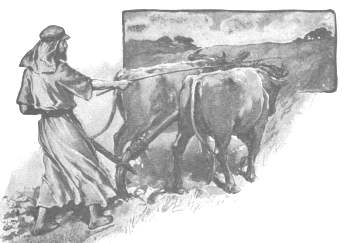
· Elisha. In 1 Kgs 19:19-21 we read how the prophet Elijah found Elisha son of Shaphat … ploughing with 12 yoke of oxen …. He went up to him and threw his cloak around him. Elisha said goodbye to his parents and took his yoke of oxen and slaughtered them then burned the ploughing equipment to cook the meat. He gave it to the people to eat then set out to follow Elijah and became his attendant. Elisha also had a servant, Gehazi. His relationship to his master may have been similar to Elisha's to Elijah. Sadly, his greed led him astray for which he was punished.
· Baruch. Another possible model is Baruch who served the prophet Jeremiah as a scribe, writing out some of his prophecies and on occasions reading them out. At the fall of Jerusalem Jeremiah said to him (45:5) Should you then seek great things for yourself? Seek them not. For I will bring disaster on all people, declares the LORD, but wherever you go I will let you escape with your life.
Is the idea biblical? Specific New Testament models
In the New Testament we have no examples of assistant pastors as such but we do have three examples of assistant apostles.
· John Mark. In Acts 13 we read how, led by the Spirit, the church at Antioch set apart two leaders, Paul and Barnabas, for missionary work. In verse 5 we read John was with them as their helper or servant. John Mark was Barnabas's cousin. He grew up in Jerusalem and it was in his mother's house that the early church met. This childhood home was probably where the upper room was, scene of the last supper. When Paul and Barnabas came with a gift to Jerusalem he was invited to join them, accompanying them to Antioch. Sadly, on the first missionary journey, after the period in Cyprus and at the beginning of their journey into the interior of Asia Minor Mark left the apostles. This eventually caused a division between Paul and Barnabas as when they began planning the second missionary journey two years later (15:37-39) Paul did not think it wise … to take Mark because he had deserted them in Pamphylia and had not continued with them in the work. Happily, we know that Paul later had a better opinion of him. In Col 4:10 he sends greetings from my fellow-prisoner Aristarchus and from Mark, the cousin of Barnabas. He adds (11) referring to Mark and others These are the only Jews among my fellow-workers for the kingdom of God, and they have proved a comfort to me. In 2 Tim 4:11 he writes
Get Mark and bring him with you, because he is helpful to me in my ministry.
· Timothy. It appears that Timothy was from the backwater of Lystra in Lycaonia, part of the Province of Galatia (today central Turkey), a wild and mountainous district. Shortly after Mark had left them Paul and Barnabas came to Lystra and Timothy appears to have been converted through Paul's preaching then, when still pretty young (early twenties?). We also know that he was brought up in the faith. In 1 Tim 1:5 Paul refers to his sincere faith, which first lived in your grandmother Lois and in your mother Eunice. They were probably also converted through Paul. We know Timothy's father, however, was a Greek and not a believer, though not necessarily hostile to the faith. It was on Paul's return journey to Lystra that he decided on Timothy as a replacement for young John Mark. Because he would be preaching chiefly in synagogues on the journey Paul decided to have Timothy circumcised. They all knew that Timothy's father was a Greek and so could accuse Paul of consorting with a heretic. It was better, therefore, to have that objection removed. Circumcision is something indifferent - it can't affect salvation but like anything indifferent it can interfere with the gospel so Timothy was circumcised. It cannot have been pleasant for him but he willingly bore it. He was willing too to leave family and friends and the scenes of his upbringing to go who knew where. He knew his journey probably meant persecution and trouble (he had seen Paul nearly stoned to death by his fellow Lystrans) but he was willing to go for the sake of Christ.
· Erastus. In Acts 19:22 we read that Paul sent two of his helpers, Timothy and Erastus, to Macedonia, while he stayed in the province of Asia (at Ephesus) a little longer. We know almost nothing about Erastus. He is mentioned in 1 Tim 4:20. It is possibly the same Erastus as the one in Rom 16:23 referred to as the city's director of public works (ie of Corinth). No doubt there were many faithful workers in New Testament days about whom we know nothing or very little. They were faithful nevertheless.

Archive 7a Assistant Pastor

If you google 'Assistant pastor' it will take you to the Banner of truth website and an article I wrote some years ago when we had our first assistant pastor, Robin Asgher. It begins thus -

Towards the end of his life the great 18th Century Baptist preacher John Gill became rather weak and unwell. It was suggested to him by his deacons that he might benefit from the help of an assistant pastor. He did not take kindly to the suggestion. 'I've read plenty in the Bible' he is reported to have said 'about pastors but I don't recall reading anything about assistant pastors'. It is true that you will not find the phrase 'assistant pastor' in the Bible.
There is plenty about pastors (shepherds). The elders or overseers of the churches were to look after their flocks like shepherds look after sheep. See Acts 20:28, Eph 4:11, 1 Pet 5:1-3 for example. Although there is no direct mention of assistant pastors we ought not to be too quick to assume that the Bible says nothing on the subject. Just because a word is absent from the Bible does not prove it says nothing about the subject. In his day Gill was a great defender of the biblical doctrine of the Trinity, a doctrine very much under attack at the time. The word Trinity appears nowhere in Holy Writ; indeed it was not invented until some time later. But it was a word that Gill used because it sums up the Bible's teaching that God is one and yet three; a triune being; Father, Son and Holy Spirit - three equal persons but one God. 'God in three persons, blesséd trinity'. In a similar way, though the phrase assistant pastor is not in the Bible we have good reason to believe that nevertheless the idea certainly is. In this, as in everything, the Bible must nevertheless be our guide.


Is the idea biblical? General models
Certainly the idea of assistants or helpers is there. We have the idea both in general and in both the Old and New Testaments in the cases of certain individuals.
First we consider three general models. We take these from the spheres of family, state and church.
· A model from family government - wives. At the very beginning the idea of a helper is introduced with the description of how Adam was alone and needed a helper suitable for him. That is why God created Eve and this is the model for marriage. One of the strengths of families is that we are able to help one another.
· An example from civil government - officials. Then in Ex 18 we learn how Moses's father-in-law came to meet him and the Israelites in the desert. Seeing Moses' heavy workload he warned him that he was likely to wear himself and the people out and suggested that if it was God's will Moses should select capable men from all the people - men who fear God, trustworthy men who hate dishonest gain - and appoint them as officials over thousands, hundreds, fifties and tens. There would then be a structure in which easier cases could be dealt with by them so that Moses would need only to deal with difficult ones. And that is what was done. This principle goes on to this day in every well run state.
· An example from church government - Levites. Similarly, when the priestly system was introduced though the sons of Aaron were to do the main work the other Levites were to help (Num 3:6,7; 8:26; 18:3). In 2 Chron 29:34 we read how when there were too few priests to skin all the burnt offerings their kinsmen the Levites helped them until the task was finished and until other priests had been consecrated, for the Levites had been more conscientious in consecrating themselves than the priests had been. Temple servants (Ezra 8:20) are a further extension of this idea.

Archive 6c Chapel Names

Then there are the mountains: Ararat, Carmel, Hermon, Moriah, Nebo, Pisgah, Tabor, Zion, even Horeb or Sinai. Bethesda and Siloam were pools in Jerusalem connected with healing miracles of Jesus. Antioch is inspired by the New Testament church of that name. Of the seven churches mentioned in The Revelation, only Sardis and Smyrna are usually used, for obvious reasons. (Philadelphia is known as it means brotherly love). The story is told, however, of a church in the southern states of America that left a great deal to be desired and was a great discouragement to its faithful pastor. They decided they wanted to give a name to their chapel but could not fix on one until some mischievous or ignorant soul suggested Laodicea. When they came to the pastor for his opinion he had to admit that it was a most appropriate name for that particular church to choose! And so it was given the name Laodicea.
There is evidence that as the 19th Century wore on our Victorian fathers tired of this naming game. They would sometimes resort to the practice of calling chapels after influential figures of the near or distant past, as in Latimer Memorial, Chalmers Memorial, Martyrs Memorial, Carey Baptist or Kensit Evangelical. Others simply looked for more unusual names. Some went to Isaiah for Hephzibah and Beulah. Galeed means ‘Heap of witness’. Lebanon looks like a topographical reference but refers more to the cedar of Lebanon, symbolic of God’s strength. Similarly, Sharon refers to the Rose of Sharon mentioned in Song of Solomon and long accepted as a title for the Lord Jesus.
Some common names today among the more conservative are Grace and Christ Church. Trinity continues to be used too. Church on the rock is an attractive name.
Some people can get hot under the collar on this subject but it is not really one to get het up about. Provided we remember that the church and the building are two different things and that there is nothing in the New Testament about chapels as such, we should not go too far wrong. Meanwhile let us not forget this largely incidental but interesting part of evangelical and Nonconformist culture which has its own lessons to teach.
May each of our Bethels and Zions and Temples truly be the houses of God; may the prophets of Baal be challenged at Carmel; may we not forget the Lord’s past help at Ebenezer. And if your chapel does not have a specific name remember that he who walks among the candlesticks has a white stone with a secret new name for all who come to him. The names of all his churches are indelibly written on the palms of his hands.

Archive 6b Chapel Names

In some instances you learn something about a chapel from its name. Enon has to be a Baptist church. Enon you recall was where John the Baptist baptised because there was much water there. Tabernacles, like God’s house in the Old Testament, are relatively large as are the rarer Temples. Babell Apostolic in Aberdare, South Wales, gets its name from the Welsh word for tent not the place where the tower was built! Bethel means house of God and Zoar (meaning ‘Little place’) should be smaller, just as Rehoboth should be larger, or an extension work, as the name means ‘Room’. It was the name given to a well by Isaac following a time of strife. Perhaps in some instances that thought is in the background. Zoar is, of course, where Lot fled from Sodom and Gomorrah and so suggests a place of refuge from wickedness.
The idea of refuge is also there in the popular Elim, ‘Place of rest’, and the unusual Cave of Adullam, where all in distress, debt or despair resorted to David. The Ark clearly suggests a welcome for all creatures great and small. The name Lighthouse or Beacon, like The Bridge, though not directly from Scripture, make similar points. The name Hebron was probably selected with a similar thought. It was a city of refuge. City of Refuge spells out the point. Gilead, of course, is the place for soothing balm. Welsh Noddfa, like the French L’Abri (used by Francis Schaeffer), both mean shelter or refuge.
The name Elim, the name of an oasis where Israel stayed in the desert, is one of many examples where biblical place names have been adopted. Use has been made of Bethany, where Jesus loved to stay; Bethlehem, perhaps with the thought of its meaning, house of bread; Calvary, Latin for the place of the skull, where Christ died; Emmaus, where after his resurrection he broke bread and Jerusalem, Caersalem (in Wales) or Salem, which means peace. Galilee and Gethsemane also exist. Gilgal, interestingly, is where the Israelites rededicated themselves to God in Joshua’s time. Peniel is where Jacob met God face to face yet lived. Nazareth and Goshen are understandable choices too, as is Eden for there Adam and Eve met with God. Why Ramah or Shiloh should be chosen is not immediately clear, though the latter was where the Tabernacle used to be.
Last part to follow.

Archive 6a Chapel Names

[This article originally appeared in Grace Magazine]
Amazingly Apt Alliteration


What’s in a name?
If your church meets in a chapel, does it have a name? I have belonged to two or three Baptist churches in my time, each named after its location. However, many chapels do have names, especially where there is more than one in a town. Some have quietly dropped these names in recent times, feeling their work is not helped by issuing invitations to ‘Come to Ebenezer’ or ‘Join us at Zion’. Most, however, continue to use these ancient, and often well loved, names. Some new churches have even incorporated a name into the title of the church itself, such as Cornerstone, Immanuel, Gateway, Grace, Lifeline, Trinity, Vineyard or Church of the Good Shepherd. Meanwhile, Rehoboths, Hopes and Providences continue to abound.
Until 1689 Baptists had no chapels as such. Before the Restoration of Charles II in 1660 they had made use of parish churches and other public buildings where possible and then, under threat of persecution, had resorted to using private homes. This arrangement created its own difficulties and so where possible, like other Nonconformists, they built or bought chapels in which to meet. Sometimes congregations would share facilities but more often each church became identified with one specific building. From the 1740s at least the practice began of identifying these buildings with names. As Nonconformity flourished in the 19th Century so each new chapel erected often bore a particular name to distinguish it from others. Soon potentially confusing phrases such as ‘I belong to Hope’ or ‘I’m going to Emmaus’ became common place.
Parish churches have for long ages been traditionally connected with the names of saints, as in St Luke’s, St Philip and St James’s St Michael and All Angels or All Saints. At least one church in Wales bears Peter’s Aramaic name (Cephas) but most Nonconformists in England and Wales eschewed this practice and struck out on different paths. In America they, unimaginatively, speak usually of First Baptist, Second Baptist, Ninth Presbyterian, Tenth. Here names were chosen, mainly from the Bible, for usually obvious reasons. Bethel is ‘House of God’; Emmanuel, ‘God with us’. Providence acknowledges God’s provision of a meeting place, Jireh is ‘The Lord will provide’ and Ebenezer ‘Up until now the Lord has helped us’.

To be continued

Archive 5b Black Dog Days

Coping
For the one who is inexplicably depressed himself it is a matter of coping. Perhaps a strategy can be developed along these lines.
1. Do not be surprised by depression. It happens even to eminent Christians. Think of Cowper or Luther or Brainerd. Spurgeon once said ‘I, of all men, am perhaps the subject of the deepest depression at times’. David and Jeremiah are biblical examples. Godliness does not guarantee freedom from depression. There is a sinful depression. Think of angry Cain or pouting Ahab. Depression can also lead to sin. We must not excuse ourselves. However, depression can come unbidden to holy people.
2. When depressed or despondent, take special care to get plenty of sleep and to eat well. This will sometimes be difficult to achieve but if we realise its importance for mental as well as physical well being we will make it a priority. Many have pointed out how when Elijah fled from Jezebel in a fit of depression the first thing God did was to feed him and give him a long rest.
3. Do not be afraid to seek medical advice. It is not a lack of faith. Maybe medication is needed. There is no shame in using drugs to get through depression brought on by physical causes. Scripture condemns Asa not for seeking medical help but for failing to pray about his disease. Of course, on the other hand, it is a sin to pretend we have a medical problem when there is none. We should not be too quick to resort to medicine.
4. Concentrate on ‘getting through’. Depressions tend to be cyclical. They come and go. They can be more intense at certain times. It is common, for instance, to feel worst first thing in the morning or during the night. Remember that. Psalm 27:14 says ‘Wait for the LORD; be strong and take heart and wait for the LORD‘.
5. Beware of thinking too much. This may sound unusual advice. However, when a person is depressed he is not thinking straight and to let thoughts go round and round in a downward spiral does no good. Richard Baxter says ‘Do not exercise your thoughts too deeply, nor too much .... Long meditation is a duty to some, but not to you, any more than it is a person’s duty to go to church who has his leg broken’. When depressed do not waste mental energy on why you are depressed. It is worth analysing at another time but not in the midst of depression.

6. Seek company. The natural tendency of depressed persons is to seek solitude. Rather, seek cheerful company. Remember ‘A cheerful look brings joy to the heart and good news gives health to the bones’ (Pro 15:30). Dr Gaius Davies adds, ‘The role of a confiding, intimate friend is also important in protecting against depression’. Where this is possible such a friend will know you are depressed and with few words can help you through. Under this heading we might also note the need to take care over the music you hear. Music can powerfully affect moods, positively or negatively.
7. Concentrate on your duties. Jay Adams points out how those with less structured life-styles, such as housewives and ministers, can be more prone to depression. As far as possible, keep to daily routines and keep appointments. Try and ‘do the next thing’. At least do the little things that need doing but that require little mental effort. When depressed it is not the time for new initiatives or in depth discussions about the future.
8. Concentrate on maintaining your Christian testimony. All sorts of temptations may come to a depressed believer, it is important not to spoil an otherwise faithful witness by breaking out and doing something foolish that will bring the gospel into disrepute.
9. Keep praying and reading the Scriptures. Praying can be difficult at the best of times. In depression, prayer may seem impossible. Try and pray with others. It is clear that David came to God even at his worst. Ps 42:6 ‘My soul is downcast within me; therefore I will remember you’. Ps 69:1, 2 ‘Save me, O God, ... I have come into the deep waters’. The psalms are a good place to turn to when downcast. Do not forget the great promises either.
10. Above all, trust in the Lord. Ps 42:11 ‘Why are you downcast, O my soul? Why so disturbed within me? Put your hope in God .…’ Isa 50:10 ‘Let him who walks in the dark, who has no light, trust in the name of the LORD and rely on his God’. Look to the Lord. He will bring you through. Spurgeon says ‘I find myself frequently depressed ... I find no better cure ... than to trust in the Lord with all my heart and seek to realise afresh the power of the peace-speaking blood of Jesus and his infinite love in dying upon the cross to put away all my transgressions.’

Archive 5a Black Dog Days

Sir Winston Churchill used to speak of a metaphorical black dog that sometimes followed him. Many have known the same thing. To be downcast, depressed, dogged by a mood of hopelessness or inadequacy, can be debilitating. Depressions vary in intensity and duration. Perhaps as many as one in ten experience melancholia at some point. Christians are not exempt.

Causing
What causes it? There are a number of possible factors.
1. Heredity. It may be that some family lines are more disposed to depression than others. It is worth knowing your family background, where you can, and how that may affect you psychologically.
2. Chemical imbalance. Some are sceptical but certain illnesses, child birth, menstruation, etc, can all lead to chemical imbalance, such as lowered brain amines, bringing on depression.
3. There can be a reaction to stresses of various sorts, emotional and physical, leading to depression. Major life changes, such as bereavement, moving home, redundancy, etc, can precipitate depression. Sometimes, confusingly, there can be a delayed reaction.
However, many depressions are unidentifiable. Proverbs 18:14 says 'A man’s spirit sustains him in sickness then observes, but a crushed spirit who can bear?' It is a curious thing that faced by the same set of circumstances at one time a man can surmount them but at another, for no apparent reason, is unable.

Curing
A cure is not always possible with depression. Saying ‘snap out of it’ is usually unhelpful. The whole problem is being unable to snap out of it’. A more subtle approach sometimes works as when Luther’s wife suggested to him that God was dead! Obviously where a chemical cause is discovered appropriate medication may deal with the root problem. Similarly, stress induced depression can be overcome by removing the cause or managing it better.

Caring
Where the underlying cause of a depression is unclear the approach must be a caring one from those who wish to help the depressed person. Sympathising with those who are depressed for no obvious reason is not easy, especially if we have never experienced depression ourselves. Jay Adams warns against extremes. On one hand, it is not good to encourage anyone to rely too much on our support. They must took to the Lord. On the other, we must never minimise what they are facing. If we underestimate how bad they feel, we risk alienating them and driving to despair. Patience and love are vital.
To be continued

Archive 4 Sunday Afternoons

This is a slightly expanded version of an article that originally appeared in Grace Magazine

40 Good things to do on a Sunday afternoon
The plot of Thomas Hardy’s Far from the madding crowd turns partly on an idle Sunday afternoon when the heroine Bathsheba Everdene, not knowing what to do with herself, engages in a foolish piece of teasing. There seems to be a number of good Christian people today who do not know what to do with themselves on the Lord’s Day. So here is a series of suggestions as to how to use such time wisely. Even if you are involved in meetings or you take a nap there will still be time to do one or two things. It would certainly be impossible to do all of them. Of course, they can be done on any day but for most of us, if they are not done on a Sunday they never will be done. If you have no time for any of them then perhaps you need to take a fresh look at how you organise your week. May they be a help to you, or at the very least set you thinking.

1 Have an extended time of family worship
2 Listen to a sermon or something similar on mp3, downloaded podcast, CD, tape, etc, eg a Sunday sermon you have missed or an old one you have forgotten
3 Read the Bible, perhaps a whole book or section at one sitting
4 Go over (or catch up on) your weekday Bible readings or prepare for your daily Bible readings in the week ahead, eg reading introductory materials
5 Do some Scripture memory work, eg using Navigator aids
6 Compose a picture or a poem arising out of some biblical theme that is on your mind
7 Spend some time in prayer with others or alone. Concentrate on a particular area, eg mission or the family
8 Revise your prayer list
9 Sing some hymns with others, with a CD or on your own
10 Learn a new hymn or teach one to others
11 Listen to some hymns on your i-pod or on a CD
12 Have a Bible quiz or work through Bible puzzles with the children
13 Read a good Christian biography or church history, eg one of the volumes in Nick Needham’s 2000 Years of Christ’s Power or Arnold Dallimore on George Whitefield
14 Read a good commentary or doctrinal book. Perhaps you could read through something like Matthew Henry’s Commentary or Grudem or Reymond’s Systematic Theology Sunday by Sunday. How about working through the 1689 Confession?
15 Read a Christian classic with others (use a children’s edition if youngsters are involved) eg Pilgrim s Progress
16 Read from a good Christian coffee-table book such as a book of maps and charts or a pictorial encyclopaedia
17 Read a good Christian magazine
18 Read something from a good Christian website downloaded earlier in the week
19 Talk about the things of God with other Christians indoors or out
20 Share your testimony with someone or listen to theirs - again or for the first time
21 Discuss the sermon you have heard or share it with someone who has not. How much can you remember?
22 With children, discuss the Sunday School lesson or children’s address. Help them with memory work or catechise them. Even work through one for yourself, eg The Shorter Catechism or the Baptist versions of Keach or Spurgeon. This can be done while out walking
23 Visit someone who is in hospital or sick at home
24 Check that all is well with your neighbour next door, especially if they are elderly
25 Show hospitality to someone - a stranger or someone who would otherwise be on their own
26 Engage formally in self-examination using questions for your soul, eg go through The Ten Commandments or The Beatitudes27 Meditate on God’s goodness to you, especially in recent days. Keep a weekly diary of God’s providences
28 Write a journal entry concerning God’s dealings with you over the last week
29 Write a pithy sentence summing up some lesson you have learned in the last week
30 Write down one way in which you have related to God’s Word over the past week in an alphabetically arranged book. Soon you will have your own uninspired but personal Psalm 119
31 Write a letter or an e-mail to a missionary
32 Write a letter or e-mail or telephone to encourage a fellow believer, someone recently bereaved perhaps
33 Write a letter or e-mail on behalf of a persecuted believer
34 Write a letter or e-mail or telephone to an unbeliever pointing them to Christ
35 Telephone someone who was absent from church and see how they are
36 If you know what the passage will be in the evening look over it in preparation
37 Telephone someone to invite them to the evening meeting
38 Go out evangelising with tracts, door to door or something similar
39 Did the minister suggest something in his morning sermon to look at or did something come to mind as he preached - a passage to look up, a subject to investigate? Start on it
40 Take a walk in the park or countryside and see how many things you see to give thanks for

Archive 3 Desert Island Books

Some while ago I sent my very good friend Darby Gray to a desert island to see what books he might like to read there. The Bible, Calvin's works, Matthew Henry's commentary and Pilgrim's Progress were already provided he just had to add five more. He wrote
Narrowing down to just five books is no easy task. One is thankful to have the Bunyan, Henry, and Calvin available. In thinking about this, a number of great favourites have had to be by-passed, such as Spiritual Disciplines by Don Whitney, a book I have very much enjoyed more than once.
1. Like many other castaways I am keen to take a biography with me. Reading the lives of others is both pleasant and instructive. The two volumes by Iain Murray on Dr. Lloyd-Jones instantly spring to mind as does Roland Bainton's volume on Martin Luther. Dallimore's two volumes on Whitefield or even his single one on Spurgeon are attractive possibilities too. Dallimore and Murray are superb biographers. The latter's large work on Edwards and his smaller one on John Murray are also contenders. However, I think I will plump for Ned B. Stonehouse's wonderful Biographical Memoir of J. Gresham Machen. There is a slight degree of hagiography involved here no doubt and much of the attraction is the atmosphere the book breathes - leisurely, verbose, refined, from a bygone age. Machen's life was no easy one, however, as he struggled with the attractions of German liberalism, served in France in the Great War and defended the faith in face of a vicious onslaught from modernism, being instrumental in founding Westminster Theological Seminary. His attitude to fundamentalism, temperance, Billy Sunday, church relations, the Sabbath, etc, are interestingly revealed. It is hard to think of a more moving or a more challenging 20th century biography.
2. The 'Princeton' atmosphere is so fine that I really would like more than just one smattering for my desert island reading. I did think of trying the trick that others have used and ask for a set of works, namely 10 volumes of B B Warfield. However, some of that would involve hard work on my part and so I will instead take the easy option and go for the next best thing to biography, Church history, and order the two volumes by David B. Calhoun on old Princeton Seminary, Faith and Learning 1812-1868 and The Majestic Testimony 1869-1929. Partly it is the writing but chiefly it is the subject matter of these lovely descriptions of experiential Calvinism that hooks me. From log college to premier university, the story is a fascinating one on many fronts. The glimpses of the Alexanders, the Hodges, Machen, Warfield, as well as a host of lesser known men, is fascinating. The persistent re-emergence of vital godliness amid thoroughgoing and painstaking theology is no small part of the attraction that the books hold.
The one snag with such a book would be the references to other books just out of reach. There is an interesting description, for instance, of J A Alexander beavering away in a New York hotel during the summer months on his commentaries on Psalms, Acts, and Mark, lost deep in thought or getting frustrated and breaking for a half an hour of Dickens or a walk in the streets. 'Well, this is the most delightful and exciting occupation I can conceive of,' he said, 'it is better than any novel that I ever read.'
3. At the risk of wallowing and basking even more in the glory of old Princeton and Westminister let me add a third less obvious choice. If I wanted another obvious one I would have gone for J W Alexander's Thoughts on Preaching. However, I want something doctrinal. I know little of the late Edwin H Palmer except that he was a Christian Reformed pastor, a lecturer at Westminister Seminary and executive secretary of the committee that produced the NIV Bible. The same clarity he brought to that project is found in the two books he authored, one a study guide on The Five points of Calvinism and the other (my choice) on The Holy Spirit, His Person and Ministry. Here are 16 clear, well set-out, warm-hearted, simple studies that it would be a joy to re-read and to study again.
4. My final two choices would both be by Puritans. I notice too that like two out of my last three choices these have both been published or republished (these two as Puritan paperbacks) by the Banner of Truth Trust. How thankful we ought to be to God for the Trust's continued commitment to the Reformed faith.
First, I mention John Flavel's Mystery of Providence (as it is known). I will never forget reading it for the first time and being introduced to the whole idea of providence. It led to my seeing things and discovering things about God's goodness that I never would have seen otherwise. Originally published in 1678 there is not a book like it for opening up the subject of God's providence. What a joy it would be to contemplate, even if banished to a desert island, the goodness of God revealed in providence. The book is in three parts. Firstly it deals with the evidence for Providence; then the duty, method, and advantages of meditating on it; and finally the practical implications and problems and the advantages of keeping records.
5. My final choice was written just over 25 years earlier. Another Puritan work, Thomas Brook's Precious Remedies Against Satan's Devices was first published in 1652. The very title teaches a lesson and the contents pages themselves contain more lessons than many books produced since, for all their boasts. I believe he lists some 41 devices and over 200 remedies. Obviously time has moved on and written today such a book would no doubt have different things to say, but as a manual for the daily fight with Satan (from which a desert island would offer no rest) nothing can beat it. Perhaps the section warning against the false inferences from the cross actings of Providence would begin to come alive on a lone desert island. Brooks would help me to see that many things contrary to our desires are not contrary to our good and that God's hand against me does not mean his love and heart are not set on me. He would help me to see that such a cross providence would do me good (no doubt through reading these books) and help me on my way to heaven.
This article originally appeared in The Evangelical Library Bulletin, Banner of Truth Magazine and elsewhere.

Archive 2 Pray for London

Pray for London because it is …
A populous place and few inhabitants are believers
Like our Lord it should move us to think of so many sheep without a shepherd. Most of London is virtually untouched by gospel witness.
The national capital Like it or not, what happens here affects the whole country sooner or later. If the gospel triumphs in London the ripples will extend far and wide.
The seat of national government God commands prayer for all 'in authority, that we may live peaceful and quiet lives in all godliness and holiness' (1 Ti 2:2). Pray for the government; pray for London.
Where the Queen resides and where state occasions take place Pray for the Royal Family; for their conversion and good influence.
Still a strategic centre for the English speaking world America is today’s superpower so English is still the lingua franca and despite the Empire’s demise London’s impact is still great. Imagine the influence for good if the gospel again made a real impact here.
A place that many visit for business or pleasure More than half the country must visit or live here at some time. Every year people come to London and are converted. What an impact it would have if more were saved.
Very cosmopolitan Revival here would have an effect worldwide. Congregations regularly see people from Europe, Africa, Asia, the Americas. Who knows what the result might be if London became a real centre for the gospel.
A strategic commercial centre It is home to major banks and other economic institutions. It was part of Paul’s strategy to plant a church in the commercial centre of Corinth. He recognised the impact it would have. Pray for ‘the city’. Who knows what transforming influence conversions among such people might have.
An academic centre It has influential colleges, medical schools, museums and other institutions. As for Paul in Athens it is not an easy atmosphere in which to evangelise but think of the repercussions when even one sceptic believes.
Teeming with students and young people What opportunities! Yet how few labourers. When academic institutions have come under gospel sway in the past what an impact. Imagine a revival among students in even one of London’s many colleges.
Where many involved in the arts and media live People still come here to ‘be famous’. Those in the media have a big influence on all sorts. Conversions among such could have an impact. We ought to be praying that such people will come under the sound of the gospel.
A wicked place Satan has his throne here. It draws the worst sorts from many places. A centre for prostitution and the sex industry, militant homosexuality and other perversions, gambling and greed, organised and disorganised crime, licentiousness and violence. All sorts of iniquity lurks in its high streets and alley ways. It corrupts vast numbers in many places. Pray for Satan’s downfall.
Not easy to be a Christian here Because it is a wicked place being a Christian here is not easy. Pray for believers assailed by many temptations, not least of which is to move to a possibly less demanding situation. Alternatively, dropping out of corporate church life is an easy option in this vast city. Every year professing Christians come to London and fall away never having connected with an evangelical church.
Dangerous to live here Every woman in my congregation has had her purse stolen at least once. I'm not aware of anyone in the congregation who has not suffered some crime or other over the years. Pray for protection from physical harm for believers here.
A stressful place to live in other ways Pray for believers especially that they will be able to stand up under the strains of urban and suburban life.
A city full of needy people Quite apart from the problems of its native born population it continues to act as a sink for all sorts of troubled souls. Poor and needy, physically or sexually abused, drug addicts and alcoholics, refugees and outcasts, destitute or dangerous, many such still find their way to London. The gospel is the answer for such people. Pray many will hear the glorious good news.
Potentially very lonely Because it's so large and busy, so cosmopolitan and anonymous, with great social, cultural and economic variation there's a tendency for Londoners to shut out much of what goes on. It's not that they are unfriendly. In many ways they're more friendly than elsewhere. However, the nature of London life is such that it easy to be forgotten. We don't live in one another’s pockets. The potential for loneliness and depression is great. Ralph McTell’s ‘Streets of London’ is sentimental but makes a fair point. Pray for the lonely people of London’s mansions, bedsits, hostels, shelters and streets. Pray they'll know the Friend who sticks closer than a brother.
A real centre for false teaching Professedly evangelical churches attract large crowds, confusing and misleading the gullible and unwary with a deadly mixture of truth and error. Nominalism and liberalism hang on and even thrive. Large Catholic and Orthodox congregations, synagogues and mosques exist and Hindu, Sikh and Buddhist temples thrive. Here they have propaganda centres too. Here is the national HQ of the Watchtower Society and similar cults. The cults have their posters on the tube and the 'hare krishnas' on Oxford Street are famous. All sorts of false teachers visit London. Pray for the downfall of cults and false religions; pray for London.
Still where several Christian organisations are based or hold important meetings There are large but faithful churches in the centre and suburbs with much influence. Pray for these.
A place where Reformed churches are generally in a weak state Apart from the suburbs most are small; many are struggling; several have no pastor. The city is vast and even were we doing 10 times as much and even if we were making 20 times the impact we would still only be scratching the surface. Brothers, pray for us.
Originally written at the end of 2000 and published in Grace Magazine

Archive 1 Carey the plodder

This article first appeared in Grace Magazine October 1992, then Reformation Today 130, (Nov/Dec 92) and Reformation Africa South (second quarter 93). I have reason to believe it has been a help to many. Coming across it again lately I thought it might be good to have it here. I've scanned it from the RAS version and made one or to minor alterations.
 
It is often forgotten that William Carey, sometimes referred to as the father of the modem missionary movement, was a Baptist and a Calvinist. His life demonstrates total commitment to the task to which he was called - he was consumed in the service of the gospel, making known the Saviour of sinners to a people fast-bound in the grip of false religion, superstition and ignorance. Pushing aside the arguments of convenience and indifference which mitigated against the taking of the gospel to the heathen of India, he is said to have plodded in the service of Christ.

‘Whatever he began, he finished. Difficulties never discouraged him,’ said his sister. He was ‘determined never to give up a particle of anything on which his mind was set . . . He was neither diverted by allurements nor driven from its search by ridicule or threats,’ noted his brother. This is how those closest to him remembered William Carey.
He was not, of course, a superman, and there were times when Carey did become discouraged. However, he never gave up. In a famous statement he wrote of himself, ‘I can plod. That is my only genius. I can persevere in any definite pursuit. To this I owe everything.’ As his fellow-labourer J C Marshman pointed out, ‘it was the plodding of a genius’, but it was plodding nevertheless.
We may never emulate Carey’s genius, but we ought to emulate his tenacity. Indeed, this is the need of the hour. There are enough shooting stars. A steep climb, a burst of glory, and then they fizzle out. Rather, we need slow burners who will faithfully shine ever brighter until that perfect day. The art of plodding is exemplified in Carey’s life in many ways. We will highlight some of them.

PLODDING TO CHRIST
The teenage Carey, an Anglican, first heard the gospel through fellow-cobbler John Warr. Many and long were the conversations they had on spiritual things, and Carey put up strong opposition to the truth at first. Warr however was, in Carey’s words, importunate with me, lending me books, which gradually wrought a change in my thinking.’ He began to attend Independent meetings and increasingly came under the conviction of sin. It was his first attempt to pass off a counterfeit shilling that became the catalyst for his eventual conversion aged seventeen.
In an instant age, we expect instant conversions, but these are rare and often prove untrue. More likely and more lasting is ‘plodding’ to Christ. Like Warr, we must be persistent and faithful witnesses. Even unpromising material may prove tractable in the end and come to expect great things from God and attempt great things for Him. We also need to encourage seekers to search for Christ, to plod on until they find Him.

 
PLODDING TO CLEARER VIEWS OF THE TRUTH
Once converted, it was a little while before Carey was willing to take the radical step of throwing in his lot with the despised Nonconformists. It was longer, again, before he became a Baptist. It was a Paedobaptist sermon that drove him to the New Testament. After a typically thorough study of the subject, including consultations with Robert Hall, Carey came to the truth and was baptised at Northampton by Ryland in October 1783.
Superficial thinking is everywhere today, and many lack conviction on doctrinal matters. The question of baptism, especially, has been down-played in some quarters. We must forsake woolly thinking and plod on to ever clearer views of the truth, whatever our roots and whatever conclusions we draw about baptism or similar subjects.

PLODDING TO SHARE HIS MISSIONARY VISION
The story of Carey’s valiant efforts to share his convictions regarding the plight of the heathen is fairly well known. It is difficult to appreciate, at this distance in time, what a task it was to share this vision. By 1788, he had already attempted to write a pamphlet setting out his arguments for bringing the gospel to the heathen. Andrew Fuller remembered how Carey’s ‘heart burned incessantly with desire for the salvation of the heathen’. However, Carey felt incompetent to finish the pamphlet and had no way of getting it published, anyway. He unsuccessfully tried to persuade other ministers to write. For Fuller and others, the ‘unbeaten path’ felt ‘utterly beyond their reach’.
Eventually Carey’s Enquiry appeared in 1792. That same year, he preached his famous sermon from Isaiah 54 at the Northamptonshire Association in Nottingham. When the ministers met the next morning, Carey was determined not to let another opportunity pass. ‘Is there nothing again going to be done, sir?’ he asked, gripping Fuller’s arm. At last persistence paid off, and that day the Particular Baptist Missionary Society was formed. The following year, Carey set sail for India.
It does not take long to tell the story, but we need to appreciate the years of struggle as Carey sought to share his vision of what ought to be done. We need to picture in our minds long evenings spent poring over maps, the lives of Brainerd and Eliot, and the Scriptures themselves. Imagine Carey coming home from yet another fraternal where the burning question went undiscussed or was again rejected because of the practical difficulties.
We need men who will beaver and badger for the truth, especially when others fail to see, or are reluctant to act. It is not an easy role, and we must be certain that we really do have it right, but it is work that needs to be done, and That only plodders can do.

 
PLODDING ON UNTIL THE FIRST CONVERSIONS
So Carey finally reached India. Were the years of plodding over? They had only just begun. Even today, every missionary knows he is in for a tough time. How much more so then. It was nearly seven years before the first convert, Krishna Pal [see pic], was baptised at the end of 1800. Sadly, many missionaries today would already have given up well before that point. It is plodders we need.
Over the years, besides a host of other work, Carey translated the Bible into Bengali, Ooriya, Hindi, Marathi and Sanskrit. How on earth did he do it all in that strength-sapping heat? Diary extracts make it clear that it was chiefly by means of the biblical principle ‘little by little’. More than that, there was the deep-rooted conviction that ‘the work to which God has set his hands will infallibly prosper.’ It is such plodders we need.

 
PLODDING ON DESPITE ADVERSITY
From the time they reached India, Carey’s wife, Dorothy, was in a fragile mental state. There were also deaths (including his young son in 1794), many disappointments, a breach with the Society back home and many set-backs. Through it all he learned, in his own words, the need ‘of bearing up in the things of God against wind and tide’.
In 1812, a particularly devastating blow struck. The printing house accidentally burned down. Paper, new type, irreplaceable manuscripts - all were lost. His reaction is exemplary. ‘In one night the labours of years are consumed. How unsearchable are the divine ways ... The Lord has laid me low that I might look more simply to Him.’ That Sunday he preached from Psalm 46 on God’s right to do his will, and our duty to acquiesce. He wrote to Fuller, ‘The ground must be laboured over again, but we are not discouraged ... God has a sovereign right to dispose of us as He pleases.’ As he plodded on, the press was re-established and output increased beyond what it was before. Plodding once more proved the way to blessing. Oh for more plodders like Carey today!