The similar phrase 'Worldly Christianity' is one used by Bonhoeffer. It's J Gresham Machen that I want to line up most closely with. See his Christianity and culture here. Having done commentaries on Proverbs (Heavenly Wisdom) and Song of Songs (Heavenly Love), a matching title for Ecclesiastes would be Heavenly Worldliness. For my stance on worldliness, see 3 posts here.

Short Poem 19


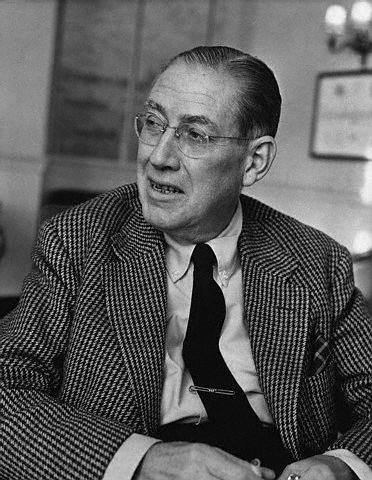
Los Angeles Daily News, CC BY 4.0 <https://creativecommons.org/licenses/by/4.0>, via Wikimedia Commons

Frederic Ogden Nash (1902–1971)was an American poet best known for writing pithy and funny light verse.
He's famous for (among others)
The Camel has a single hump, The dromedary two, Or else the other way around, I'm never sure - are you?
The Lord in His wisdom made the fly And then forgot to tell us why
The one-L lama, he's a priest The two-L llama, he's a beast And I would bet a silk pajama
There isn't any three-L lllama
More here in Wikipedia.

The Purist by Ogden Nash

I give you now Professor Twist,
A conscientious scientist,
Trustees exclaimed, "He never bungles!"
And sent him off to distant jungles.
Camped on a tropic riverside,
One day he missed his loving bride.
She had, the guide informed him later,
Been eaten by an alligator.
Professor Twist could not but smile.
"You mean," he said, "a crocodile."
(I once saw a john Wayne film where someone explains the difference between a crocodile and an alligator by saying that the first chews your leg off while the other snaps it off in one bite!)

Bio 08a William Buckland

Samuel Cousins, Public domain, via Wikimedia Commons


We haven't had a biographical thread for a while. This one's a little different. I came across this chap recently looking for something else.
Dean William Buckland (1784-1856), naturalist and Anglican minister, was an eccentric. President of the Geological Society in England and Dean of Westminster, he was one of the early pioneers in the field of geology. Along with many lesser discoveries, he is credited with being the first person to scientifically describe a dinosaur, Megalosaurus, in 1824. In fact, he was the paragon of a perfect scientist. Until he went off the deep end, that is.
Buckland had always been a little odd to begin with. He was known to cover his desk with petrified reptile droppings and let free-range guinea pigs and jackals roam about his office. But by 1813 there were signs that the mostly innocuous scientist was moving in a very odd direction. That year, a student recounted the following episode in one of his lectures.
"He paced like a Franciscan preacher up and down behind a long showcase ... He had in his hand a huge hyena’s skull. He suddenly dashed down the steps - rushed skull in hand at the first undergraduate on the front bench and shouted ‘What rules the world?’ The youth, terrified, threw himself against the next back seat, and answered not a word. He rushed then on to me, pointing the hyena full in my face - ‘What rules the world?’ ‘Haven’t an idea’, I said. ‘The stomach, sir,’ he cried."
Buckland, it seemed, had a new fascination with the stomach and all things consumable. The most pronounced symptom of this new behaviour was that Buckland was somehow seized with an unquenchable drive to eat his way through the entire food chain. He was resolved to eat one of every type of animal. His dinner parties become infamous for their toasted mice (a favourite of his), chilled insects and stewed birds. Hedgehog, guinea pig, alligator, sea slug, ostrich - the menu at his house was eclectic to say the least. He became a sort of Anti-Noah, living near London Zoo meant he could turn up when something died he had yet to sample. Apparently on holiday when the zoo's Leopard died, he returned to find it buried, but dug it up and tried it anyway. There is no exact list of everything he tried - but we know that his two least favourite snacks were Mole and the humble Bluebottle, which he thought was 'disgusting'. He obviously had an effect on his son, Frank, as he carried on his father's passion for unusual foodstuffs, managing to plough through a whole dolphin.
In addition, Buckland’s extensive intercourse with all of nature’s delicacies apparently convinced the scientist that he had developed superhuman powers of taste. According to the former geologist and historian Simon Winchester, the Rev Buckland was with a party of friends at St Paul’s Cathedral when the group happened upon an oddly shaped stain in front of the steps. A few of them foolishly began speculating on the source of the stain, and before anyone could stop him, the Reverend was on his knees licking the dark substance. "Bat's urine!" he exclaimed.
Buckland also had a table made entirely out of coprolites, which was greatly admired by visitors, often unknowing of what they were actually admiring! Buckland junior wrote: ‘I have seen in actual use ear-rings made of polished portions of coprolites (for they are as hard as marble); and while admiring the beauty of the wearer, have made out distinctly the scales and bones of the fish which once formed the dinner of a hideous lizard, but now hang pendulous from the ears of an unconscious belle, who had evidently never heard of such things as coprolites.’
Buckland’s most famous eccentric exploit, however, nearly defies the imagination. The story is related by the famous raconteur Augustus Hare, on the Oxford University Museum of Natural History website. "Talk of strange relics led to mention of the heart of a French King preserved at Nuneham in a silver casket. Dr Buckland, whilst looking at it, exclaimed, ‘I have eaten many strange things, but have never eaten the heart of a king before,’ and, before anyone could hinder him, he had gobbled it up, and the precious relic was lost for ever."
Despite his now supremely outlandish behavior, Buckland managed to be appointed Dean of Westminister in 1845. The old chap began failing in health however, and was bedridden for several years before copping in 1856. True to his sense of humour, Buckland arranged to leave this world in style. The plot he reserved in the local graveyard turned out, surprise, surprise, to be above only a few inches of soil above an outcrop of dense Jurassic limestone. It took several sticks of dynamite to clear enough space for the coffin. Well, that’s one way of going out with a bang.
Main source: This article here

Short Poem 18

This is by George Gordon (1788-1824), better known as Lord Byron.
See 2 Kings 18 and 2 Chron 32 for the biblical account.
I think Bertie Wooster used to like to cite this.
Byron was a leading Romantic poet.
For more see here.

The Destruction of Sennacherib

The Assyrian came down like the wolf on the fold,
And his cohorts were gleaming in purple and gold;
And the sheen of their spears was like stars on the sea,
When the blue wave rolls nightly on deep Galilee.
Like the leaves of the forest when Summer is green,
That host with their banners at sunset were seen:
Like the leaves of the forest when Autumn hath blown,
That host on the morrow lay withered and strown.

For the Angel of Death spread his wings on the blast,
And breathed in the face of the foe as he pass'd,
And the eyes of the sleepers wax'd deadly and chill,
And their hearts but once heaved, and for ever grew still!
And there lay the steed with his nostril all wide,
But through it there roll'd not the breath of his pride;
And the foam of his gasping lay white on the turf,
And cold as the spray of the rock-beating surf.

And there lay the rider distorted and pale,
With the dew on his brow, and the rust on his mail:
And the tents were all silent, the banners alone,
The lances unlifted, the trumpets unblown.
And the widows of Ashur are loud in their wail,
And the idols are broke in the temple of Baal;
And the might of the Gentile, unsmote by the sword,
Hath melted like snow in the glance of the Lord!

Favourite Puns 19


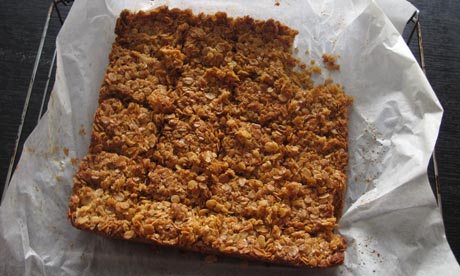
Oat Cuisine

Academics

There's a part of me that just loves the world of academia and another part that ....
There's an interview with the professor of systematic theology at Trinity, Deerfield, Illinois, Kevin Vanhoozer here that includes this memorable line in response to the question 'in your writing and teaching projects do you have the laymen or the pastor in mind? or both?' Dr Vanhoozer begins

Well, I try to tailor the message to the appropriate level of cognitive development of my intended audience.

Priceless.

Bloggy Special 12


Peter Jeffery

I've just added a link to you tube on my rather crowded sidebar. This will take you to a 10 minute gospel presentation by Peter Jeffery. There are a few others there too. Also see here.

Weekly Proverb 15

Shun inebriation and gluttony to escape impecunity and the gutter 23:20, 21 Do not join those who drink too much wine or gorge themselves on meat, for drunkards and gluttons become poor, and drowsiness clothes them in rags
Here the father again speaks to the son and is quite specific. The positive part calls for a hearing, (19 Listen, my son, and be wise, and keep your heart on the right path) the negative warns against joining drunkards and gluttons for that way leads to poverty. Our word gluttony is from a Latin one meaning to swallow or gulp. It can refer both to excess eating and drinking (or even over-indulgence in other ways), though we tend to use it most in regard to food.
These sins are not exactly the same in that, unlike alcohol, most foods do not directly affect the brain. Excess intake of food has its dangers, however. It can mean loss for others, poor health, shortened usefulness and expectancy of life and the diminution of time and desire for spiritual activity. Christ himself was accused of being a glutton and a drunkard (Mt 11:19) and there is a line between asceticism and over-indulgence. Despite their accusations, the Lord was able to tread that line and his followers should also be able to, by God's grace.
The temptation to gluttony and drunkenness has been periodic historically. Our modern situation is such that in some parts of the world it is always a possibility. At the beginning of the 20th Century, dealing with the seven deadly sins, James Stalker felt little need to say anything about gluttony. It is unlikely he would write in the same vein today. At present, it is estimated that in the US more than half of all adults are overweight or obese. Some 300,000 deaths per year are attributable to obesity and as much as 6% of healthcare spending has to do with issues related to this matter. Indirect costs to businesses are also thought significant. Another consequence of this is probably the over-reaction that manifests itself in some forms of anorexia and bulimia.
Similar things can be said about alcoholism. Believers must avoid these sins. Those who fall into them soon become hard up and poor, if not materially then certainly spiritually.
Drunkenness comes up again in 29-35. Gluttony, along with sloth (12), envy (17) and lust (26-28), is one of the traditional ‘Deadly sins’. Appetite, specifically the desire to eat, is natural and unobjectionable although no-one must be a slave to appetite. Overeating is a form of over-indulgence to be shunned by the believer. The spotlight has been on various eating disorders in recent years. Anorexia is in many ways the antithesis of gluttony but another condition, bulimia, involves uncontrolled binge eating along with sporadic dieting and vomiting. These problems usually seem to have their roots in emotional disorders and that is probably true of gluttony too. Whatever the root cause of a sin it is still a sin and must be repented of. In his Screwtape Letters C S Lewis suggests that being fussy over food is a form of gluttony – wanting things just the way we like them. It is also a form of gluttony to want more pleasure from food or anything else than it was intended to give. Paul speaks of those whose god is their stomach (Php 3:19).

Marian Martyrs

Last week I read this delightful little guide to the Marian martyrs. I found myself thinking - when I retire ...! This really is a great little series from Day One. They have just published number 12 on R M M'Cheyne and I know there are more in the pipeline.


So far there are

Travel with John Bunyan by John Pestell
Travel with C H Spurgeon by Clive Anderson
Travel with William Booth by Jim Winter
Travel with John Knox by David Campbell
Travel with Martyn Lloyd-Jones by Philip Eveson
Travel with William Grimshaw by Fred Perry
Travel with William Carey by Paul Pease
Travel with William Wilberforce by Kevin Belmonte
Travel with CS Lewis by Ronnie Bresland
Travel with Robert Murray McCheyne by Derek Prime
Plus
The Martyrs of Mary Tudor by Andrew Atherstone
Around the British Museum by Clive Anderson

Favourite Puns 18


Cutlass

Busy Monday

Monday was busy. I'm only just recovered. First it was the Westminster Fellowship a ministers' fraternal at Westminster Chapel, which meets six times a year on the first Monday of the month. We usually have a speaker these days but on this occasion we reverted to the old method of discussion. Graham Harrison was in the chair. The topic was sexual sin and though the turn out was low the discussion was worthwhile.
I then headed across town to the Evangelical Library near Baker Street where I was chairing the committee. Things are a little quieter with us at present, which is good. Major building works are about to start, including the installation of a lift.
At 6 pm we had our annual lecture. It was gratifying to see over 50 squeezed into the Bob Sheehan Room to hear my father-in-law, Geoff Thomas, speak on Louis Berkhof (1873-1957) author of one of the Banner of Truth's earliest and most popular books - Berkhof's Systematic Theology. He began by relating the experience of Dan De Haan and the benefit he got from Berkhof's systematic theology. We then moved through the complicated background to the Dutch Reformed Churches at the end of the 19th Century, which is never easy to follow. The life of Berkhof, the life of a Dutch-American academic, yields no exciting matter in itself, although it was interesting to know that he never gained a doctorate, only taught 300 men in his career and wrote a third of his output in his final 13 years, also to learn of his baker father and the strong constitution that made him the longest survivor from a large family. He married twice, having been widowed when he was 55. We learned nothing of his first wife Reka but Geoff had unearthed a fascinating account of his courtship of his second wife, Dena, which enlivened the story and gave something of a human face to the man. Geoff also outlined an early pamphlet of Berkhof's on how to deal with the social ills of the day and expressing the wish that it had featured in the systematic theology in some way that we might not gain the wrong impression.
The mystery of the systematic theology with and without (as in the Banner edition) its prolegomena, the manual and then the summary was explained. Very reliant on Bavinck (and Shedd according to the late E Kevan) Berkhof is not hyper-Calvinist but he does not really teach the free offer adequately, which perhaps explains something of the recent history of the Reformed movement.
The message will appear in In Writing as soon as we can expedite that.
Wikipedia gives links to an outline of his systematics and two other works by Berkhof. See here. [Pic: Calvin Theological Seminary Chapel today]

Paperback Believer


I watched this documentary about The Monkees which sent me to Youtube looking for archive material and I found this. Mashups are old hat to the younger people but it's a new thing to me. (Funnily enough my son heard this track being played late on Radio 1 yesterday. The mashup is not new. The fellow playing it had got there by the same process as me.)

Hymn of the Week 8

We sang this on Sunday - but only five verses and in a slightly modernised form (40 Hallelujahs might have been too much for us!). It confirms to me again that Wesley is our greatest hymn writer. The line 'Still he loves the earth he leaves' is stunning piece of brilliance.


Hail the day that sees Him rise,
Hallelujah!
To His throne above the skies,
Christ, awhile to mortals given,
Reascends His native heaven,

There the glorious triumph waits,
Lift your heads, eternal gates,
Christ hath conquered death and sin,
Take the King of glory in,

Circled round with angel powers,
Their triumphant Lord, and ours,
Conqueror over death and sin,
“Take the King of glory in!”

Him though highest Heav’n receives,
Still He loves the earth He leaves,
Though returning to His throne,
Still He calls mankind His own,

See! He lifts His hands above,
See! He shows the prints of love,
Hark! His gracious lips bestow,
Blessings on His church below,

Still for us His death He pleads,
Prevalent He intercedes,
Near Himself prepares our place,
Harbinger of human race,

Master, (will we ever say),
Taken from our head to day,
See Thy faithful servants, see,
Ever gazing up to Thee,

Grant, though parted from our sight,
Far above yon azure height,
Grant our hearts may thither rise,
Seeking Thee beyond the skies,

Ever upward let us move,
Wafted on the wings of love,
Looking when our Lord shall come,
Longing, gasping after home,

There we shall with Thee remain,
Partners of Thy endless reign,
There Thy face unclouded see,
Find our heaven of heavens in Thee,


Grace Assembly Mp3

All eight of the main addresses are now available for download at the Caterham Baptist Church website here.