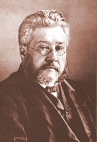
The similar phrase 'Worldly Christianity' is one used by Bonhoeffer. It's J Gresham Machen that I want to line up most closely with. See his Christianity and culture here. Having done commentaries on Proverbs (Heavenly Wisdom) and Song of Songs (Heavenly Love), a matching title for Ecclesiastes would be Heavenly Worldliness. For my stance on worldliness, see 3 posts here.
Showing posts with label F W Boreham. Show all posts

Banner Conference 2025 04


The final morning of this year's Banner was the anecdote packed second of David Campbell's addresses. Very helpful. We closed with Warren Peel expounding Proverbs 4:23 making good use of Flavel's Keeping the heart.
Many of us did not know the F W Boreham story about his call from Mosgiel to Hobart, found in his biography and retold by David.
... For reasons of their own, the officials at Hobart had asked me to let them have my decision not later than Saturday, March 24, and I had promised to respect their wishes in that matter. As that day drew nearer, the issues narrowed themselves down to one. Did the acceptance of the English trip commit me to a prolonged ministry at Mosgiel?
When that Saturday dawned, we were as far from finality as ever. The post office closed at five o’clock in the afternoon and I was determined, come what might, to hand in my reply by then. In my confusion I recalled for my comfort a conversation that, during one of his visits to our manse, I had enjoyed with Mr. Doke. One lovely morning we were sitting together on the veranda, looking away across the golden plains to the purple and sunlit mountains, when I broached this very question: ‘Can a man be quite sure,’ I asked, ‘that, in the hour of perplexity, he will be rightly led? Can he feel secure against a false step?’ I shall never forget his reply. He sprang from his deck-chair and came earnestly towards me. 'I am certain of it,’ he exclaimed, if he will but give God time! Remember that as long as you live,'' he added entreatingly.
More than ten years later I found myself face to face with a crisis. I had to make a decision on which my whole life's work depended, and I had to make the decision by five o'clock — the hour at which the telegraph office closed - on a certain Saturday evening. It chanced once more that a minister was my guest. But he could not help me. He thought it vastly improbable that God could concern Himself about individual trivialities. 'The Lord has so much to see to ... such a lot of beds in the ward! ' He was inclined to think that a certain element of chance dominated our mortality, that a man was bound to take certain risks, and that life was very much like a lottery. 'And if a man make a mistake at a critical juncture like this?' I asked anxiously. He shrugged his shoulders.
'And after that the dark.' I remember with a shudder how my faith winced and staggered under that blow. But I thought of the sunny morning on the verandah ten years before, and clutched desperately and wildly at my old faith. Saturday came. I positively had not the ghost of a notion as to what I ought to do. At five minutes to five we were standing together in the porch of the post office, desperately endeavouring to make up our minds. We were giving God time: would the guidance come? At three minutes to five, Gavin, the church secretary, rode up on a bicycle. He was obviously agitated.
‘What do you think I heard in the city this morning?’ he asked eagerly. I assured him that I could form no idea.
‘Well,’ he replied, his news positively sizzling on his tongue, ‘I heard that you have been called to Hobart!’
‘lt’s true enough, Gavin,’ I answered, ‘but how can we consider such an invitation after your goodness in giving us a trip to England?’
‘A trip to England!’ he almost shouted. ‘Man alive, didn’t you earn your trip to England before you went? Why, you’re very nearly due for another!’
I begged him to excuse me a moment. The clerk at the counter was preparing to close the office. I handed in my telegram and rejoined Gavin, who insisted on taking us home to tea. At his house I wrote out my resignation, asking him to call the officers together at ten o’clock next morning.

10 preachers known by their double initial


1. C H Spurgeon (Charles Haddon)
2. D L Moody (Dwight Lyman)
3. A W Tozer (Aiden Wilson)
4. W A Criswell (Wallie Amos)
5. R A Torrey (Reuben Archer)
6. F B Meyer (Frederick Brotherton)
7. W E Sangster (William Edwin)
8. F W Boreham (Frank William)
9. T D Jakes (Thomas Dexter)
10. R C Sproul (Robert Charles)
[Not all recommended]

2010 and eternity


A little slow off the mark I guess - I wasn't sure just where to begin until I found this quotation near the very end of F W Boreham's Bunch of everlastings. He says
I recently took a long, long railway journey through a thousand miles of civilisation, a thousand miles of desert, and a thousand miles of bush. The train bore me to a part of this vast continent in which I found myself surrounded by trees that were entirely new to me, and by flowers such as I had never seen before. I freely expressed my admiration, and, when the time came to commence my homeward journey, I found among the mementoes with which I was presented a beautiful bunch of everlastings. A Bunch of Everlastings! It seems to me I have this morning been gathering just such a bouquet. Here is Stephen Grellet listening to the great word that rings through the silence of the forest Etemity! Eternity! Eternity! Here is Uncle Tom uttering the same word with strange and wonderful effects: Eternity! Here is Dr Chalmers confessing that the mistakes of his life lay in his forgetting the greatness of Eternity! The list could be indefinitely continued; the valleys are full of everlastings. ‘That night,’ says Ebenezer Erskine, in recording in the pages of his diary the greatest spiritual crisis that he ever knew ‘that night I got my head out of Time into Eternity!’ ‘The vastness of the word Eternity was impressed upon me,’ says Andrew Bonar in his diary; and, a few months later, he says again, ‘I strive to keep the feeling of Eternity always before me!’ ‘Gentlemen,’ exclaims old Rabbi Duncan to his students as he dismisses them at the end of the year’s work, ‘many will be wishing you a Happy New Year. Your old tutor wishes you a happy Eternity!’.

Bio10c Boreham on Spurgeon

In his Life of Spurgeon, Dr Fullerton devotes a good deal of his space to an enquiry as to the sources of Mr S’s commanding authority. It is an elusive and difficult question. It is admitted that there is scarcely one respect in which Mr S’s power were really transcendent. He had a fine voice; but others had finer ones. He was eloquent; but others were no less so. He used to say that his success was due, not to his preaching of the gospel, but to the gospel that he preached. Obviously, however, this is beside the mark; for he himself would not have been so uncharitable as to deny that others preached the same gospel and yet met with no corresponding success. The truth probably is that, although he attained to super-excellence at no point, he was really great at many.
And behind this extraordinary combination of remarkable, though not transcendent, powers, was a deadly earnestness, a consuming passion, that made second-rate qualities sublime. The most revealing paragraph in Dr Fullerton’s book occurs towards the end. It is a quotation from Mr S himself. ‘Leaving home early in the morning’, he says, ‘I went to the vestry and sat there all day long, seeing those who had been brought to Christ by my preaching of the Word. Their stories were so absorbing to me that the hours fled without my noticing how fast they were going. I may have seen some thirty or more persons during the day, one after the other, and I was so delighted with the tales of divine mercy they had to tell me, and the wonders of grace God had wrought in them, that I did not know anything about the passage of time. At seven o’clock we had our prayer meeting. I went in and prayed with the brethren. And, after that, came the church meeting. A little before ten I felt faint, and I began to wonder at what hour I had eaten my dinner, and I then for the first time remembered that I had not tasted any! I never thought of it. I never even felt hungry; God had made me so glad!’
Mr S lived that he might save men. He thought of nothing else. From his first sermon at Waterbeach to his last at Mentone, the conversion of sinners was the dream of all his days. That master-passion glorified the whole man and threw a grandeur about the common details of every day. He would cheerfully have thrown away his soul to save the souls of others.
I was in London on the day of his burial. Indeed, I stood beside the grave at Norwood and saw the casket, surmounted by the palm-fronds that had accompanied it from Mentone, reverently lowered. Before hearing the final benediction pronounced by a future Archbishop of Canterbury (then Bishop of Rochester), I listened to the most perfect tribute that, on any such occasion, I have ever heard. For brevity, beauty, dignity and pathos, I have often thought that the exquisite apostrophe addressed by Archibald G Brown to the dead preacher deserves to rank with the historic utterance of Abraham Lincoln on the field of Gettysburg. On my mind, at any rate, it created an impression that has deepened rather than faded with the years.
On that unforgettable day the great city stood still. The black crowds stretching for miles and miles testified to the reverence and affection in which everybody held him. They were taking farewell of a great man, good as gold and honest as the day, who had left the world immensely better than he found it.

Bio 10b Boreham on Spurgeon

Dr Fullerton says that in matters of taste, he developed wonderfully as time went on. ‘He mixed with the highest as their equal, put the lowliest delightfully at their ease, said the right word at the right moment, took infinite pains to remember people’s names and faces, and was generosity itself, both in thought and action.’One of these days some able and penetrating historian will undertake to analyse the subtle and permeating influence of Spurgeon and to view his life and work in its true historic perspective. When that volume appears, its readers will be impressed by the way in which the rugged personality of Mr S stands out boldly against a striking, dramatic and picturesque background. For, during the latter half of the nineteenth century, English history took a surprising turn; the nation was made all over again. Its politics, its literature, its science, its commerce, its art, and, above all, its faith were recast and refashioned; whilst the position of Great Britain among the world powers assumed an entirely new character and importance.In this renaissance Mr S played a conspicuous part, and he did it in two ways. He did it by creating a popular atmosphere for evangelism. This was his supreme triumph. In his famous Memoirs, Grenville graphically describes Mr S - whose physique struck him as singularly reminiscent of Macaulay’s - preaching, at an ordinary service, to nine thousand people. It impressed him, as it impressed all thoughtful observers, as an arresting and epoch-making phenomenon. It forced the evangelical pulpit into the glare of public attention.
The world was compelled to sit up and take notice. It made thinkable and possible the work of all those ministers and evangelists who have since captured the attention of the populace. And it is only when we attempt to estimate the spiritual, ethical and civic value of the impact of Mr S’s flaming intensity upon each individual unit in the surging crowds that flocked every Sunday with wistful faces to hear him that we realize how vitally he contributed to the new order that sprang into being in his time.
Nor was this all. Mr S had a second string to his bow. A great age produces great men, and, by the very men that it produces, is made still greater. The annals of the Victorian era glitter, like a starry sky, with brilliant and illustrious names. There were giants in those days. But among those Homeric figures there was scarcely one upon whom Mr S did not exercise a profound and formative influence. He magnetized and sometimes electrified them. They went to hear him: they sought his counsel, and they struggled to keep the movements that they directed in harmony with the atmosphere that he generated.
The most skillful of analytical historians must find it beyond their wit to account, in precise terms, for Mr S’s authority over the minds of the men who dominated his period. But the most cursory review of the history of the nineteenth century must convince any man that his sway was stupendous. A kingmaker occupies a more exalted eminence than a king. And, in that age of crisis and of transformation, there were many kingly spirits who gratefully confessed that, but for Mr S’s ministry, in public and in private, their own contribution to the nation's astonishing development would have been negligible.

Bio 10a Boreham on Spurgeon

I was at a committee meeting for Grace Publications recently. See here for more on GPT. My friend Tim Curnow said he's noticed references to F W Boreham here - see here - and kindly gave me copy of Boreham's 1951 collection Arrows of desire that he had spotted. Thanks Tim! I haven't had a good look at it yet but I noticed an article called So this is Spurgeon! which I thought worth reproducing. This is part 1. (Two more parts to follow). Boreham was the last student to be interviewed by Spurgeon himself for his college.

I often heard Spurgeon. On each occasion it was an ordinary Sunday morning service; on each occasion I had to stand in an apparently endless queue waiting for the doors to open; and on each occasion I found myself, on gaining admission, an insignificant unit in the crowd of five or six thousand people who packed the vast auditorium to capacity. And this sort of thing went on, summer and winter, year in and year out, for a generation.
The service was never advertised. Why should it be? Mr S’s trouble was to keep people away. He was everlastingly imploring his own members to absent themselves in order to make room for the strangers who desired to hear him. He had no organ and no choir. The singing was led by a precentor with a tuning fork.
Those who went to hear Spurgeon - and in those days everybody, from kings to crossing-sweepers, went at some time or other - bore away with them an indelible impression: they vowed that, if possible, they would go again; they talked of the strange and striking experience for years afterwards; but not one of them was ever able to explain, in so many words, what it was about the service, the singing or the preacher, that produced upon his mind so extraordinary an effect.
Few men have achieved such world-wide and enduring fame with such slender natural advantages. He had nothing in the way of a magnetic presence. When he made his way from the vestry to the pulpit, it seemed incredible that so very commonplace a figure could hold those thousands spellbound. His infirmity often compelled him to keep his seat whilst preaching; and, on each of the occasions on which I heard him, he leaned heavily with both hands on the pulpit rail.
Some people thought him positively repulsive. George Eliot did. Mrs Florence Barclay, of The Rosary, was also shocked at first. ‘He reminded me’, she makes one of her characters say, ‘of a grotesque gorilla and I often dreaded the moment when he should rise up, face us and announce a text. It seemed to me that there ought to be bars between, and that we should want to throw nuts and oranges. But when he rose to preach, his face was transfigured. Goodness and inspiration shone from it, making it the face of an angel!’
A princely presence is undoubtedly a great asset to a public speaker; but it has the disadvantage that it may excite inflated anticipations that his subsequent utterance may fail to fulfil. Mr S’s crude appearance, on the contrary, led his hearers to expect a torrent of mediocrity; and his powerful and persuasive eloquence, when they heard it, gathered to itself the value of a sensational surprise.
It was often said, too, that Mr S was not quite a gentleman; and Dr W Y Fullerton, his biographer, admits that, judged by conventional standards, the charge can be sustained. It was certainly true in the early days, and nobody told him so more plainly than his wife. Even in their courting days, she had good reason to be scandalised. On one occasion, for example, he took her to a service at which he was to preach. A crowd was struggling for admission to the building. Mr S calmly walked off to the vestry, leaving his poor little lady-love to battle with the crowd as best she could. Instead of making the attempt, she hurried home in high dudgeon and poured her tale of woe into her indignant mother’s ear.
After the service, the young preacher anxiously sought his lost sweetheart, and it was not until he had heard from her mother’s lips exactly what that lady thought of him that the task of reconciliation could begin. But it is difficult to see how any man - and exceedingly difficult to see how such a man - could breathe the atmosphere that Mr S breathed during the years of his amazing ministry without being incalculably sweetened and enriched and refined in the process.

F W Boreham

I recently came across this item from Michael Haykin here.
F. W. Boreham (1871-1959) has long been one of my favourite authors. I am not sure where I first encountered his writings. Most likely I came across them in what was then the library at Central Baptist Seminary,Toronto, the first school where I had full-time employment as a teacher. But I took an immediate liking to this author who was the final student C. H. Spurgeon ever accepted into his Pastor’s College. The books I first read were his unique topical sermons on Bible texts that he preached in Baptist Churches in New Zealand and Australia and that summed up the lives of various figures in church history. Boreham’s A Bunch of Everlastings (1920) and A Casket of Cameos (1924) are gems in this regard.
It was with great interest, then, that I picked up this slim study—F. W. Boreham, Lover of Life: F. W. Boreham’s Tribute to His Mentor (Eureka, California: John Broadbanks Publishing, 2007)—by Boreham on the man who was his mentor, Joseph John Doke (1861–1913). Doke was a Devonian from the West Country in England who came out to New Zealand when Boreham had just arrived at his first pastoral charge. The two became close friends and in the matrix of their friendship there was what proved to be a rich experience for Boreham, namely that of being mentored by Doke. It was Doke who helped make Boreham into a voracious reader when Boreham had come to recognize the limitations of his theological training. The solution Doke suggested was reading: “Read my dear man,” he once told Boreham, “Read; and read systematically; and keep on reading; never give up” (p. 8)!
It was also Doke who challenged Boreham to reflect deeply on how to walk with God. On one occasion, by role-playing, he helped Boreham learn how to minister to the sick and dying. As Geoff Pound states in the introduction, this small work is “a helpful vision of what a mentoring relationship might become” (p. x).
Though a frail man physically, Doke was cut from heroic cloth, as his later years well reveal when he helped Mahatma Gandhi in his struggle for human rights in South Africa. On one occasion he even saved Gandhi’s life.
This is the first of a series of Boreham’s books that are being reprinted by the newly-formed John Broadbanks Publishing. It is attractively produced and augurs well for future reprints.
Note: “Chuddigh” on p. 6 should be “Chudleigh.”
To learn more about Boreham, visit:

“The Official F W Boreham Blog Site” here.
For a brief biography, see Geoff Pound, “F. W. Boreham: Australia’s Greatest Baptist Preacher Ever”, The Baptist Studies Bulletin, 6, No.1 (January 2007) here.