The similar phrase 'Worldly Christianity' is one used by Bonhoeffer. It's J Gresham Machen that I want to line up most closely with. See his Christianity and culture here. Having done commentaries on Proverbs (Heavenly Wisdom) and Song of Songs (Heavenly Love), a matching title for Ecclesiastes would be Heavenly Worldliness. For my stance on worldliness, see 3 posts here.
Showing posts with label Religion. Show all posts

10 religious facial hair decisions

1. Sikh uncut
2. Jewish corners uncut
3. Amish married man should wear a beard but have no moustache (too soldierly)
4. Rastafarian corners uncut (as do the Jews)
5. Greek Orthodox tradition for priests to be bearded
6. Muslim common but not obligatory
7. Muslim henna dyed often to mark having gone on pilgrimage to Mecca
8. Hindu common among sects that take a vow of poverty and so cannot own a razor
9. Pagan a beard can help the look
10. Mormon and JW leaders not a rule but beards are seldom seen

Strange teaching 01

Dan Strange lectures at Oak Hill on Culture, Religion and Public Theology. He has recently completed an SCM book (with Gavin D'Costa and Paul Knitter) called Only One Way? Three Christian Responses to the Uniqueness of Christ in a pluralistic world. This morning at LTS he shared with us his thesis, which is in summary
Non-Christian religions are sovereignly directed, variegated and dynamic human idolatrous distortions of divine revelation behind which evidence demonic deception. Being antithetically against yet practically dependent upon the truth of the Christian worldview, non-Christian religions are 'subversively fulfilled' in the gospel of Jesus Christ.
He defended this thesis with a very carefully worked out biblical and theological argument. He used the following headings (before the break):
1. YHWH's transcendent uniqueness: God and Trinity
Implications - 1. Yahweh's transcendent uniqueness 2. God's name and glory 3. Derivative uniqueness of Israel and the church
2. The perilous exchange: creation and fall
The relationship between Christianity and other religions is one of both principial discontinuity and practical continuity.
1. Principial discontinuity
Antithesis between true and false faith
Lies about God which lead to divine judgement and human disintegration
Deception which only brings disappointment, disillusionment and destruction
Religions are worldviews
Here he took the example of Islam. Its unity without diversity idea works it out in all sorts of ways.
2. Practical continuity
Like Christians, unbelievers are full of inconsistencies with their own views. Elements here include
Anthropological complexity
Historical or phenomenological complexity
Personal complexity
Other religions are made of imaginal, remnantal, influential and demonical revelation.
(To be continued)

Ignorance

I came across this quotation from Barry Reay's 1985 Popular Culture in Seventeenth Century England in a book I am reading at present. It acts as a warning against idolising the past but is also a reminder of how we are probably in similar times once again. How much gained, how much lost.
At the beginning of the seventeenth century the rector of a parish in Kent found that of four hundred communicants "scarcely 40" had any knowledge about Christ, sin, death and the after life. It was said of men in south Yorkshire and Northumberland that they were totally ignorant of the Bible and did not know the Lord's Prayer. A Yorkshire boy when quizzed by a minister could not say "how many gods there be, nor persons in the godhead, nor who made the world nor anything about Jesus Christ, nor heaven or hell, or eternity after this life, nor for what end he came into the world, nor what condition he was born in". Otherwise he was "a witty boy and could talk of any worldly things skilfully enough". A Lancashire woman when asked about the Jesus Christ mentioned in the Creed, replied "she could not tell, but by our dear Lady it is sure some good thing, or it should never have been put in the Creed, but what it is I cannot tell you". An old man from Cartmel, also in Lancashire, a regular church attender, did not know how many gods there were. When Christ was mentioned by his questioner he said: "I think I heard of that man you spoke of, once in a play at Kendall, called Corpus Christi play, where there was a man on a tree, and blood ran down."

Bee Season

Eleri and I sat down to watch the 2005 film Bees Season the other night on DVD. Based on a novel by Myla Goldberg, it didn't do too well at the box office, I believe. I think that is understandable given the subject matter, although it was not without merit.

Richard Gere is the central figure a Cabbalistic Jewish father who lectures in the university on the subject. His daughter a feels untalented and neglected by him but is eager to catch his attention. She eventually does this through her ability to win spelling bees. Her father sees her gift as a possible route into mystical union with God, and pushes her hard in that direction, while she simply wants his love. Meanwhile the older son, who has been closer to his father drifts away from him to the point of an open rift, provoked chiefly by his secret alliance with an attractive young girl who is a devotee of Hinduism. The fourth member of the family is the French former Catholic mother who lost her parents in a tragic accident, played by Juliette Binoche. She is the most mysterious of the four. It eventually becomes apparent that she is suffering some sort of mental breakdown. In her case the desire to please her husband and fulfil his mystic dream is a factor but instead of it drawing him to her as she hopes, it only repels him.

So, an enjoyable film for me, touching on spelling (I couldn't resist attempting every one of the many words given to be spelled) and religion. Quite what the film is saying is difficult to be sure but it is certainly intense and disturbing and to me a reminder that religion itself is divisive rather than a force for cohesion. Bad teaching will have a deleterious effect in the end.
Great for provoking discussion.

Zen für Dummies

Do you ever get these things? This is one of the dumbest ones I've ever had.

Greetings from Amazon.co.uk,
As someone who has purchased or rated America's God: From Jonathan Edwards to Abraham Lincoln by Mark A. Noll, you might like to know that Zen für Dummies will be released on 4 November 2009. You can pre-order yours for just £16.99 by following the link below.

Zen für Dummies Inken Prohl
Price:
£16.99
Release Date: 4 November 2009
Yes. It is a German language title explaining a branch of Buddhism. The obvious sequel to Mark Noll on American church history.

TvL The religious element

I remember once hearing that Simon and Garfunkel split over a religious difference. There is apparently no truth in the rumour. A conspiracy theorist might stand a better chance of trying to explain the Thijs Van Leer, Jan Akkerman split in such terms.
I've highlighted the religious element in Akkerman’s music elsewhere. When it comes to Van Leer the task is pretty straightforward.
In 1981 the Van Leer penned album Donna Nobis Pacem (Give us peace) was released with three other artists under the name Pedalpoint. With Latin and Greek lyrics, it is basically a traditional mass with one or two other bits thrown in. In the sleeve notes, Van Leer gives thanks to the Lord for it all. Straddling the classical and rock genres as it does it is one of his best solo albums.
Two albums chiefly of hymn tunes have also appeared (The glorious album and Instrumental hymns, also released in Holland as De Mooiste Liedere – The best songs). Van Leer is not over proud of these as they can tend toward a Claydermanesque muzakishness in places but at times they are worthy to be ranked alongside some of the fine Introspection tracks.
Then there are the Christmas albums. There are four of these. The first was Music per la notte de natale (1976) featuring 11 Christmas hymns in a classical style, with Louis Van Dijk, Rogier Van Otterloo and others. Then came the similarly conceived Kerst met Thijs van Leer en Elly Ameling in de Grote Kerk te Monnickendam (1982) with several Christmas carols. [The picture shows a version of the two combined]. There was also Joy to the world, which like the more down home Kerstconcert was produced with diverse contributions from family members and others and includes several carols.
Of course, when we speak of the religious element in Van Leer’s music the name of J S Bach can never be far away. Van Leer is on record, back in 1976, as saying that he and Akkerman ‘always agreed that our ideal composers were Bach and Bartok.’ He goes on to say that ‘Bach always has that radiance, knowing it was the music of the truth of Jesus Christ ... Rock could still be the language of our day in that way.’ Years later in 1999 he was one of several musicians to celebrate the 250th anniversary of Bach’s death in 2000. He released Bach for a new age which featured well known pieces, including reworkings of Erbarme dich from the St Matthew Passion; Jesu, Joy of Man’s Desiring; Sheep may safely graze; Ave Maria from the well-tempered clavier and Agnus Dei from the Mass in B minor. Most of the tracks had previously featured, differently arranged, on the delightful Introspection albums that appeared mainly in the seventies and were so successful. They include several religious pieces chiefly from Bach and Handel.
It would be wrong to think that the religious element of the music is confined to the solo output. Even in Focus days it was a feature. Several early albums include what amounts to a hymn from Van Leer. On Moving Waves it is the title track, a setting of the words of the Sufi Muslim Inayat Khan. On Focus 3 Latin verse from Virgil breaks up the raucous Round goes the gossip. On Hamburger Concerto it is simply an old Dutch Christmas hymn inserted into the title track. Perhaps where the first and last original Focus albums went wrong (if they did) was in not including a hymn!
The more one looks for this religious element the more one sees it. It is there in a title like Carmen Elysium (Introspection 2) for example (later reworked as P’s March on Ship of Memories) and in a track like La Cathedrale de Strasbourg which is ostensibly about camping holidays but has bells, church organ and an 'Amen'. What about his penchant for speaking and singing in tongues, evidenced on some more recent recordings? In a 2006 interview Van Leer made a rare reference to being Jewish. Such a revelation may come as a surprise when one considers the amount of Christian harmony in his output, however a closer listen might perhaps reveal a strand of Jewishness making up yet another element in the Van Leer repertoire and proving a further factor to note when considering what makes it so attractive.

JA the religious element

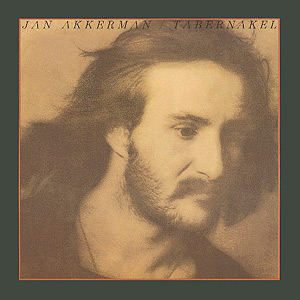
In 1974 Jan Akkerman’s third solo album Tabernakel appeared. I was 15 and, at first, unsure what to make of it. I'd been converted and baptised a little before. At the time we were studying Exodus in Sunday afternoon Bible Class and a large model of the Tabernacle dominated the room where we met. Now here was an album by my favourite guitarist with the very same word in its title. Not only that, but the cover artwork had him in a distinctly messianic pose (Akkerman himself later told me it wasn't his idea).
The thing that first drew me to the music of Focus, then individual band members, was the predominance of instrumental numbers in the repertoire. It seemed to me to solve the problem of lyrics that would today require parental advisory stickers or that promoted unbiblical ideas. Instinct kept me from Led Zeppelin or Black Sabbath (though friends kept trying to show me the Christian content in Sabbath lyrics). Later albums were not without problems (a dodgy cover, a swear word) but the difficulty was very much minimised.
It would take too long to explain the conflicting feelings of an evangelical teenager with leanings to fundamentalism confronted by a rock album with a definite religious feel from start to finish. Suffice to say the listening experience was something incredible and put to rest my fears. A superb album of solo lute, through acapella choir and rocked up sitar, to straight rock, Tabernakel is in my opinion Akkerman’s best. This is due in no small degree to its strong religious dimension.
The title and closing Amen are overtly religious but there are other elements. One track is called Javeh, a form of the Hebrew word for God as is I am which features in the Lammy suite. There's also Anthony Holborne’s Last Will and Testament and not forgetting House of the King!
This album confirms that the religious input evident on Focus albums, eg Hamburger Concerto (with a Dutch Christmas carol and its own ‘Amen’ on La Cathedrale de Strasbourg), was not all coming from Thijs van Leer (who went on to record albums of hymn tunes and a modern mass).
The truth is that one sees evidence of this religious element throughout Akkerman’s catalogue. From Exodus (his first single) and the gospel song Mercy, mercy, mercy on the debut solo album (Guitar for sale) through to the album Passion, with its religious double entendre (punning is an Akkerman penchant). The Bach tune that is the title track is often sung to the words O sacred head sore wounded. The album is about the Passion not just earthly passions. Bach’s influence, of course, has been openly acknowledged with Where would I be? (Focus in Time) and the earlier Father Bach (Mother Focus). Bach almost inevitably brings a religious dimension to any composer’s work.
Other titles where religious themes surface are the incomplete Spoke the Lord Creator (Ship of Memories); Nightprayer (JA 3); Fire from heaven (Heartware); Waterfalls of Eden, Communion and procession (Pleasure Point bonus tracks); Cherubim and Sepharim (Seraphim?! From the Basement bonus track);
Virgin Mary (Blues Hearts); Hineimatov [Ps 133] (GFS); The fight and Happy Gabriël? (Profile); Everything must change (Can’t stand noise); David’s harp (Passion).
I'm confining myself to Judaeo-Christian references. Perhaps other traditions are there (eg on the collaboration with Buddhist Tony Scott which includes Under the bo tree). For me it's the way the more religious element is either blended with or juxtaposed to solid rock and other genres that is attractive. A classic example is Leading me there (Focus in Time). Akkerman comments ‘I have always taken great pride in metaphorically racing a motorbike through a church’ which often means blues over Bach but is here blues over Mozart. The same philosophy is evident on Love is uneven (Puccinis's Cafe) ‘a sort of sacro popsong where you can actually see crusaders on horseback change into wild motor-biking herds.’ Another example is a title like Apocalypso (Transparental). A recently issued DVD of footage from the eighties begins with Jan in a church playing lute then cuts to him doing a straight rock concert with his band.
The approach offends some. Focus received complaints from the Bach Society for what they did. However, religion is two-sided. It can do great good or great harm. The Lord Jesus spoke against religious people in his day. Akkerman says he probably inherited a dislike for churchianity from his father and it's reflected in the music. Such dislike, though not saving, can be healthy.
Akkerman is unusual in combining a strong religious element with rock music but not unique. Think of eg Madonna, Prince. Someone with such broad musical tastes inevitably uses religious music and I'm aware that there are many other sides to his output. However, this element is an important but easily overlooked part of what makes his body of work the phenomenon it is.