The similar phrase 'Worldly Christianity' is one used by Bonhoeffer. It's J Gresham Machen that I want to line up most closely with. See his Christianity and culture here. Having done commentaries on Proverbs (Heavenly Wisdom) and Song of Songs (Heavenly Love), a matching title for Ecclesiastes would be Heavenly Worldliness. For my stance on worldliness, see 3 posts here.

Westminster Conference Programme


For further information please contact (before the end of November) the Secretary on 01924 497184 or jfharris@ntlworld.com. (Double click image to enlarge.)

Bloggy Man 46


Hymn of the week 29

It's quite a while since we had one of these. I went looking for this hymn for Sunday in New Christian Hymns and found it wasn't there. It is in Grace. Written by one Richard Lee, it doesn't seem to be very well known.

Far beyond all comprehension
Is Jehovah's covenant love;
Who can fathom its dimension
Or its unknown limits prove?

Ere the earth upon its basis
By creating power was built,
His designs were wise and gracious
For removing human guilt.

He displayed His grand intention
On the mount at Calvary,
When He died for our redemption,
Lifted high upon the tree.

O, how sweet to view the flowing
Of His soul-redeeming blood!
With divine assurance knowing
That it made my peace with God.

Freely Thou wilt bring to heaven
All Thy chosen, ransomed race,
Who to Thee, their Head, were given
In the covenant of grace.

Induction

We were over at an induction today for Andrew Hill in the newly refurbished premises at Highgate Road Chapel in Kentish Town (an FIEC church for many years I believe but formerly Baptist). The preacher was John Nicholls, now director of LCM but for many years pastor of Cole Abbey Presbyterian Church. We had mostly redemptive historical insights from 1 Chronicles 28 and Scots quotes and anecdotes. Also taking part were Robert Strivens, the new LTS Principal; Gwynn Evans, pastor at Hayes Town Chapel where Andrew was mentored while at LTS and the Highgate Road elder Wiltshire bred Tim Collier. Over a hundred were present and there was a lovely spread after. Nice to chat with people. Conducting a teaching ministry in London these days is no easy task but the service seemed to strike the right note of cautious optimism. We pray God's blessing on the work.
Andrew can be seen with Lanu form Burma our LTS student
in a publicity shot for the Seminary.

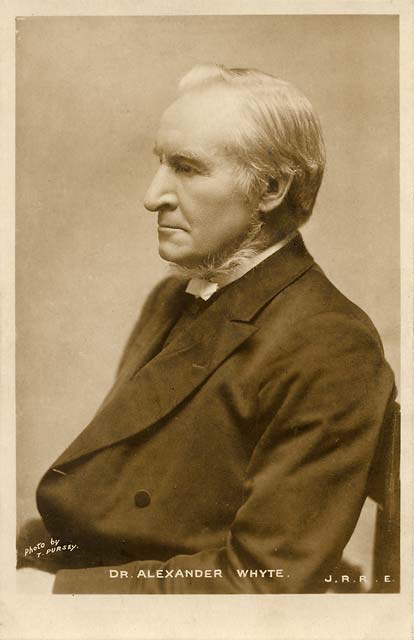
Whyte on the minister

Welsh Portrait Collection, Public domain,
via Wikimedia Commons

Another quotation prompted by Iain Murray this week. It is from Alexander Whyte writing on the character Knowledge from Pilgrim's Progress. See here.

Other men may squander and kill their time as they please, but a minister had as good kill himself at once out of the way of better men unless he is to hoard his hours like gold and jewels. He must read only the best books, and he must read them with the 'pain of attention.' He must read nothing that is not the best. He has not the time. ... The best books are always few, and they must be read over and over again when other men are reading the 'great number of books and papers of amusement that come daily in their way, and which most perfectly fall in with their idle way of reading and considering things.' And, then, such a minister must store up what he reads, if not in a good memory, then in some other pigeon-hole that he has made for himself outside of himself, since his Master has not seen fit to furnish him with such a repository within himself. And, then, after all that, - for a good minister is not made yet, - understanding and memory and industry must all be sanctified by secret prayer many times every day, and then laid out every day in the instruction, impression, and comfort of his people. And, then, that privileged people will be as happy in possessing that man for their minister as the sheep of Immanuel's Land were in having Knowledge set over them for their shepherd. They will never look up without being fed. They will every Sabbath-day be led by green pastures and still waters. And when they sing of the mercies of the Lord to them and to their children, and forget not all His benefits, among the best of their benefits they will not forget to hold up and bless their minister.

Peldroed


Dewi was playing in goals for the school at the end of the street today so I sauntered down to look. They were only one down when I left. They must have tired in the second half.

Iain Murray

Yesterday was a good day. It started with a call from my good friend Chris. We have this arrangement whereby he phones me from time to time and I phone him once a year. (It's a little like the arrangement with my dad, though less equal, where we phone each other when we are totally embarrassed it's been so long).
It was good then to go on to the Westminster Fellowship. Iain Murray spoke. About 30 of us were present.
He first gave us a word of exhortation. He saw three great needs at the present time - Less confidence in ourselves, increased and persevering faith in God and continued prayer for and working to revival. He said lots of wise and helpful things some of which, such as the need to pray more and meditate on Scripture more, chimed in very much with my own current thinking.
He then spoke on unction. First he said what it was not. It is not to do with buildings, voice, gifts such as oratory, length of sermon, how good the sermon is technically, church office, etc. Rather it is the evident presence of God felt by preacher and congregation. It is preaching that is marked by a focus on Christ and love for men. He quoted from James Garretson's book on Archibald Alexander later. I think it is the quote that speaks of the necessity of
"that solemnity which arises from the fear of God; and that affectionate manner, termed unction which arises from a deep feeling of the truth and importance and excellence of what he utters from the Word of God. This qualification, which is nothing else but piety in a lively exercise, is of the utmost importance to good and useful preaching. . . . Without it he may be a good preacher, a splendid orator . . . . but there will be an essential defect in his sermons; the right spirit will be wanting. And while the multitude may be pleased and the refined gratified, the hearers will not be edified, nor sinners converted."
Amongst hindrances to unction he mentioned a lack of pastoral work, grieving the Spirit, a lack of holiness. Unction involves feelings, it is a experience but faith is at its heart.
After lunch we spoke about the subject and as I might have expected things became less clear. I think it's one of those subjects that because it involves a certain amount of subjectivity is not easy to discuss. There are great mysteries here. One man spoke of his very limited success in the UK and yet (with the same material) great success overseas. Someone contrasted the spectacularly successful but otherwise disastrous Jonah with Isaiah and Jeremiah who though much better examples saw very limited success. It is very easy to be dismissive of the whole idea of unction but I'm sure that is a mistake.
The new programme for Westminster was available. A little lacking in inspiration I'm afraid.
After that I went on to the Evangelical Library for our committee. Things proceed slowly as ever. We look to the Lord.
Then home to the family. Put the youngest boys to bed (for once). We read about the crossing of the Jordan from a family Bible story book we have.

Advice on preaching

Here you will find the following by John Livingstone (thanks IM once again).
It is most probable that no gift, no pains a man takes to fit himself for preaching, shall ever do good to the people or himself except a man labour to have and keep his heart in a spiritual condition before God, depending on Him always for provision and the blessing. Earnest faith and prayer, a single aim at the glory of God and the good of people, a sanctified heart and bearing, shall avail much for right preaching. There is sometimes somewhat in preaching that cannot be ascribed either to the matter or expression, and cannot be described as to what it is or whence it cometh, but with a sweet violence it pierceth into the heart and affections and comes immediately from the Lord. But if there be any way to attain to such a thing, it is by heavenly disposition of the speaker.
A man should especially read the writings, and labour to follow the gifts, of those whom God hath, in the most eminent manner, blessed in the converting and confirming of their hearers, rather than those who seem to have rare gifts for learning without such success. It is very needful that a man prudently discern what is the nature and extent of the gift that God hath given him, so that in attempting to imitate others he does not stretch beyond his own line, but only correct the defects of his own gift, and labour to improve and stimulate what is good therein.
It is very fitting that a man have plenty and variety of words that, as need requires, he may vary his expression. And sometimes the enforcing of the same thing with other words to the same purpose hath its own use, especially to a dull auditory; and so we find that often in the Prophets and Psalms and poetic Scriptures, the same thing will be twice expressed, only in different words. But a custom of multiplying synonymous words and expressions and sentences to the same purpose is very unsavoury to an understanding hearer that seeks matter and not words; it would appear to proceed from scarcity of matter and a desire to fill the hour any way.
The light of nature, which is a spark of the will of God, hath taught many useful rules, even to pagans, about the right way of making solemn speeches before others. Most of these are, with due discretion, to be applied to preaching, so that what is thought unseemly in the one is to be avoided in the other. But the best rules are taken from the preachings of Christ, of the Apostles and Prophets.
Directions and Mistakes in Preaching
Matter:
1. A mean should be kept, so that there is not too much matter in one sermon, which only overburdens the memory of the hearers and would seem to smell of ostentation; and, on the other hand, that there be not too little, which hungers the auditory, and argues an empty gift.
2. The matter should not be too exquisite and fine, with abstruse learning and quaint notions which go beyond the capacity of ordinary people, and also savours of ostentation, nor yet too common and such as most of the auditory might themselves devise; for it procures careless hearing and despising of the gift.
Moreover, these faults should be shunned:
1. Too many particular points reckoned, as eight or ten, which loads the memory, and too few is flat. 2. Too exquisite a method, and none almost at all. 3. Too much should not be left to assistance in the time, and yet not all should be premeditated. 4. Ordinarily do not go beyond the hour. 5. Not too much Scripture cited, nor too little. 6. Not to insist long in proving clear doctrines. 7. Not too few doctrines, nor too many. 8. Not to insist on points that may be spoken to on any text. 9. Neither too many similitudes, nor none at all.
Words:
1. Not too fine, nor too common. 2. Avoid many synonymous words and sentences.
Utterance and Voice:
1. Not like singing. 2. Not long-drawn-out words. 3. Not affecting a weeping-like voice. 4. Not too loud, or too low. 5. Not to speak too fast, or too slow. 6. Not to interrupt with frequent sighing.
Endnotes: Reprinted from Select Biographies, vol 1, Wodrow Society, Edinburgh, 1845, pp 287-9. Livingstone was the famous minister of Covenanting times whose preaching was so much blessed on the Monday of a communion season at Kirk of Shotts.

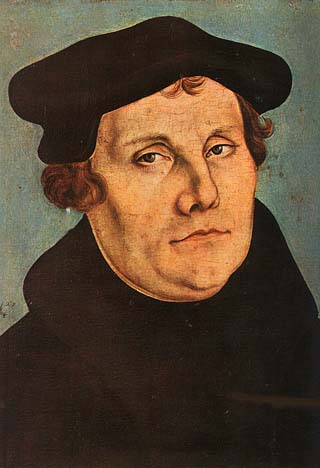
Luther on preaching


Another via Iain Murray. This from Luther (in a letter may be):


I have never troubled myself with fears about not preaching well, but I have often been troubled and terrified that I must stand in God's presence and speak of his great majesty and glorious nature. Therefore, only be strong and pray.

Spurgeon on the church's perpetuity

Listening to Iain Murray today. He always has good anecdotes from church history and excellent quotations. Here's one from Spurgeon:

But why all this, dear friends, why is it that we have seen the Church endure to this day? How is it that we are confident that even should worse times arrive, the Church would weather the storm and abide till moons shall cease to wax and wane? Why this security? Only because Christ is in the midst of her. You do not believe, I hope, in the preservation of orthodoxy by legal instruments and trust deeds. This is what too many Dissenters have relied upon. We certainly cannot depend upon creeds; they arc good enough in their way, as trust deeds are too, but they are as broken reeds if we rely upon them. We cannot depend upon parliament, nor kings, nor queens. We may draw up the most express and distinct form of doctrine, but we shall find that the next generation will depart from the truth unless God shall be pleased to give it renewed grace from on high. You cannot, by Presbytery, or Independency, or Episcopacy, secure the life of the Church—I find the Church of God has existed under an Episcopacy—a form of government not without its virtues and its faults. I find the Church of God flourish under a Presbytery, and decay under it too. I know it can be successful under an Independent form of Church government and can decline into Arianism quite as easily. The fact is that forms of government have very little to do with the vital principle of the Church. The reason why the Church of God exists is not her ecclesiastical regulations, her organisation, her formularies, her ministers, or her creeds, but the presence of the Lord in the midst of her; and while Christ lives, and Christ reigns, and stands and feeds his Church, she is safe; but if he were once gone, it would be with her as it is with you and with me when the Spirit of God has departed from us, we are weak as other men, and she would be quite as powerless.
(From Sermon Christ is Glorious—Let Us Make Him Known March 20th, 1864)

What a day may bring


The above picture shows the sheltered housing complex Garth House next to the church here in Childs Hill. A fire broke out in the early hours of Sunday morning and more than 30 mostly elderly people, including a member of our own congregation, have been made homeless by the devastation. It was a fierce fire around 20 or so fire vehicles were involved in dealing with the blaze. The fire appears to have started in the roof and thankfully there were no injuries as far as we know. Some people will have lost everything, however, as most of the top floor has been badly affected. The firemen and policemen seemed to do their job well although a little officiously at times, turning some people away from church at times and making others take circuitous routes. Barnet seemed to be very well organised in looking after those affected. We are all praying for them.

Autumn

I don't want to fill the blog with adverts but the season set me thinking on Keats' wonderful Ode to Autumn and then I saw this ad. The added bonus here is the well chosen Golden Brown by the Stranglers (yet more high brow low brow). The reader is, of course, Roger McGough. Sadly, this is a link not a video.

Learning guitar

Guitar Lesson- Hocus Pocus - Focus
This is partly in the vein of high brow low brow again though mainlyan advert. I don't play guitar but one of my sons had guitar lessons once so I urged him to ask about learning Hocus Pocus (a lifeling favourite of mine). As this advert reveals, it's not a song for beginners.
(Video no longer there I see)

Bad Christians 02

As noted, I'm working through Keller's book The Reason for God and have reached his section on how come Christians are so obnoxious. I'd like to add a second observation on this.
Another unhelpful trait found in some Christians is freeloading - taking advantage of the generosity of other Christians. As with divisiveness, it was something not unknown in New Testament days. Again there are probably various reasons for his but again I think it is something that often goes back to how one becomes a Christian. Given that forgiveness is all of grace and can't be won or earned, there is always a temptation to think that everything else ought to be grace too. And yet rightly not everything is by grace. Clearly Christians ought to be kind to each other and everyone else but they are under no obligation to provide everything gratis or near to that. Some Christians can't see this and are mortified at the idea of not getting things free or at least at a knock down price. Again it is a mindset problem and once we see our way through it then there aren't too many problems. We cannot assume anything is gratis or free but for God's grace itself.

Bad Christians 01


I'm working through Keller's book The Reason for God and have reached his section on how come Christians are so obnoxious. I'd like to add an observation on this.
One trait found in some Christians is their divisiveness. Given that we are to work at unity and show Christ by our love, this is not always easy to defend. Paul even warns against tolerating divisive Christians. Why does it happen so frequently then?
I think that part of the answer lies in the very process of becoming a Christian in the first place. When you become a Christian you are pretty much saying that most people are wrong - it's a difficult moment but when you've done it once it can get easier with time. First you say most of the world is wrong, then many or most Christians are wrong, then a few more. Before you know where you are everyone's wrong but me and thee (and I'm not sure about thee).
And my point? This is one of the traits we can see in others and to some extent we may understand it. We also ought to beware of getting into such a compulsive way of thinking.