Here's something I came across on my recent travels - a plaque marking the site of a baptistry used in the 18th century by the Baptsts of South Craven. The South Craven Baptist Church currently occupies a modern building opposite the beck where baptisms took place in times gone by. The church started in 1711.
The similar phrase 'Worldly Christianity' is one used by Bonhoeffer. It's J Gresham Machen that I want to line up most closely with. See his Christianity and culture here. Having done commentaries on Proverbs (Heavenly Wisdom) and Song of Songs (Heavenly Love), a matching title for Ecclesiastes would be Heavenly Worldliness. For my stance on worldliness, see 3 posts here.
Titus Salt
In Saltaire today and here with a bust of Mr Salt himself, one of the Christians featured in Faith Cook's book.
Fine gold from Yorkshire
As we were to be spending some days in Yorkshire I thought I'd start reading Faith Cook's new set of biographies Fine gold from Yorkshire. I've just finsihed it here in the dales. This is a collection of a variety of short biographies of various lengths and from various periods and contains some well known Christians such as Wilberforce and Wycliffe, unknowns like Ruth Clark and Robert Arlington, people not necessarily known as Christians, such as Titus Salt, Kit Calvert and Anne Bronte, and others such as Hudson Taylor who are well known enough but may not necessarily be connected with Yorkshire. Faith Cook has a light touch and keeps up the interest well. The first and last words are given to Roger Carswell and it is clear that one hope is that the book will be picked up by the casual reader and that they will be drawn to the gospel. We pray that will be so. There are 21 biographies from various ages though perhaps with a bias to the 18th century and a little rag bag at the end mentioning a few more.
PS On the way up here we popped into Barnsley hoping to see the pharmacists where Hudson Taylor began but all we managed was a puncture! Ah well, next time!
Wedding of my son Dewi
Great day yesterday as my son Dewi married Esther from Cross Hills in Yorkshire. It was rather wet at first but brightened through the day adn we an excellent time as we moved from the wedding itself to the cake reception and eventually to the main reception in Cracoe. It was great to see everyone. A lovely day for which we give thanks to God.
(Ps pic by a friend of Dewi's Gareth Thomas)
Lord's Day July 23 2017
The summer months can be a little strange in Childs Hill with many away but there are plenty of opportunities to do good. We had a good congregation in the morning (a little slow filling up but okay). Our African visitors from last week were not back but two people who began to come the week of the mission were with us and another who has been once before since then. There was also one Iranian again and a new lady, a Filipina. I preached one of the great New Testament texts 1 John 1:9. It is difficult to go wrong with such a statement. In the evening we were due to have ccommunion at 6 pm but everyone forget so we did not do that until 6.25. We were only seven communing. By the time we came to the main meeting we were double that, including one member fresh in from Aberdeen. It was a privilege to preach to so many young people. (Everyone in the congregation was younger than me). I preached on fellowship with believers, the third ina series I'm doing on living the Christian life.
Midweek Meeting July 19 2017
We were a small company last night but we had a good session looking at the subject of heaven and then in prayer. Always plenty to pray about. Being so few we were finished not long after nine.
Hampstead
We finally got to see the film Hampstead last night. Knowing it is based in our neighbourhood we were curious to see. I remember seeing them filming it from time to time a year or two back. We went to see the film in the JW3 Centre, which we had not been to before. It's a cultural centre with restaurant, cinema, etc. It currently features a large sanded area with deckchairs and a Tel Aviv backdrop. There are security guards on the gates but it has a nice voluntary Israeli feel. Anyway the film is a nice gentle romance featuring two older people not convinced about the rat race. It is nice to be reminded of what a lovely area we live in (as ever in such films the geography is fictional and you know where things really are). It is sad that the only only alternatives offered in this set up are rat race, moan at the race or drop out. There are other alternatives. We managed to exit the cinema just as it was about to rain. I've rarely seen such a storm.
Gail and Paul
We had the invite to my sister's wedding today.
It reminded my wife of two bakers in nearby Hampstead.
My sister will be giving up being a Baker (in joke).
Lord's Day July 16 2017
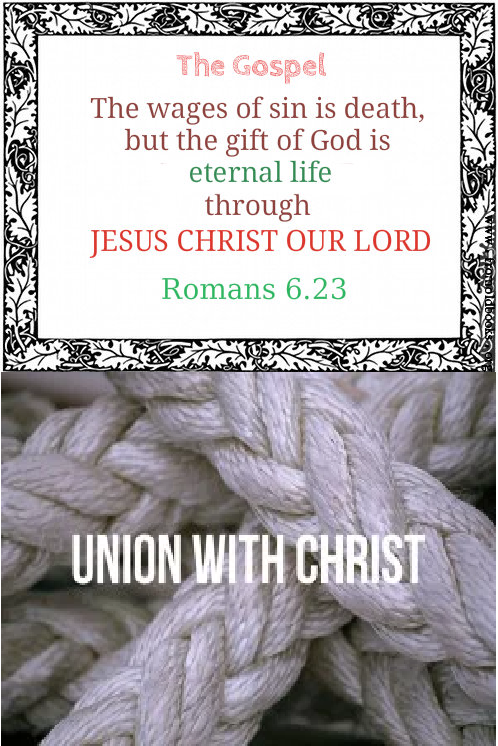
We were not many Sunday evening, about 12, but in the morning we were packed out - eventually - even with many away. There were some new comers - two lots of two Africans. I didn't get to speak to the one pair but I did meet two South African ladies (one is from Botswana). The most encouraging thing today is that a lady who came for the first time during our mission came again for the first time in a while. I was sorry not to ahve seen her and thought perhaps she wasn't so interested but in fact she has been unwell all this while and was very glad to be back. I preached in the morning on Romans 6:23. It was so encouraging to be preaching on such a verse with such a person present. In the evening we looked at another aspect of Christian living and at union with Christ.
Another Idris Davies poem
I thought I might just throw in another Idris Davies poem at this point.
High summer on the mountains
And on the clover leas,
And on the local sidings,
And on the rhubarb leaves.
Brass bands in all the valleys
Blaring defiant tunes,
Crowds, acclaiming carnival,
Prize pigs and wooden spoons.
Dust on shabby hedgerows
Behind the colliery wall,
Dust on rail and girder
And tram and prop and all.
High summer on the slag heaps
And on polluted streams,
And old men in the morning
Telling the town their dreams.
Midweek meeting July 12 2017
Leviticus 15 is all about bodily discharges and I thought it might be difficult to handle but it was not really as with a bit of help from Philip Eveson I was able t make some good points without embarrassment. We'll have another little break now having looked at the while section on being clean or unclean. Only another 12 chapters and it will practically be just 1 and II Chronicles and Lamentations left. We had a good number out and a good time of prayer.
10 Panics
![]() |
| National Archives Photo, Public domain, via Wikimedia Commons |
2. 1825 Stock market crash that started in the Bank of England. It arose in part out of speculative investments in Latin America, including the imaginary country of Poyais. It was felt most acutely in England where it precipitated the closing of six London banks and 60 country banks but was also manifest in the markets of Europe, Latin America and the USA. An infusion of gold reserves from the Banque de France saved the Bank of England from complete collapse. It has been referred to as the first modern economic crisis not attributable to an external event, such as war, and thus the start of modern economic cycles.
3. 1837 Financial crisis in the USA that touched off a major recession that lasted until the mid-1840s. Profits, prices and wages went down; unemployment went up. Pessimism abounded. It had both domestic and foreign origins. Speculative lending practices in western states, a sharp decline in cotton prices, a collapsing land bubble, international specie flows, and restrictive lending policies in the UK were all to blame. On May 10 banks in New York suspended specie payments, meaning that they would no longer redeem commercial paper in specie at full face value. Despite a brief recovery in 1838, the recession persisted approximately seven years.
4. 1847 Minor British banking crisis associated with the end of the 1840s railway industry boom and the failure of many non-banks.
5. 1857 Financial panic in the USA caused by the declining international economy and over-expansion of the domestic economy. Because of the interconnectedness of the world economy by the 1850s, the financial crisis that began in late 1857 was the first worldwide economic crisis. In the UK, Palmerston's government circumvented the requirements of the Peel Banking Act, 1844, which required gold and silver reserves to back up the amount of money in circulation. Surfacing news of this circumvention set off the Panic in the UK.
6. 1873 Triggered a depression in Europe and USA that lasted until 1879, and even longer in some countries (France, UK). In the UK it started two decades of stagnation known as the "Long Depression" that weakened the country's economic leadership. It was known as the "Great Depression" until the events in the early 1930s set a new standard.
7. 1893 Serious economic depression in the USA that ended in 1897. It deeply affected every sector of the economy and produced political upheaval that led to the realigning election of 1896 and the presidency of McKinley.
8. 1901 First stock market crash on the New York Stock Exchange, caused in part by struggles between E H Harriman, Jacob Schiff and J P Morgan/James J Hill for financial control of Northern Pacific Railway. The stock cornering was orchestrated by James Stillman and William Rockefeller's First National City Bank financed with Standard Oil money. After reaching a compromise, the moguls formed the Northern Securities Company. As a result of the panic thousands of small investors were ruined.
9. 1907 Also known as the 1907 Bankers' Panic or Knickerbocker Crisis, a US financial crisis that took place over a three-week period starting mid-October, when the New York Stock Exchange fell almost 50% from its 1906 peak. Panic occurred, as this was during a time of economic recession, and there were numerous runs on banks and trust companies. It eventually spread throughout the USA when many state and local banks and businesses entered bankruptcy.
10. 1911 A slight economic depression that followed the enforcement of the Sherman Anti-Trust Act. It mostly affected the stock market and business traders who were smarting from the activities of trust busters, especially with the breakup of the Standard Oil Company.
Lord's Day July 9 2017
We had quite large congregations (for us) morning and evening last Lord's Day. Three Iranians were present so it wasencouraging to see that link has not entirely gone. Our two Korean friends were back and there were lots of Nigerians, as is often the case. We ended up with seven children for the talk and Sunday School. I am going through the klife of Peter and we are almost through. I hope to tackle Luther mext. We had our communion before the morning service and tea before the evening, an unusual combination. I preached a text in the morning Romans 5:1, 2 and starteda lttle series in the evening on Christian living, beginning with the fear of God - something I don't think I've ever preached on or possibly heard preached on.
Gwalia Deserta by Idris Davies
One further feature of PSB's Every Valley is part of a poem by the Monmuthshire poet Idris Davies (1905-1953) sung by James Dean Bradfield (also from Monmouthshire or Gwent, like myself). I have mentioned him here before and how I discovered him studying Anglo-Welsh poetry in university. The piece is from Davies's Gwalia Deserta, which includes the part made famous by Pete Seeger, the Byrds, the Alarm, etc - The Bells of Rhymney.
In the places of my boyhood
The pit-wheels turn no more
Nor any furnace lightens
The midnight as of yore.
The slopes of slag and cinder
Are sulking in the rain
And in derelict valleys
The hope of youth is slain.
And yet I love to wander
The early ways I went
And watch from doors and bridges
The hills and skies of Gwent.
In Gwalia, my Gwalia,
The vandals out of hell
Ransacked and marred forever
The wooded hill and dale.
They grabbed and bruised and plundered
Because their greed was great
And slunk away and purchased
The medals of the state.
And yet I love to wander
The early ways I went
And watch from doors and bridges
The hills and skies of Gwent.
Though blighted be the valleys
Where man meets man with pain
The things by boyhood cherished
Stand firm and shall remain.
(Repeated several times)
Every Valley PSB
Unusual experience yesterday. I read a review of four new albums in the pop section and knew what they were talking about. I'd not heard of Broken Social Service, but I am aware of Arcade Fire and War on Drugs who apparently followed in their pioneering wake.
Then there was Calvin Harris whose name rang a bell (as did those of Pharell Williams and Arian Grande who are involved on this album I think).
There was also Haim who I've got (rightly or wrongly) next to the Staves in my galaxy of bands I don't know much about.
Anyway, I'm only aware of these becasue I have or have had teenage sons. The fourth album reviewed was a new one by Public Broadcasting Service. I became aware of them when I heard the track Go on Radio 2 one Saturday afternoon. I consequently purchased most of the album The race for space. The other items didn't quite grab me. This new album Every Valley however is about the rise and fall of the South Wales coal field and was recorded in my home county. Having grown up on the eastern edge of the coal field (one of my uncles was a miner as was a great grandfather in Cwmbran itself) I was drawn by this offering and after a listen through on itunes downloaded it in digital form.
Some potential cliches are there (a song in the Welsh language, the final track is done by Beaufort Male Voice) but plenty of others are avoided - a song about Aberfan and references to Margaret Thatcher, Scargill, etc. Rather, the whole thing is done in a more general way in my opinion comes together very well.
Subscribe to:
Posts (Atom)