The similar phrase 'Worldly Christianity' is one used by Bonhoeffer. It's J Gresham Machen that I want to line up most closely with. See his Christianity and culture here. Having done commentaries on Proverbs (Heavenly Wisdom) and Song of Songs (Heavenly Love), a matching title for Ecclesiastes would be Heavenly Worldliness. For my stance on worldliness, see 3 posts here.
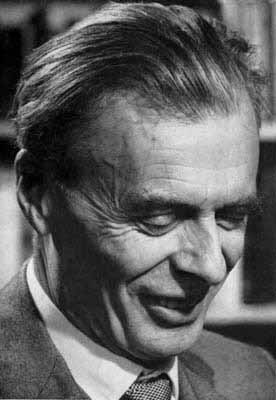
Showing posts with label Aldous Huxley. Show all posts

November 21-23 1963


(This repeats a post from an earlier time)

21st
1. Death Robert Stroud, Springfield, Missouri, 73 (American convict "Birdman of Alcatraz")

22nd
2. Death J F Kennedy, Dallas, 46
3. Death C S Lewis, Oxford, 65
4. Death Aldous Huxley, Hollywood, 69
5. Death William R Titterton, 87 (journalist and poet, friend and first biographer of G K Chesterton)
6. Death J D Tippit, Dallas, 39 (American police officer, also murdered by Lee Harvey Oswald)
7. Death Wilhelm Beiglböck, Buxtehude, 58 (Nazi war doctor)
8.  Release of the Beatles second studio album With the Beatles

23rd
9.  Death Luis Cernuda, Mexico City, 61 (Spanish poet and exile)
10. BBC broadcasts first episode of Dr Who series

10 Literary types who turned down knighthoods


1. Alan Bennett, playwright (in 1996; had previously declined appointment as CBE in 1988)
2. Arnold Bennett, novelist, declined knighthood offered for service in running the British government's French propaganda department during World War I.
3. E. M. Forster, author and essayist; declined knighthood in 1949, but accepted a Companion of Honour in the 1953 New Year Honours list and an Order of Merit in 1969
4. Michael Frayn, novelist and dramatist; declined a knighthood in the 2003 New Year Honours and a CBE four years previously; Frayn stated: "I haven't done this for reasons of modesty. I like the name 'Michael Frayn'; it's a nice little name to run around with. I've spent 70 years getting used to it and I don't want to change it now."
5. John Galsworthy, playwright, declined knighthood in 1918 New Year Honours, but accepted appointment to the Order of Merit in 1929 as it was not a title.
6. Aldous Huxley, author (in 1959)
7. Rudyard Kipling, writer, and poet; declined knighthood in 1899 and again in 1903; his wife stated that Kipling felt he could "do his work better without it". Kipling also declined the Order of Merit in 1921 and again in 1924. Kipling expressed his own view on the importance of titles and poetry in his poem "The Last Rhyme of True Thomas".
8. T. E. Lawrence, Arabist, archaeologist, soldier; King George V offered Lawrence a knighthood on 30 October 1918 at a private audience in Buckingham Palace for his services in the Arab Revolt, but he declined
9. George Bernard Shaw, playwright, critic, and socialist; also declined OM
10. Danny Boyle, theatre and film director (in 2013)

November 21-23, 1963


21st
1. Death Robert Stroud, Springfield, Missouri, 73 (American convict "Birdman of Alcatraz")

22nd
2. Death J F Kennedy, Dallas, 46
3. Death C S Lewis, Oxford, 65
4. Death Aldous Huxley, Hollywood, 69
5. Death William R Titterton, 87 (journalist and poet, friend and first biographer of G K Chesterton)
6. Death J D Tippit, Dallas, 39 (American police officer, also murdered by Lee Harvey Oswald)
7. Death Wilhelm Beiglböck, Buxtehude, 58 (Nazi war doctor)
8.  Release of the Beatles second studio album With the Beatles

23rd
9.  Death Luis Cernuda, Mexico City, 61 (Spanish poet and exile)
10. BBC broadcasts first episode of Dr Who series

Brave New World

I got round to reading Brave New World by Aldous Huxley the other day. It's another of those novels you feel you ought to have read by now. Well, there it is done. Written in the early thirties it is a dystopian novel of the future (2054) that makes a number of telling points about mass production, promiscuity, the search for happiness, etc. One of my sons has made a study of the genre and suggested to me that although Huxley's ideas are very good George Orwell (1984) is probably just a better write. I think there is a lot in that. (The title, of course, is from Shakespeare's The Tempest. The title is not just chosen at happy random).

Huxley's motives

I had motives for not wanting the world to have meaning; consequently I assumed that it had none, and was able without any difficulty to find satisfying reasons for this assumption…. We don’t know because we don’t want to know. ... For myself, as, no doubt, for most of my contemporaries, the philosophy of meaninglessness was essentially an instrument of liberation. The liberation we desired was simultaneously liberation from a certain political and economic system and liberation from a certain system of morality. We objected to the morality because it interfered with our sexual freedom; we objected to the political and economic system because it was unjust. The supporters of these systems claimed that in some way they embodied the meaning (a Christian meaning, they insisted) of the world. There was one admirably simple method of confuting these people and at the same time justifying ourselves in our political and erotic revolt: we could deny that the world had any meaning whatsoever
Aldous Huxley, Ends and Means, p. 270, 273, 1946, cited in Can Man Live Without God by Ravi Zacharias