
The Man Who Drew London: Wenceslaus Hollar in Reality and Imagination by Gillian Tindall
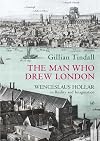
I am a fan of the Puritan Richard Bernard and many years ago I noticed that Wenceslaus Hollar had drawn a portrait of him for a posthumous book. I then saw this book at a discount somewhere. Some years passed and then I finally read it. Getting hold of info on Hollar seems to be difficult and so Gillian Tindall has supplemented her research with some speculative biographical sections. I appreciate the effort but I found these a little tedious to be truthful, especialy knowing that it was sepculative. May be some other method would have worked better. Not much on Hollar though and this is pretty decent. Sorry I took so long to get round to such an important man.
Memorial : the mystery of Mary of Bethany by Dolores Kimball
This is a book by a woman about a woman and so I should not have been surprised that it is written for women, although it doesn't actually say that on the cover. Anyway, it's a short and interesting book for the most part. I would disagree on certain points I guess (eg I'm pretty sure Mary Magdalene and this woman were the same woman) but some good points are made.
A Short History of the World in 50 Animals by Jacob F. Field
This is a great idea for a book. All the expected ones are there such as cows and sheep and fleas and bees. Some individual animals are highlighted such as Leika the space dog, Hans the counting horse and Dolly the sheep. Bats, rats, cats and many others are all there. Missing? Locusts, donkeys. The book is hampered by its evolutionary assumptions but if you ignore these it is a fascinating read. The dodo and dinosaur are there, of course. Did you know that beavers had iron edged teeth and that a child could fit into a blue whale's arteries?
The Two Prophets to Nineveh: Goodness and Severity in Jonah and Nahum by James E. McCarthy
This is a great idea for a commentary. Jonah is very well known but Nahum much less so. However, both concern Nineveh and by treating them in the same little book the writer covers a sixth of the minor prophets in brief but relevant fashion. McCarthy has good illustrations and is very thorough with the text and all could learn from what he writes and how he writes. This is an excellent little commentary well worth getting hold of.
Distinct Communion: The Believer's Relations with Father, Son, and Holy Spirit by Dan Peters
This is a brilliant book - cogent, well written and betraying a very well read author. Most Reformed ministers know about John Owen and his advocacy of communion with all three persons of the Trinity but this book builds on that and explores the whole subject with some panache. Besides Owen, he explores Goodwin and Durham (with whom he is less than pleased) and the pulpit prayers of C H Spurgeon, which are held up to us as exemplars. The final chapter considers whether we should pray to the Holy Spirit, something I have not seen dealt with anywhere else, despite it being an obvious question. This is in the Christian Focus Mentor series and so is intended for ministers and Bible college students but I believe many more could benefit from this well written tome. My only very slight disappointment was the distracting and unnecessary use of the generic feminine pronoun.
Jews Don’t Count by David Baddiel
Antisemitism is a fascinating subject. When I saw this book in a secondhand shop I immediately bought it and have now read it. (David Baddiel lives in this area, as do many Jews). Baddiel's simple point is that antisemitism is not taken seriously enough and tends to be placed lower in the hierarchy of racisms. He also points out the fundamental inconsistency in the way most people think of Jewish people. From the time I was converted I was encouraged to love the Jewish people and have tried never to be antisemitic or racist towards anyone but if I am honest, I am guilty. This book helped me to see this again. More than once Baddiel quotes people defending Jews and I think fine, no problem, only to find him pointing out the subtle racism hidden in the quote. One could try and dismiss that as being pernickety but I think there is a genuine issue. It is also interesting, as a Christian (as perseuted as Jews if not more) to see his take on things. (One other thing is that without excusing Jeremy Corbyn, he does appear to explain what happened).


