The similar phrase 'Worldly Christianity' is one used by Bonhoeffer. It's J Gresham Machen that I want to line up most closely with. See his Christianity and culture here. Having done commentaries on Proverbs (Heavenly Wisdom) and Song of Songs (Heavenly Love), a matching title for Ecclesiastes would be Heavenly Worldliness. For my stance on worldliness, see 3 posts here.
Showing posts with label writing. Show all posts

10 Writers Called Thomas


      1 Dylan Thomas (1914–1953, E), poet
      2 Gwyn Thomas (1936–2016, W), poet and academic
      3 Gwyn Thomas (1913–1981, E), novelist
      4 Ned Thomas (b 1936, EW), critic and editor
      5 (Philip) Edward Thomas (1878-1917)
      6 Leslie Thomas (1931–2014, E), novelist
      7 R S Thomas (1913–2000, EW), poet
      8 William Thomas (Gwilym Marles, 1834–1879, W), poet and minister
      9 David Thomas (Dewi Hefin, 1828–1909, W), poet and schoolteacher
      10 Ebenezer Thomas (Eben Fardd, 1802–1863, W), poet

      (The above writers wrote in E(nglish) or W(elsh) or both)

Day Off Week 40 2020


Really threw myself into this one, wearing jeans and a T-shirt and making a to do list (yes, mindset and order I've found is important even on a day off - it is also not a good thought to think I've got all day, I'll do my devotions later - which I managed to avoid thinking this tine). I got a number of little jobs done and did some tidying and sorting which is always important to keep up with. I also had a coffee, did a little blogging, watched some TV, read a bit more Moby Dick and completed a church history item for a journal. Remembered to out the bins out - unusual! In the evening Eleri and I watched the second part of a disturbing fact based drama Honour.

Day off week 19 2020


Another uneventful day off this week. It would be hard to spot any great difference in the routine as I gave a lot of time to a writing project I have on hand at the present. I did spend time watching TV, however, and reading Tom Holland's book on Persia, etc. Having read his Dominion recently I remembered that I had bought a hardback copy of his Persian Fire in a charity shop some time and never read it. I am enjoying it.

10 writers with appropriate adjectives


1. Aesop - fabulous
2. Homer - epic
3. Thomas Malory - legendary
4. J R R Tolkien - fantastic
5. Edgar Allan Poe - terrific
6. Lewis Carroll - wonderful
7. John Grisham - definitive
8. Khaled Hosseini - splendid
9. F X Toole - knock out
10. Ralph Ellison and H G Wells - both out of sight

10 well known pen makes


1. Parker
2. Lamy
3. Pilot
4. Staedtler
5. Waterman
6. Paper Mate
7. Faber-Castell
8. Montblanc
9. Uni-ball
10. Sheaffer

Herman Hesse's Siddhartha

In the same section of Waterstones where I saw the Jhumpa Lahiri short story collection I saw a copy of Herman Hesse's Siddhartha. I first became aware of this book many years ago reading  James W Sire's very helpful book The Universe Next Door. He mentions it in his chapter on Basic Eastern Pantheistic Monism. The book is certainly a great advertisement for that way of thinking. It relates the story of the eponymous hero from his Brahmin youth, through his time as a samana and encountering the Buddha, through a sansara period of sex, riches and gambling then back into a more traditionally Hindu  approach to life. It is very well written and so lures in the unsuspecting. It was written (in German) in the twenties but reached popular heights only by the sixties when the Beatles and others were looking east for inspiration. It is still worth a read - in order to understand eastern thought and read well written and simple prose.

Frank Visco's Rules


  1. Avoid Alliteration. Always.
  2. Prepositions are not words to end sentences with.
  3. Avoid cliches like the plague. (They’re old hat.)
  4. Employ the vernacular.
  5. Eschew ampersands & abbreviations, etc.
  6. Parenthetical remarks (however relevant) are unnecessary.
  7. It is wrong to ever split an infinitive.
  8. Contractions aren’t necessary.
  9. Foreign words and phrases are not apropos.
  10. One should never generalize.
  11. Eliminate quotations. As Ralph Waldo Emerson once said, “I hate quotations. Tell me what you know.”
  1. Comparisons are as bad as cliches.
  2. Don’t be redundant; don’t use more words than necessary; it’s highly superfluous.
  3. Profanity sucks.
  4. Be more or less specific.
  5. Understatement is always best.
  6. Exaggeration is a billion times worse than understatement.
  7. One word sentences? Eliminate.
  8. Analogies in writing are like feathers on a snake.
  9. The passive voice is to be avoided.
  10. Go around the barn at high noon to avoid colloquialisms.
  11. Even if a mixed metaphor sings, it should be derailed.
  12. Who needs rhetorical questions?

William Safire's Rules for writers

I stumbled across these recently

William Safire's Rules for Writers:
  • Remember to never split an infinitive.
  • The passive voice should never be used.
  • Do not put statements in the negative form.
  • Verbs have to agree with their subjects.
  • Proofread carefully to see if you words out.
  • If you reread your work, you can find on rereading a great deal of repetition can be avoided by rereading and editing.
  • A writer must not shift your point of view.
  • And don't start a sentence with a conjunction. (Remember, too, a preposition is a terrible word to end a sentence with.)
  • Don't overuse exclamation marks!!
  • Place pronouns as close as possible, especially in long sentences, as of 10 or more words, to their antecedents.
  • Writing carefully, dangling participles must be avoided.
  • If any word is improper at the end of a sentence, a linking verb is.
  • Take the bull by the hand and avoid mixing metaphors.
  • Avoid trendy locutions that sound flaky.
  • Everyone should be careful to use a singular pronoun with singular nouns in their writing.
  • Always pick on the correct idiom.
  • The adverb always follows the verb.
  • Last but not least, avoid cliches like the plague; seek viable alternatives.

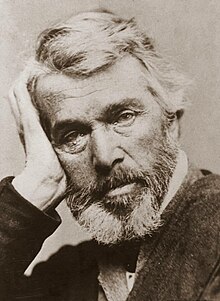
Works of Thomas Carlyle


(1828) Essay on Robbie Burns
(1829) Signs of the Times
(1831) Sartor Resartus (novel)
(1837) The French Revolution: A History
(1840) Chartism
(1841) On Heroes and Hero Worship and the Heroic in History
(1843) Past and Present
(1845) Oliver Cromwell's letters and speeches, with elucidations, editor (3 vols)
(1849) "Occasional Discourse on the Negro Question", Fraser's Magazine (anonymous)
(1850) Latter-Day Pamphlets
(1851) The Life Of John Sterling
(1858) History of Friedrich II of Prussia
(1867) Shooting Niagara: and After
(1875) The Early kings of Norway
(1882) Reminiscences of my Irish Journey in 1849
[Most of these texts are available online - see wikipedia page]

A N Wilson Non-fiction


Biography
The Laird of Abbotsford: A view of Sir Walter Scott (1980)
The Life of John Milton A Biography (1983)
Hilaire Belloc: A Biography (1985)
Tolstoy: A Biography (1988)
C. S. Lewis: A Biography (1990)
Jesus: A Life (1992)
Paul: The mind of the Apostle (1997)
Iris Murdoch As I Knew Her (2003)
Betjeman (2006)
Dante in Love (2011)
Hitler: a short biography (2011)


Other
How Can We Know? (1985)
Penfriends from Porlock: Essays and reviews 1977-1986
Against Religion: Why we should live without it (1991)
The Rise and Fall of the House of Windsor (1993).
God's Funeral: The Decline of Faith in Western Civilization (1999)
The Victorians (2002)
London: A Short History (2004)
After the Victorians (2005)
Our Times (2008)
The Elizabethans (2011)


Wilson has also written around 20 novels


The joy of reading


One of the joys of the cruise for me was sitting in the Captain's Club or the Library reading or writing up my journal (especially when no-one else was there). I took Paul Johnson on Napoleon, Tom Barnes on Glorification, the Boris Starling novel Messiah and my Bible. Every cabin had a Gideon bible (the one concession to anything like that). On the last day I left my little pile of books in the Library while we went into town. When I returned the Bible was gone. I don't know if someone who really needed one had it or if someone rather malicious threw it overboard. I'd not written anything in it. It's the second book down in the little pile in front of me, under my journal. Next to me you can see my trusty i-pod. Many of the books that appear to be behind me on the shelf are just a facade.