The similar phrase 'Worldly Christianity' is one used by Bonhoeffer. It's J Gresham Machen that I want to line up most closely with. See his Christianity and culture here. Having done commentaries on Proverbs (Heavenly Wisdom) and Song of Songs (Heavenly Love), a matching title for Ecclesiastes would be Heavenly Worldliness. For my stance on worldliness, see 3 posts here.
Showing posts with label Biblical biography. Show all posts

Charles Hodge Quotation

Writing to his mother as a young man Charles Hodge wrote

“I have lately, in reading Bonaparte’s Russian Campaign, and the Life of Sheridan, been very much struck with the truth of the remark how little they really enjoy the world to whom the world is every thing. Bonaparte says the happiest part of his life was when he was a poor lieutenant. And Sheridan said the happiest part of his life was the short time he spent in a cottage. There is nothing lost, therefore, even as regards the present world, by seeking first the kingdom of God; that is, by making it the primary object of pursuit, seeing that godliness has the promise of the life that now is, and of that which is to come.”

Bold Miriam 02

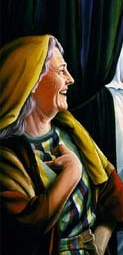
1. Miriam the babysitter - A bold and wise young woman
Miriam is first mentioned in Exodus 2. We're told how Moses' mother gave birth to a boy and saw he was a fine child - he was healthy. Because of the situation at the time and not wanting him to be killed she hid him for 3 months. As time went by it got more and more difficult to conceal his presence so (3) when she could hide him no longer, she got a papyrus basket (a miniature Noah's ark) for him and coated it with tar and pitch. Then she placed the child in it and put it among the reeds along the bank of the Nile. In 4 we're told that His sister stood at a distance to see what would happen to him. Her name is not given because the focus is on the baby – on Moses. Aaron would be three by this time (things had been easier when he was born). We don't know how old Miriam was. One assumes she was around 10 or 12.
Anyway what happens is that Pharaoh's daughter comes down to the Nile to bathe and she sees the basket among the reeds and sends her slave girl on the bank to get it. The princess opens the basket and sees the baby. He was crying, and she felt sorry for him. This is one of the Hebrew babies, she said. We don't know if she could tell by his looks, the fact he was circumcised or if she simply worked it out from the circumstances.
Anyway, at this point Miriam speaks up and on this sentence (as at other points in history too - see Esther) turns the whole of history. In a bold stroke of genius she says to Pharaoh's daughter (7) Shall I go and get one of the Hebrew women to nurse the baby for you? The princess immediately agrees and Miriam gets Jochebed, Moses' mother. Then comes wonderful verse 9 Pharaoh's daughter says Take this baby and nurse him for me, and I will pay you. So the woman took the baby and nursed him. It had been a dangerous moment but now in one stroke not only is Moses safe but his mother is being paid to look after him! And all thanks to Miriam. Later, and this would be important too, (10) When the child grew older, she took him to Pharaoh's daughter and he became her son. She named him Moses, saying, I drew him out of the water.
We've spoken to you about how God's people were slaves and how they were redeemed. It all happened under Moses and the truth is that if it were not for Miriam there may never have been a Moses. If she'd panicked and either run away or confessed who the baby's mother was, things would have been very different. No doubt Moses would have survived but he would not have been brought up by his mother in those crucial early years. He might never have even known he was a Hebrew and so would not have become the saviour of his people that he did become. Obviously God gave her the words to say but Miriam was a bold and wise girl who'd learned well from her mother. Her secret, perhaps, was that she was seeking not only to help her little brother but she was looking too for a saviour. No doubt her mother had said to her about this child -may be he will be the one to save us from slavery, to lead us out of Egypt. If she did she was right.
Wouldn't you like to have been smart like that as a girl? Perhaps you were! How can children be taught to be like that? They need to be taught not to be afraid to speak up, no doubt, but they must learn not to blab out everything. What care needs to be taken when speaking especially to strangers. We inevitably think of that later Miriam – Mary the mother of Jesus. She too was the means of bringing a Saviour into the world and keeping him safe from harm. What an impact even quite young girls can have under God.

Bold Miriam 01

Miriam or Maryam was the name of the mother of the Lord Jesus and of several other women in the New Testament. We usually refer to these women in English as Mary. We keep the name Miriam for the Old Testament woman who is best known for being Moses and Aaron's older sister, the daughter of Amram and Jochebed from the tribe of Levi.
She is not mentioned in the New Testament and there are not many references to her in the Old. There we glimpse her once as a young girl, twice in later life and then at her death in the desert. That in itself is reminds us how quickly life passes and how insignificant even the lives of significant people are.
She is the subject of this adn we are using the title “Miriam - a bold woman”. I think that's as good a title as any. I want to say four things to under that heading. Before I do so I want to just set the scene by reminding you of the times in which Miriam lived. We can think of three phases.

1. Slavery. Miriam was born in Egypt. She grew up and indeed for a very large part of her life was a slave there. When the Israelites had gone down to Egypt hundreds of years before in Joseph's time, they had been welcome guests and they really prospered. Over the years things changed and a new Pharaoh came to power. Slowly but surely Israel's fortunes sank to the level first of second class citizens, then of slaves. It even became government policy to try and destroy them. It was eventually decreed that any new born Hebrew male was to be put to death. We do not know if it was ever done but that was certainly the policy. See the end of Exodus 1.

2. Redemption. The great hope of God's people was that God would rescue them as he had promised so long ago. At first this didn't seem to be happening but eventually after a long time God raised up Miriam's own brother Moses to lead the people out of Egypt. This exodus didn't come without a titanic struggle, however, and even when they finally escaped Egypt, Pharaoh and his army came running after them. Already humiliated in the 10 plagues culminating in the death of the first born throughout Egypt, Pharaoh and his army suffered one final and ignominious defeat in the cold waters of the Red Sea, the very waters that God had just safely brought his people through.

3. Glory. On the other side of the Red Sea God brought his people safely to Sinai, where he gave the people his holy law. The time in the desert was not easy and neither Moses, Aaron nor Miriam herself lived to see the Promised Land itself. However, she and they knew that was where the people of God were bound and where one day the Messiah would be born. Miriam did not receive the things promised. Like others she only saw them and welcomed them from a distance. Like all the Old Testament saints, she was woman of faith, a bold faith that we ought to know about and that we would be wise to copy.
So four snapshots of a bold woman – Miriam.
(To be continued)

John Colquhoun Link


I enjoyed reading this here on John Colquhoun (174-1827) author of a book on Repentance, soon to be reprinted according to Heresy Huntin' Martin Downes. Also see here at Monergism.

"Colquhoun was a Church of Scotland minister who also wrote Law and Gospel, the Covenant of Grace and The Covenant of Works. He was considered an able preacher of the "Marrow" theology, having been moulded in his Christian life and ministry by Thomas Boston's Fourfold State.

The "Marrow men" were defenders and preachers of the offer of God's free grace in Christ to all sinners.
The book (on Repentance) was first published in 1826, and published by the Banner of Truth in 1965. As I started reading through it I could not fathom why they let this little gem go out of print. Well the good news from Jonathan Watson at the Banner is that they will be republishing the book later this year.
Colquhoun wrote the following words about "evangelical" as opposed to natural or legal repentance:

It is a gracious principle and habit implanted in the soul by the Spirit of Christ, in the exercise of which a regenerate and believing sinner, deeply sensible of the exceeding sinfulness and just demerit of his innumerable sins is truly humbled and grieved before the Lord, on account of the sinfulness and hurtfulness of them.
He feels bitter remorse, unfeigned sorrow, and deep self-abhorrence for the aggravated transgressions of his life, and the deep depravity of his nature; chiefly, because by all his innumerable provocations he had dishonoured an infinitely holy and gracious God, transgressed a law which is "holy, just and good," and defiled, deformed and even destroyed his own precious soul.
This godly sorrow for sin and this holy abhorrence of it arise from a spiritual discovery of pardoning mercy with God in Christ, and from the exercise of trusting in his mercy.
And these feelings and exercises are always accompanied by an unfeigned love of universal holiness, and by fixed resolutions and endeavours to turn from all iniquity to God and to walk before him in newness of life.
Such, in general is the nature of that evangelical repentance, to the habit and exercise of which the Lord Jesus calls sinners who hear the Gospel.
Repentance, p. 10

Here is the inscription from Colquhoun's gravestone:


Having studied deeply the Doctrines of
Grace, and experienced their saving and
sanctifying power in his own soul.
He laboured earnestly and affectionately
to communicate the knowledge of them
to his Fellow Sinners.
As an Author his chief aim was to advance
the Glory of the Saviour.
In private he exhibited the effects of the
holy Doctrines he inculcated in public by
a close walk with God;
And by a kind affable and humble deportment
towards all men.
And in these several ways his labours
were acknowledged of God,
by whom they were blessed to many.
He was faithful unto death
and
has now received the Crown of Life.

Harold Abrahams


This blue plaque has been up in the next but one street to me since May 2007 I discover. (A friend tipped me off about it). Abrahams, known to most of us through the film Chariots of fire, lived there as a single man from around 1923-1930 and then intermittently 1930-1936. More here. Also check out here for blue plaques. There I discover that other ones near me include David Bomberg and Amy Johnson.

Uriah Ben Shemaiah

(Now Uriah son of Shemaiah from Kiriath Jearim was another man who prophesied in the name of the LORD; he prophesied the same things against this city and this land as Jeremiah did. When King Jehoiakim and all his officers and officials heard his words, the king sought to put him to death. But Uriah heard of it and fled in fear to Egypt. King Jehoiakim, however, sent Elnathan son of Acbor to Egypt, along with some other men. They brought Uriah out of Egypt and took him to King Jehoiakim, who had him struck down with a sword and his body thrown into the burial place of the common people.)

In my reading this morning in Jeremiah I came across a reference to Uriah son of Shamaiah [26:20-23]. The NIV puts it in brackets as it is an editorial addition, probably by Jeremiah. I'd not really given any thought to Uriah before. Matthew Henry criticises his flight into Egypt. The 'in fear' perhaps suggests it but elsewhere in Scripture we are encouraged to flee persecution. Certainly no-one can deny his bold speaking out in the first place, despite the likely consequences. Disregarding this, the servants of wicked King Jehoiakim showed him no mercy in life or in death. Most of us have never heard of Uriah, even though God saw fit to have his story recorded in this way. There must be countless thousands who are just as faithful today and just as unknown. It is an encouragement to know that God will not forget them.

Note to Charles Darwin


I've been reading about Darwin. You can find this interesting document here. It is a note from his wife Emma.
The state of mind that I wish to preserve with respect to you, is to feel that while you are acting conscientiously & sincerely wishing & trying to learn the truth, you cannot be wrong, but there are some reasons that force themselves upon me & prevent my being always able to give myself this comfort. I dare say you have often thought of them before, but I will write down what has been in my head, knowing that my own dearest will indulge me. Your mind & time are full of the most interesting subjects & thoughts of the most absorbing kind, viz following up yr own discoveries — but which make it very difficult for you to avoid casting out as interruptions other sorts of thoughts which have no relation to what you are pursuing or to make it possible for to be able to give your whole attention to both sides of the question.

There is another reason which would have a great effect on a woman, but I don't know whether it wd so much on a man — I mean E (Erasmus Alvey Darwin, Charles's elder brother. Emma refers to Erasmus 'going before' Charles in doubting religion. See Correspondence vol. 1, pp. 171-2) whose understanding you have such a very high opinion of & whom you have so much affection for, having gone before you — is it not likely to have made it easier to you & to have taken off some of that dread & fear which the feeling of doubting first gives & which I do not think an unreasonable or superstitious feeling. It seems to me also that the line of your pursuits may have led you to view chiefly the difficulties on one side, & that you have not had time to consider & study the chain of difficulties on the other, but I believe you do not consider your opinion as formed. May not the habit in scientific pursuits of believing nothing till it is proved, influence your mind too much in other things which cannot be proved in the same way, & which if true are likely to be above our comprehension. I should say also that there is a danger in giving up revelation

which does not exist on the other side, that is the fear of ingratitude in casting off what has been done for your benefit as well as for that of all the world & which ought to make you still more careful, perhaps even fearful lest you should not have taken all the pains you could to judge truly. I do not know whether this is arguing as if one side were true & the other false, which I meant to avoid, but I think not. I do not quite agree with you in what you once said — that luckily there were no doubts as to how one ought to act. I think prayer is an instance to the contrary, in one case it is a positive duty & perhaps not in the other. But I dare say you meant in actions which concern others & then I agree with you almost if not quite. I do not wish for any answer to all this — it is a satisfaction to me to write it & when I talk to you about it I cannot say exactly what I wish to say, & I know you will have patience, with your own dear wife. Don't think that it is not my affair & that it does not much

signify to me. Every thing that concerns you concerns me & I should be most unhappy if I thought we did not belong to each other forever
I am rather afraid my own dear Nigger will think I have forgotten my promise not to bother him, but I am sure he loves me & I cannot tell him how happy he makes me & how dearly I love him & thank him for all his affection which makes the happiness of my life more & more every day.

[In ink, in Charles Darwin's hand:]
—When I am dead, know that many times, I have kissed & cryed over this. C. D.


In the manuscript of the Autobiography (CUL-DAR26.1-121), Darwin added a pencil note about Emma's letter:
Mem: her beautiful letter to me, safely preserved, shortly after our marriage.
Charles and Emma were married on 29 January 1839.

Mary & Others

We can profitably compare Mary with many women in the Old Testament, such as Eve, Leah, Miriam, Ruth, Bathsheba. However six particular women who had one thing in common with each other are particularly linked to Mary. Their experiences were no doubt intended to point forward to and prepare the way for the virgin birth itself. I refer to Sarah, Rebekah, Rachel, Samson's mother, Hannah and Elizabeth (an OT woman in a NT setting). John the Baptist was the last of the Old Testament prophets, the forerunner of Jesus. His mother, Elizabeth, was the last in a line of women unable to conceive except by a miracle and the one nearest in time to Mary herself. We can make several points.
1. All these women were mothers to first born sons who were significant men that we read of in the Bible.
Sarah - Isaac, from whom came the children of Israel; Rebekah - the mother of Jacob or Israel (as well as Esau); Rachel - Joseph (as well as Benjamin). Joseph was Jacob's favourite because of his godliness and was appointed his eldest son (1 Ch 5:2). He was very much the Saviour of his people when he went ahead of them down into Egypt where figuratively he died and rose again (Ps 105:17); Manoah's wife - Samson was a significant judge. He began the deliverance from the Philistines; Hannah - Samuel was the last of the judges, a prophet, a godly man and the one who prepared the way for King David; Elizabeth - John the Baptist, the last of the prophets and the immediate forerunner of Christ. Mary - Jesus Christ, the Saviour himself, whom these other men could only point to and prepare for.
2. They were all women unable to have children in the normal course of things but in whose lives God worked to bring about a significant birth. All six were initially barren. The first and the last (Sarah and Elizabeth) became too old to have children anyway. A particular note is made of their joy in both cases (Gen 18:6, 7; Lk 1:58). Mary is also joyful (Lk 1:46-49).
Sarah - Gn 16:2, 18:12; Ro 4:19, He 11:11; Rebekah - Gn 25:32; Rachel - Gn 29:31; Manoah's wife - Jg 13:2, 3; Hannah – 1 Sa 1:3ff; Elizabeth - Lk 1:7. Mary's problem was that though she had reached mature enough years to conceive, she was a virgin until after Jesus was born.
3. All these women showed themselves to be imperfect but women of faith and virtue to some extent. We see submission in Sarah, generosity and selflessness in Rebekah, commitment and perseverance in Rachel, good sense in Manoah's wife, devotion and dedication in Hannah, thankfulness in Elizabeth. Mary is marked particularly by humility but other virtues too.
As for imperfections, we see that in Mary's failure to understand Jesus as she should have. We see unbelief in Sarah's scheming and laughter (Gn 16; 18:12), Rebekah's scheming and tricks, Rachel's idolatry and willingness to trust in other means (Gn 31:19; the mandrakes, Gn 30). The latter three are more free from obvious signs of sin.
4. The first three women are important as mothers in Israel building up the family line. Like Mary they gave birth to children of promise (Gn 21:1, etc; Gn 25:3 and Rom 9). Without the miracles in their lives there would have been no Jewish race and so no Messiah.
The latter three arrive on the scene after the Jews are well established as a people. What they have in common is that each of their sons (Samson, Samuel and John) appear to have been Nazirites from birth (Jg 13:4, 5; 1 Sa 1:11, 28; Lk 1:15 ). Jesus was not a Nazirite in the proper sense but was entirely dedicated to God and is the fulfilment of the Nazirite idea. In the cases of Samson, Samuel and John there are clearly references to them being moved by the Spirit from early on (Jg 13:25; 1 Sa 3:19-21; Lk 1:15 ). This is a mark of Christ himself. Another theme common to the last three is the way they shine in comparison to their menfolk. Manoah's wife certainly outshines him in logic and good sense (Jg 13:22, 23) and is clearly the outstanding one. Something similar is true of Hannah and Elkanah. With Elizabeth and Zechariah the faith of the former and the lack of faith of the latter are obvious. Mary's faith is especially contrasted, not with Joseph's, but with Zechariah's lack of it (Lk 1). Something else that stands out about these three and Mary herself is that they give birth at times of great moral declension and corruption.
5. Obvious contrasts are how Rachel and Hannah, unlike Mary, had to share their husbands. All the women were married and older than Mary, of course, some much older. Although Hannah and Mary sing songs, Sarah and Elizabeth only express their gladness in prose. Elizabeth's husband sings, however. Unlike Mary, Sarah and Rachel died before their husbands.
6. The women have more particular connection with Mary.
Sarah and Mary were both reminded of God’s power to do the impossible (Gn 18:14; Lk 1:37). Rebekah and Mary are both virgins when we first encounter them. Rebekah is described (Gn 24:16) as very beautiful, a virgin; no man had ever lain with her. If Mary was not outwardly beautiful, she certainly had that inner beauty that Peter commends. Rachel and Mary had a strong Bethlehem connection. See Gn 35:16, 48:7 concerning Rachel's death (also Ru 4:11). Also Je 31:15, which is quoted in Mt 2:18.
Manoah's wife, like Sarah and Mary, received an angelic visit to announce the birth of their sons. In the case of Manoah and his wife and Abraham and his they met with a theophany, while Mary was visited by Gabriel. Like Mary, Manoah's wife hears the news before her husband. Hannah's son Samuel, John and Jesus are said to have grown up in the Lord (1 Sa 2:21; Lk 1:80, 2:40, 2:52). Elizabeth was told through her husband, like Mary, to give her son a specific name.

Sarah & Mary compared and contrasted

Sarah and Mary compared
1. Both Sarah and Mary were women in Scripture unable to have children in the normal way but who did. (Sarah had a double disability. She was barren and had then passed childbearing age. Cf Gen 16:2, 18:12; Rom 4:19, Heb 11:11. Mary's problem was at the other end. She had reached mature enough years to conceive but was a virgin until after Jesus was born).
2. Both Sarah and Mary were reminded of God’s power to do the impossible. (Gn 18:14 Is anything too hard for the LORD? I will return to you at the appointed time next year and Sarah will have a son. Lk 1:37 Nothing is impossible with God.)
3. Both Sarah and Mary received special revelations that they would give birth to a special son. (Mary was visited by Gabriel, Sarah overheard the Lord talking to Abraham, cf Gen 18 and Lk 1)
4. Both conceived their first born sons in a supernatural way.
5. Both Sarah and Mary were women of faith and virtue and examples to people today, especially women. (Compared with Mary, Sarah lacks faith but Mary was not perfect. 1 Pet 3:6 commends Sarah's attitude to her husband. Heb 11:11 may commend her faith. Paul likens here to the Jerusalem above (Gal 4). Lk 1:38 shows Mary was a woman of faith and virtue.)
6. Both Sarah and Mary knew God’s grace and gave birth to sons, to children of promise. (Gen 21:1 Now the LORD was gracious to Sarah as he had said, and the LORD did for Sarah what he had promised. God’s grace to Mary is evident too. Cf Lk 1:50. Gal 4 calls Isaac a child of promise ie one promised before he was born. Believers are children of promise but Christ is particularly one in that he is the long promised OT Messiah.)
7. Both Sarah and Mary had their sons circumcised. (Gen 21:4, Lk 1:21).
8. Both Sarah and Mary travelled down into Egypt at one point. (Gen 12, Lk 2)
9. Both Sarah and Mary's sons were later taken by their fathers, made to carry wood and laid on it to be sacrificed on a mountain. (Cf Gen 22 and the Gospel accounts).
Sarah and Mary contrasted
1. Sarah was an old woman, Mary was a young woman. (God uses all sorts).
2. Sarah tried her own means of securing a child, Mary only waited for the Lord to do his will. (Cf Gen 16)
3. Sarah’s husband was told about her son first, Mary was told about her child before her husband. (Why should that be? Perhaps because Mary was to be the mother of Christ in an exclusive way. Joseph had no part in the conception. It is typical of the Bible to subvert the order too.)
4.Sarah overheard what God said about her son, Mary was spoken to directly by an angel. (Gen 18; Lk 1. Mary is singled out for greater honour.)
5. Sarah laughed at the idea of giving birth, Mary believed what she was told. (Gen 18:12; Lk 1:38).
6. Sarah’s presence when pregnant closed wombs, Mary’s presence when pregnant enlivened a womb. (Cf Gen 20/Lk 1:39-45)
7. Sarah rejoiced after the birth of her son, Mary before the birth of her son. (Gen 18:6, 7 Sarah said, God has brought me laughter, and everyone who hears about this will laugh with me. And she added, Who would have said to Abraham that Sarah would nurse children? Yet I have borne him a son in his old age. Lk 1:46-49 My soul glorifies the Lord and my spirit rejoices in God my Saviour, for he has been mindful of the humble state of his servant. From now on all generations will call me blessed, for the Mighty One has done great things for me - holy is his name. Etc.)
8. Sarah went down to Egypt before Isaac was born, Mary went down to Egypt after Jesus was born. (Gen 12, Lk 2).
9. Sarah's son was taken to Moriah to be sacrificed, Mary's was taken from Moriah and actually sacrificed. (Gen 22, etc. Isaac was replaced by a lamb from the thorns; Christ is the Lamb of God crowned with thorns).
10. Sarah died before her husband, Mary probably died after her husband. (Gen 23).

Eve & Mary compared and contrasted


Eve and Mary compared
1. Here are two women in the Bible who are well known to us.
2. Here are two women who were both sinners. (After Jesus' birth Mary makes sacrifices for her cleansing so acknowledging herself to be a sinner. In her song she rejoices in God my Saviour, Lk 1:46,47)
3. Here are two women who gave birth with the Lord's help. (Cf Gen 4:1 With the help of the LORD I have brought forth a man Lk 1:54, 55 He has helped his servant Israel, remembering to be merciful etc )
4. Here are two women who knew Genesis 3:15 and so gave birth with both pain and hope. (Gen 3:15 gives the first hint of how God was going to redeem from the Fall And I will put enmity between you and the woman, and between your offspring and hers; he will crush your head, and you will strike his heel)
5. Here are two women who knew their hearts pierced as their firstborn sons grew up. (Lk 2:35 a sword will pierce your own soul)
6. Here are two women who also gave birth to other sons of some importance. (Abel, Seth; James, Jude)
7. Here are two women who both had a conversation with an angel.
Eve and Mary contrasted
1. Eve was the first of women; Mary is the most blessed of women. (Lk 1:48, 49 From now on all generations will call me blessed, for the Mighty One has done great things for me - holy is his name).
2. Eve is remembered for her proud, disobedient unbelief; Mary for her humble, obedient faith. (Lk 1:38 I am the Lord's servant, May it be to me as you have said).
3. Eve believed a fallen angel, Satan; Mary believed an unfallen one, Gabriel.
4. Eve conceived Cain in the ordinary way; Mary conceived Christ in a supernatural way. (Cf Gen 4:1 Adam lay with his wife Eve, and she became pregnant and gave birth to Cain Lk 1: The Holy Spirit will come upon you, and the power of the Most High will overshadow you. So the holy one to be born will be called the Son of God)
5. Eve acknowledged the Lord briefly after Cain's birth; Mary acknowledged the Lord at greater length before Christ's birth. (Gen 4:1 and Lk 1:47-55)
6. Eve gave birth to a sinner, a murderer; Mary gave birth to the sinless Saviour.
7. Eve thought she had given birth to Messiah; Mary really gave birth to Messiah. (This is how some commentators understand Eve).
8. Eve was the Mother of all the living; Mary gave birth to the Saviour of the World.
9. Eve was barred from the Tree of Life; Mary saw Christ die on the cross – the tree of life to all who believe