The similar phrase 'Worldly Christianity' is one used by Bonhoeffer. It's J Gresham Machen that I want to line up most closely with. See his Christianity and culture here. Having done commentaries on Proverbs (Heavenly Wisdom) and Song of Songs (Heavenly Love), a matching title for Ecclesiastes would be Heavenly Worldliness. For my stance on worldliness, see 3 posts here.
Showing posts with label David. Show all posts

10 headings that reveal the circumstances in which David wrote certain psalms


  1. 3 A psalm of David. When he fled from his son Absalom. (2 Samuel 15)
  2. 34 Of David. When he pretended to be insane before Abimelek, who drove him away, and he left. (1 Samuel 21)
  3. 51 For the director of music. A psalm of David. When the prophet Nathan came to him after David had committed adultery with Bathsheba. (2 Samuel 11)
  4. 52 For the director of music. A maskil of David. When Doeg the Edomite had gone to Saul and told him: “David has gone to the house of Ahimelek.”(1 Samuel 21, 22)
  5. 54 For the director of music. With stringed instruments. A maskil of David. When the Ziphites had gone to Saul and said, “Is not David hiding among us?” (1 Samuel 23:19-25)
  6. 56 For the director of music. To the tune of “A Dove on Distant Oaks.” Of David. A miktam When the Philistines had seized him in Gath. (1 Samuel 21:10-15)
  7. 57 For the director of music. To the tune of “Do Not Destroy.” Of David. A miktam. When he had fled from Saul into the cave. (1 Samuel 22:1)
  8. 59 For the director of music. To the tune of “Do Not Destroy.” Of David. A miktam. When Saul had sent men to watch David’s house in order to kill him. (1 Samuel 19)
  9. 60 For the director of music. To the tune of “The Lily of the Covenant.” A miktam of David. For teaching. When he fought Aram Naharaim and Aram Zobah, and when Joab returned and struck down twelve thousand Edomites in the Valley of Salt. (2 Samuel 8)
  10. 142 A maskil of David. When he was in the cave. A prayer. (1 Samuel 22:1)
(See also - 7 A shiggaion of David, which he sang to the LORD concerning Cush, a Benjamite.; 18 For the director of music. Of David the servant of the LORD. He sang to the LORD the words of this song when the LORD delivered him from the hand of all his enemies and from the hand of Saul; 63 A psalm of David. When he was in the Desert of Judah.)

10 Murderers in the Bible

I can't remember why this list came to mind now (probably reading the early chapters of Genesis)

1. Cain
2. Lamech
3. Moses
4. David
5. Absalom
6. Joab
7. Jezebel
8. Zimri
9. Jehu
10. Herod

Brooks David's public spirit

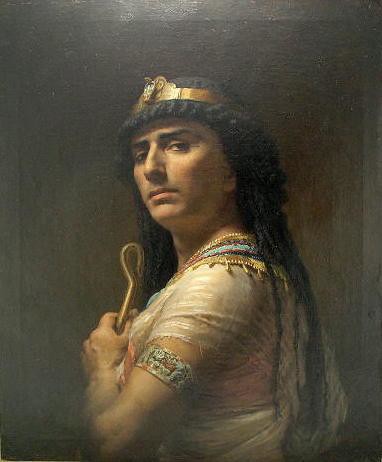
https://freechristimages.com/bible-stories/joseph-reveals-himself.html

In the intro to Thomas Brooks' Cabinet of choice jewels he commends public spirit at length and says by way of example

And so David was a man of a public spirit, for "after David had served his generation according to the will of God, he died and was buried," Acts 13:36. The Spirit of the Lord has put this upon record for David's honour and our imitation. David's soul did not live in a narrow bowling-alley. He was not a man of so poor, low, and narrow a spirit as to make himself the centre of his designs and actions. David was a man of a generous, noble spirit. The public good lay nearest his heart, and to serve his generation he was willing to spend and be spent.

3.1 Solomon on the throne

We next need to look at how Solomon became king, his succession to his father David. Solomon’s story is found in the Bible's history books. There are three main ones, each divided in two because of their size - Samuel, Kings and Chronicles. Solomon’s story is chiefly found in 1 Kings and 2 Chronicles. In this chapter we concentrate on 1 Kings 1, verses that have no parallel in Chronicles or elsewhere.
On first reading, it seems a slightly strange chapter in some ways. It appears to leap into the middle of things rather. The history to be found in the Books of Samuel (about Samuel, Saul and David) is assumed. A feature of the chapter is that it contains a number of speeches – from Nathan, Bathsheba and David. There is also a lot of repetition. You may notice that one phrase or something like it occurs no less than nine times – see verses 13, 17, 20, 24, 27, 30, 35, 46 and 48: 'and he will sit on my throne; and he will sit on my throne; who will sit on the throne of my lord the king; and that he will sit on your throne; who should sit on the throne of my lord the king after him; and he will sit on my throne; and sit on my throne; Solomon has taken his seat on the royal throne; a successor on my throne today.' There need be no doubt about the subject of this chapter then – who sits on the throne!
Here we have three kings or possible kings, all from the same family – David, Adonijah and Solomon. They portray for us, successively, an old king leaving his throne behind, a pretender to the throne and the true king on his throne. Thus we learn about Solomon negatively by learning what he is not and then positively by learning about his accession.
You may wonder how such information can be of any use to us today but the question of who is on the throne is always highly relevant - not who is on the English throne or who rules America or Israel but who is the ultimate ruler of all. This chapter helps us think that matter through. So we will look at these three kings or would-be-kings and learn from them where to look.

Do not look to puny, passing human rulers like dying David
David is, of course, a type of Jesus Christ in many ways but at this point he is weak and old, his kingship is coming to an end and he personifies the weak and transitory nature of all human kingship. We are told in verse 1 that he ‘was old and well advanced in years’. One of his big problems was that ‘he could not keep warm even when they put covers over him’. You may know that babies and old people are particularly susceptible to hypothermia because of their inability to shiver and so warm their bodies. That is how weak David was by this stage – too weak to even shiver. He was also getting out of touch with what was going on. This comes out in verse 18.
We are told that David’s servants adopted what seems to us a rather odd solution, one that sounds rather unethical. However, before we are too quick to jump to conclusions, we should remember that this is before the invention of central heating or electric blankets. It is surprising what has been done to deal with medical problems, especially in the past. I remember my father telling me about a boy he knew who had to eat live maggots to deal with a stomach growth!
So David’s servants say to him (verse 2) ‘Let us look for a young virgin to attend the king and take care of him. She can lie beside him so that our lord the king may keep warm.’ The idea of using another person to warm David up makes sense. But who? To sell the idea to David they had to make it sound attractive. So, we learn how ‘they searched throughout Israel for a beautiful girl and found Abishag, a Shunammite, and brought her to the king.’ Inevitably ‘The girl was very beautiful’. ‘She took care of the king and waited on him.’
The note – ‘but the king had no intimate relations with her’ is seen by some as further evidence of David’s decrepitude – the great lover can no longer perform! It is more likely that Abishag is introduced here partly to explain what Adonijah does later. The note is intended to clarify David’s relationship with her.
David’s weakness and old age here sum up the nature of human rule and leadership. For all its strengths, it is fundamentally weak and cannot last. Parents and husbands die. Preachers pass away. Political leaders do not last. We need to recognise this fundamental fact so that we do not put our ultimate trust in any merely human power. Psalm 146:3 and 118:9 admonish us 'Do not put your trust in princes, in mortal men, who cannot save … It is better to take refuge in the LORD than to trust in princes'.

Do not look to false, fading would-be kings like ambitious Adonijah
So with a weak and old king on the throne and nothing apparently yet certain about his successor, there was something of a power vacuum in Israel. Such times come to God’s kingdom, times of change and transition – how we react at such times is important. A passage like this encourages us to remember that through it all God is in control. If we look to him, all will be well. Such circumstances suit opportunists like David’s son Adonijah and the godly need to beware. We can say several things about such would-be kings. We begin with this one
1. Expect them to put themselves forward
At this time it was not automatically the eldest son who succeeded. As a senior son Adonijah felt his claim was as good as any and rather than waiting for David’s death he decided to push himself forward. Verse 5 'Now Adonijah, whose mother was Haggith, put himself forward and said, I will be king.'
He volunteered himself. It may surprise you to know how many people get to positions of power simply by pushing themselves forward. That is basically how Hitler came to power. Mere personal recommendation is not enough, however. Our leaders need to be those with a little more than a willingness to serve. When we choose our political leaders or elders and deacons in churches we need to do more than simply find volunteers! Our heroes should not just be those that the media promote either.

2.1 Solomon Early Years

When we appreciate a person and want to get to know more about them it is often fascinating to learn of their background and birth, as we say their roots. Sometimes we learn surprising things. It has been a convention in modern biography to begin with something about the subject’s birth and background and early years. That is how we want to begin this study of Solomon.
We know that he reigned for about 40 years altogether. He was probably about 20 when he became king. There is very little detail about those first 20 years but some few things can be gleaned. He was probably married, for example, just before his coronation. His bride was Naamah, an Ammonite princess, the mother of their firstborn, Rehoboam. This comes out in 2 Chr 12:13.
Here we consider what we know about the early years, before Solomon rose to prominence and seek to learn lessons.
God wills that we inherit good and bad from our parents
Who were Solomon’s parents? It is well known that he was King David’s son. Who was his mother? Bathsheba. She was originally the wife of Uriah the Hittite but David, in a sinful act of lust and murder, first took Bathsheba to his bed and committed adultery then had her husband killed in battle.
We know very little about Bathsheba but we can assume that she was a beautiful woman and no doubt in many ways a godly woman. Yet she was clearly a sinner. The fact that Uriah, a godly man of great integrity, was her husband says a lot for her spirituality but her failure to resist David’s advances is something of a black mark against her. It would have been very difficult to refuse the king, no doubt, but she clearly should not have acceded to David’s demands. As for David, although this was a grievous sin in his life we know that he was otherwise a godly man, a prophet and a great leader.
Undoubtedly Solomon inherited certain traits from both father and mother – good and bad. Probably he inherited the good looks and native intelligence of both parents. Certainly he inherited some of David’s qualities of leadership and readiness to work hard. But he also inherited his parents’ sinful nature. There is no escaping this, of course. We all inherit a sinful nature from our parents. David had many wives, Solomon had even more, and many concubines too. We know that they did him harm, eventually leading him into idolatry.
The ways in which our parents are good must be emulated. The ways in which they are sinful must be avoided. We cannot assume that their good qualities will rub off on us automatically or pass to us genetically. We cannot make their sins an excuse for ours, either. Under God we must seek rather to be at least as good as our parents and, if God is gracious, better still. If they have good qualities that they have developed then we have something of a head start. Learn from their good example. Learn also from their mistakes.
God can produce great good despite an unpromising start
The fact Solomon’s parents first came together in an act of adultery is worth considering. You may remember that the baby that was born following the adultery died but at the end of 2 Sam 12, in verses 24 and 25, we read 'Then David comforted his wife Bathsheba, and he went to her and lay with her. She gave birth to a son, and they named him Solomon. The LORD loved him; and because the LORD loved him, he sent word through Nathan the prophet to name him Jedidiah.'
Despite everything, that chapter and the whole episode ends on a quite unexpectedly high and positive note. Such a fact should encourage us. We tend to think, when there are troubles, that nothing good come out of this? It is hopeless. And yet God is a God who delights to turn the tables and bring about good despite the way things look.
Is that not, in summary form at least, the history of this world? Think how Adam sinned so that the world fell and all the consequences of that. Yet God is turning things around in a marvellous way so that his good purposes will triumph. Is this not what the cross is all about? The greatest good from the worst evil. This is not to condone sin or to treat it lightly but to remind ourselves that God is not hampered in his overall purposes by sin and by failure. In often surprising ways he moves to bring about his will. As William Cowper put it so well
Judge not the Lord by feeble sense,
But trust him for his grace;
Behind a frowning providence
He hides a smiling face.
Perhaps, like Solomon you had a less than ideal conception. It must have been a hard day for Solomon when he learned of his origins. I have met people born as a result of fornication, adultery, rape or born into a loveless marriage. Some are conceived through various sorts of arrangements that modern technology today allows. You may not actually know anything much about your conception or had a mum or dad as such. Such realities can be painful. However, in the end, such facts do not define us. Solomon's parents married after a night of lustful, adulterous passion but there is a whole lot more to him than that as we shall see.