Last Saturday Eleri and I headed out to Primrose Hill, a short distance form home. We have this book at home that recommends buying a book at Primrose Hill Bookshop (on the 8th rather than the 19th but that is a nicety). Anyway I looked all around and I saw Bernhard Schlink's The reader in paperback. It didn't ring any bells at the time and Eleri had moved on to another shop. Anyway I don't like to read blurb and the first chapter was fine so I bought it. The first part is rather erotic and can't be recommended for that reason (I read it in tandem with three Christian books!). Once you get beyond that it is very interesting and thought provoking. Sadly, coming from the usual humanist point of view it is both immoral and rather depressing and offers no redemption that I could see. it is well written and has short chapters and so I finished it in a short time. I keep getting drawn back to books about the holocaust somehow. We went onto Primrose Hill and saw the Iolo Morganwg memorial (more on that here) and spotted the above plaques. I knew Rizal's name as I have been in the Philippines in the past. I bought a novel of his there (still unread sadly). We had a nice cuppa in Sweet Things.
The similar phrase 'Worldly Christianity' is one used by Bonhoeffer. It's J Gresham Machen that I want to line up most closely with. See his Christianity and culture here. Having done commentaries on Proverbs (Heavenly Wisdom) and Song of Songs (Heavenly Love), a matching title for Ecclesiastes would be Heavenly Worldliness. For my stance on worldliness, see 3 posts here.
Showing posts with label Sylvia Plath. Show all posts
10 Writers who knew only posthumous fame
1. Emily Dickinson
The first collection of her poetry appeared in 1890 (four years after she died). While some critics scoffed, her lines received immediate popular acclaim. Later editions followed, then interest faded until 1924, when she was enthusiastically rediscovered. Her work has been praised ever since. Today many critics would agree that her poetry was "perhaps the finest by a woman in the English language."
2. Gerard Manley Hopkins
His posthumous fame was established by Robert Bridges putting him among the leading Victorian poets. His manipulation of prosody (particularly his invention of sprung rhythm) and his use of imagery established him after his death as an innovative writer of verse. Nature and religion were the two major themes in his poetic works.
3. Sylvia Plath
Plath is credited with advancing the genre of confessional poetry and is best known for her two published collections, The Colossus and Other Poems and Ariel. She also wrote The Bell Jar, a semi-autobiographical novel published shortly before her death by suicide in 1963. It was only in 1982 that she won a posthumous Pulitzer Prize for The Collected Poems.
4. Anne Frank
German-born diarist. One of the most discussed Jewish victims of the Holocaust, she gained fame posthumously following the publication of The Diary of a Young Girl (originally Het Achterhuis; English: The Secret Annex), in which she documents her life in hiding 1942-1944, during the German occupation of the Netherlands in World War II. It is one of the world's most widely known books and has been the basis for several plays and films.
5. Franz Kafka
Many of his works remained incomplete and unpublished when TB killed him, aged 40, in 1924. After years of tortuous efforts to "begin my real life" and to describe a precise statement of his soul, Kafka considered his efforts a failure. In a last request, he asked his friend Max Brod to burn his papers and manuscripts. Brod refused, saying that if Kafka had really wanted that he would not have given the task to Brod. Thus Kafka's best-known novels, prophetic of the nightmare state of fascism, were first published in Germany 1925-1927. The Nazis soon banned the books but translated editions surfaced elsewhere. Kafka's reputation has steadily grown since the 1940s, and today the works of his critics and interpreters far outnumber his own.
6. Edgar Allan Poe
Associated with Gothic tales of mystery and the macabre, the author of the haunting short-stories "The Raven," "The Tell-Tale Heart," "The Pit and the Pendulum,” "Murders on the Rue Morgue" and “A Cask of Amontillado” despite his popularity now, Poe's contemporaries better knew him as a literary critic and struggling artist. For much of his life, he tried to make a living through writing but never overcame his financial difficulties or career challenges. His death at the age of 40 is surrounded by mystery.
7. Stieg Larsson
Karl Stig-Erland Larsson was a Swedish journalist and writer. He is best known for writing the Millennium trilogy of crime novels, which were published posthumously and adapted as motion pictures. Larsson lived much of his life in Stockholm and worked there in the field of journalism and as an independent researcher of right-wing extremism. In 2008 he was the second best-selling author in the world. The third novel in the Millennium trilogy, The Girl Who Kicked the Hornets' Nest, became the most sold book in the USA in 2010. By March 2015, his series had sold 80 million copies worldwide.
8. John Keats
Keats was an English Romantic poet and one of the main figures of the second generation of Romantic poets, along with Byron and Shelley, despite his works having been in publication for only four years before his death. Although his poems were not generally well received by critics during his lifetime, his reputation grew after his death, and by the end of the 19th century he had become one of the most beloved of all English poets. He had a significant influence on a diverse range of poets and writers.
9. Herman Melville
Melville did know some early success but Moby Dick and other works were not commercial successes. His death from cardiovascular disease in 1891 subdued a reviving interest in his work. The 1919 centennial of his birth became the starting point of the "Melville Revival". Critics discovered his work, scholars explored his life, his major novels and stories have become world classics, and his poetry has gradually attracted respect.
10. H P Lovecraft
An American author who achieved posthumous fame through his influential works of horror fiction. He was virtually unknown and published only in pulp magazines before he died in poverty, but he is now regarded as one of the most significant 20th-century authors in his genre. Among his most celebrated tales are "The Call of Cthulhu" and "The Shadow over Innsmouth" both canonical to the Cthulhu Mythos. Lovecraft was never able to support himself from earnings as author and editor. He saw commercial success increasingly elude him in this latter period, partly because he lacked the confidence and drive to promote himself.
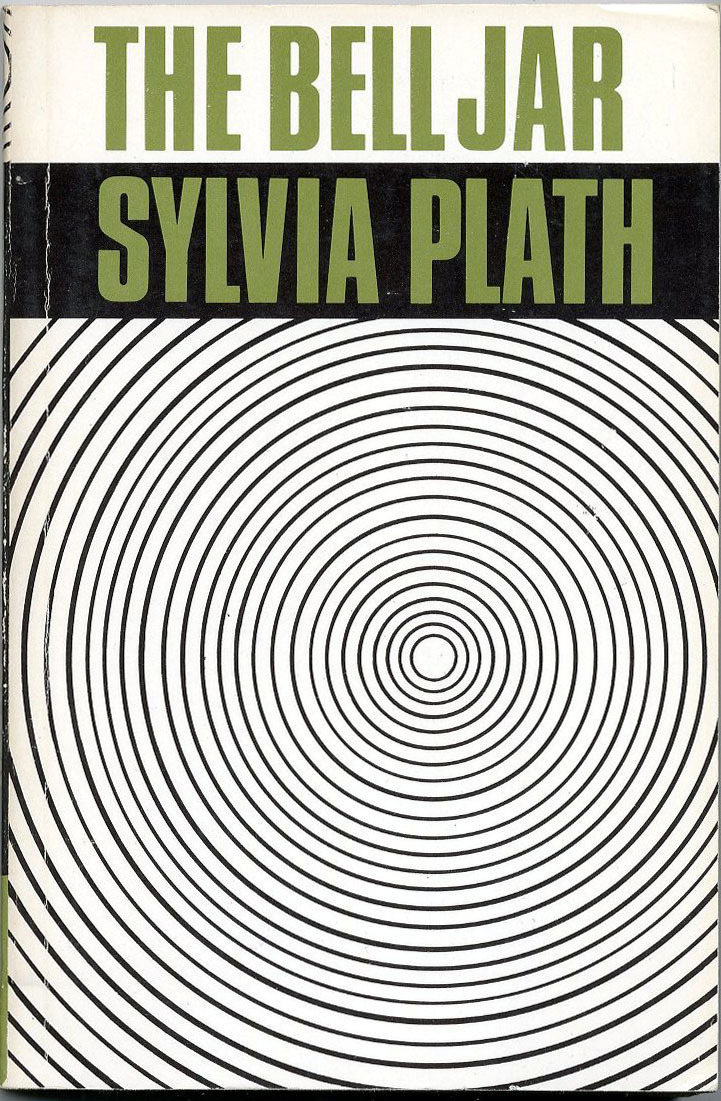
Sylvia Plath Bell Jar
In my efforts to catch up on unread novels I downloaded and read Sylvia Plath's only novel The Bell Jar, which first appeared in 1963. A short book, it is apparently very autobiographical. I whizzed through the first part and then as she started to descend it was more difficult to enjoy but it improved after that dip and is a pretty good read on the whole, written well and exploring an interesting subject. I guess they give it to teenagers to read because it is about a young woman. It reads very true to life if I remember rightly. I'd rather be reading it at 54 then 24 I guess. It's apparently not well admired but I think it is a pretty good piece of work. The fact of Plath's eventual suicide shortly after hangs over the whole thing. It is very difficult to know how to live once you throw over biblical morality. It does no-one any favours to live without that. I saw a lovely hardback edition in Waterstones today. The kindle version is a quarter of the price.
10 unusual words in Sylvia Plath's Bell Jar
1. Shantung (I wore a black shantung sheath that cost me forty dollars.) A fabric in plain weave having a slightly irregular surface due to uneven slubbed filling yarns .
2. Villanelles ( ... and sat back enjoying the bright lights and the colored fires and wrote page after page of villanelles and sonnets.) A chiefly French verse form running on two rhymes and consisting typically of five tercets and a quatrain in which the first and third lines of the opening tercet recur alternately at the end of the other tercets and together as the last two lines of the quatrain.
3. Victrola (Well, for about an hour we lounged on Constantin's balcony in two separate
slingback chairs with the victrola playing and the balalaika records stacked between us.) Tradename, used for a phonograph or record player.
4. Psychosomatic (He was very proud of his perfect health and was always telling me it was psychosomatic when my sinuses blocked up and I couldn't breathe.) Caused by mental or emotional problems rather than by physical illness.
5. Dybbuk (The night before I'd seen a play where the heroine was possessed by a dybbuk,
and when the dybbuk spoke from her mouth its voice sounded so cavernous and deep you couldn't tell whether it was a man or a woman.) A wandering soul believed in Jewish folklore to enter and control a living body until exorcised by a religious rite.
6. Screak (The soprano screak of carriage wheels punished my ear.) A harsh shrill noise.
7. Corrasable Bond (I counted out three hundred and fifty sheets of corrasable bond from my mother's stock in the hall closet, ...) A trademarked name for a brand of erasable typing paper.
8. Bosky (A big white swan full of little children approached my bench, then turned around a bosky islet covered with ducks and paddled back under the dark arch of the bridge.)
Having abundant trees or shrubs; of or relating to a woods.
9. Factitious ("Factitious!" my creative writing professor at college scrawled on a story of mine called "The Big Weekend.")
Formed by or adapted to an artificial or conventional standard.
10. Pablum (I smelt a mingling of Pablum and sour milk and salt-cod-stinky diapers and felt sorrowful and tender.)
A trademark for an infant cereal (1932).
Subscribe to:
Posts (Atom)