The similar phrase 'Worldly Christianity' is one used by Bonhoeffer. It's J Gresham Machen that I want to line up most closely with. See his Christianity and culture here. Having done commentaries on Proverbs (Heavenly Wisdom) and Song of Songs (Heavenly Love), a matching title for Ecclesiastes would be Heavenly Worldliness. For my stance on worldliness, see 3 posts here.

Alcohol problems

My attention was drawn to an article here highlighting the deleterious impact drunkenness is having on our society. The article begins

For the first time, researchers have calculated the number of deaths from conditions such as cancers, accidents and heart disease which are related to drinking but not wholly caused by alcohol.
It means previous official figures, which put the number of deaths caused by alcohol at 8,386 in a year, vastly underestimate the full impact of drinking on health.
The new statistics show that 15,000 people died as a result of their drinking in 2005 accounting for three per cent of all deaths in that year.
It is 80 per cent higher than had been thought.
I had not realised there was such a strong link between alcohol and cancer.

Getting back to it

So this week has been mainly getting back into things. Some of the congregation are still away but some are back and some never left town. The main task has been working on my messages for Wednesday and Sunday, trying to get the notices and newsletter written and thinking about how things are going to shape up over the next few months. We were a very small number at the Midweek Meeting. I've put the message here.

Some things have been different though. Rhodri is in the midst of moving out so I've been helping there a little. On Tuesday evening Eleri and I celebrated our anniversary with a meal out at Pizza Express in Golders Green then watched a DVD, Sandra Bullock in Premonition - not a film I might have seen normally. Billed as a thriller it was in fact an interesting exploration of predestination and free will. Mildly Calvinistic in its theology it sought to deal with the problem by urging kindliness and love - there are worse messages out there! (A review I found says "No, this is not a great movie, but it is a well-produced little mystery that asks the audience to engage both mind and imagination, and that is a good thing!"). See trailer here.

I spent most of Wednesday in the Evangelical Library sitting in with a regular volunteer in the Librarian's absence. It was a very quiet day - only 4 or 5 in - and Miss H did most of what work needed to be done. I concentrated on reading (I'm still busy with Machen reading for next week's lectures I'm attending) and then had a little explore. I wanted something on the session of Christ. I found something by the 19th Century Presbyterian W S Plumer but not much (see here). There doesn't seem to be much on it about. I also noticed that the works of Schaeffer associate Hans Rookmaaker are now available in six fat volumes (have been since 2002 - I've been asleep!). They retail at £100 but you can get them on CD-rom for £24. I borrowed one volume to have a little look. I started with the interviews. There is one there with the interestingly named Marc De Klein (say it quickly and it may make you smile!). Being at the Library in that way was a good exercise for me as Chairman of the EL Board. One thing that impressed me was just how diverse our membership is (ethnically and otherwise). I'd not really realised that.

On Thursday the rest of the family were out most of the day visiting friends so I grabbed the chance to pop up to Kenwood House - something I'd wanted to do last week but hadn't got the chance to. It's only a short bus ride away. There were remarkably few people there (I'm sure I spotted a disproportionately high number of pregnant women). I spent a while in the gardens and especially in the house where they have quite an outstanding collection of (mostly 18th Century) stuff - Gainsborough, Reynolds, etc. I spotted a Richard Wilson I'd not seen before (the interest there is a Welshman painting a London scene). I had another long look at the Vermeer. The guitar player is not my favourite of his 36 extant paintings but it's growing on me. The Joseph Wright of Derby piece (Dressing the kitten) was out on loan as ever. Shame. They had two there by Guardi - not a name I knew. A Venetian, he is similar in style to the older Canaletto. Anyway, good fun in lovely weather. Every time I go there I resolve to go more often. Hope I do this time.

Harold Abrahams


This blue plaque has been up in the next but one street to me since May 2007 I discover. (A friend tipped me off about it). Abrahams, known to most of us through the film Chariots of fire, lived there as a single man from around 1923-1930 and then intermittently 1930-1936. More here. Also check out here for blue plaques. There I discover that other ones near me include David Bomberg and Amy Johnson.

Summer Reading 02

Early in the summer I read a nice hardback version of Nathaniel Philbrick's Mayflower: A Voyage to war (A Story of Courage, Community, and War musbe the American subtitle). A couple of years old now I got it at a discount.
A popularly written but well researched book the interest for me is obvious, I guess. I'd not really realised that although it begins with the Mayflower journey it goes on up until King Philip's War. it mostly held my interest all the way.
There is not mush of a directly Christian nature here - that is not Philbrick's interest. There is no real anti-Christian rhetoric either. That isnot to say the book lacks bias. What it does do well is to sketch out the original make up of New England and the USA so explaining much of the country's current psyche.
A genuinely good and informative read.

Best ofs 03

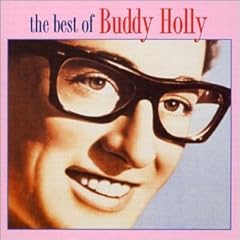
Having highlighted Don McLean there is a logical step to Buddy Holly. Holly died the year I was born but his music is still very popular. I keep promising myself a trip to the musical some time. Of the greats from that era he's my number one. The nerdiest looking of them, what I love about him is the simplicity of the numbers, his great voice and the nice tunes. Some of the ballads with orchestra work as well as the earlier rock numbers I feel. Of course, his early death and obviously under-explored talent adds to the whole thing. That tag "the single most influential creative force in early rock and roll" is intriguing.
The CD I have is one of the many compilations, a 20 track thing called The best of Buddy Holly. On my itunes I have transmuted it into the alternative 36 track The very best of Buddy Holly and the Crickets. (I notice that there are still 13 tracks form that album that I don't have). I also have the instrumental Holly hop there. I notice there is an Ultimate Collection on itunes but it doesn't include that last track. Even the simplest things are complicated. More on Holly here.
And my top seven? (Crying, waiting hoping and Love is strange not considered as they are not on this CD)

1. Rave on
2. Listen to me
3. Every day
4. Not fade away
5. Peggy Sue
6. Oh boy
7. It's so easy

New Photo Series 07

Food Face

It was 20 years ago today

It was twenty years ago today,
That's me and ’Leri’s wedding day.
We've been together for quite a while
But we hope this song can raise a smile.
So may I introduce to you
The act you've known for all these years,
Gary, ’Leri and a wedding band!
Gary Brady’s lonely heart’s been banned!

I thought you would be pleased to know,
Gary Brady’s lonely heart’s been banned!
That Gary Brady’s lonely heart’s been banned!
Sit back and see my feelings flow.
Gary Brady’s lonely, Gary Brady’s lonely,
Gary Brady’s lonely heart’s been banned!

It's wonderful to be wed,
It's certainly a thrill.
She’s such a lovely woman,
That’s why I took her home with me,
I love it that she's mine.

I don't really want to stop the show,
But I thought you might like to know,
That the kids are gonna sing a song,
And they want you all to sing along.
So let me introduce to you
Rhodz, Dylan, Dewi, Gweez and Oze
With “Gary Brady’s Lonely Heart’s been banned!”

Mencken on Machen

I have been looking at J Gresham Machen in connection with some lectures I intend to be at next week. People often refer to H L Mencken's obituary. Originally published in The Baltimore Evening Sun (January 18, 1937), 2nd Section, p 15, it can be found here.

H. L. MENCKEN'S OBITUARY OF MACHEN
"Dr. Fundamentalis"

The Rev. J. Gresham Machen, D. D., who died out in North Dakota on New Year's Day, got, on the whole, a bad press while he lived, and even his obituaries did much less than justice to him. To newspaper reporters, as to other antinomians, a combat between Christians over a matter of dogma is essentially a comic affair, and in consequence Dr. Machen's heroic struggles to save Calvinism in the Republic were usually depicted in ribald, or, at all events, in somewhat skeptical terms. The generality of readers, I suppose, gathered thereby the notion that he was simply another Fundamentalist on the order of William Jennings Bryan and the simian faithful of Appalachia. But he was actually a man of great learning, and, what is more, of sharp intelligence.

What caused him to quit the Princeton Theological Seminary and found a seminary of his own was his complete inability, as a theologian, to square the disingenuous evasions of Modernism with the fundamentals of Christian doctrine. He saw clearly that the only effects that could follow diluting and polluting Christianity in the Modernist manner would be its complete abandonment and ruin. Either it was true or it was not true. If, as he believed, it was true, then there could be no compromise with persons who sought to whittle away its essential postulates, however respectable their motives.

Thus he fell out with the reformers who have been trying, in late years, to convert the Presbyterian Church into a kind of literary and social club, devoted vaguely to good works. Most of the other Protestant churches have gone the same way, but Dr. Machen's attention, as a Presbyterian, was naturally concentrated upon his own connection. His one and only purpose was to hold it [the Church] resolutely to what he conceived to be the true faith. When that enterprise met with opposition he fought vigorously, and though he lost in the end and was forced out of Princeton it must be manifest that he marched off to Philadelphia with all the honors of war.

II

My interest in Dr. Machen while he lived, though it was large, was not personal, for I never had the honor of meeting him. Moreover, the doctrine that he preached seemed to me, and still seems to me, to be excessively dubious. I stand much more chance of being converted to spiritualism, to Christian Science or even to the New Deal than to Calvinism, which occupies a place, in my cabinet of private horrors, but little removed from that of cannibalism. But Dr. Machen had the same clear right to believe in it that I have to disbelieve in it, and though I could not yield to his reasoning I could at least admire, and did greatly admire, his remarkable clarity and cogency as an apologist, allowing him his primary assumptions.

These assumptions were also made, at least in theory, by his opponents, and thereby he had them by the ear. Claiming to be Christians as he was, and of the Calvinish persuasion, they endeavored fatuously to get rid of all the inescapable implications of their position. On the one hand they sought to retain membership in the fellowship of the faithful, but on the other hand they presumed to repeal and reenact with amendments the body of doctrine on which that fellowship rested. In particular, they essayed to overhaul the scriptural authority which lay at the bottom of the whole matter, retaining what coincided with their private notions and rejecting whatever upset them.

Upon this contumacy Dr. Machen fell with loud shouts of alarm. He denied absolutely that anyone had a right to revise and sophisticate Holy Writ. Either it was the Word of God or it was not the Word of God, and if it was, then it was equally authoritative in all its details, and had to be accepted or rejected as a whole. Anyone was free to reject it, but no one was free to mutilate it or to read things into it that were not there. Thus the issue with the Modernists was clearly joined, and Dr. Machen argued them quite out of court, and sent them scurrying back to their literary and sociological Kaffeeklatsche. His operations, to be sure, did not prove that Holy Writ was infallible either as history or as theology, but they at least disposed of those who proposed to read it as they might read a newspaper, believing what they chose and rejecting what they chose.

III

In his own position there was never the least shadow of inconsistency. When the Prohibition imbecility fell upon the country, and a multitude of theological quacks, including not a few eminent Presbyterians, sought to read support for it into the New Testament, he attacked them with great vigor, and routed them easily. He not only proved that there was nothing in the teachings of Jesus to support so monstrous a folly; he proved abundantly that the known teachings of Jesus were unalterably against it. And having set forth that proof, he refused, as a convinced and honest Christian, to have anything to do with the dry jehad.

This rebellion against a craze that now seems so incredible and so far away was not the chief cause of his break with his ecclesiastical superiors, but it was probably responsible for a large part of their extraordinary dudgeon against him. The Presbyterian Church, like the other evangelical churches, was taken for a dizzy ride by Prohibition. Led into the heresy by fanatics of low mental visibility, it presently found itself cheek by jowl with all sorts of criminals, and fast losing the respect of sensible people. Its bigwigs thus became extremely jumpy on the subject, and resented bitterly every exposure of their lamentable folly.

The fantastic William Jennings Bryan, in his day the country's most distinguished Presbyterian layman, was against Dr. Machen on the issue of Prohibition but with him on the issue of Modernism. But Bryan's support, of course, was of little value or consolation to so intelligent a man. Bryan was a Fundamentalist of the Tennessee or barnyard school. His theological ideas were those of a somewhat backward child of 8, and his defense of Holy Writ at Dayton during the Scopes trial was so ignorant and stupid that it must have given Dr. Machen a great deal of pain. Dr. Machen himself was to Bryan as the Matterhorn is to a wart. His Biblical studies had been wide and deep, and he was familiar with the almost interminable literature of the subject. Moreover, he was an adept theologian, and had a wealth of professional knowledge to support his ideas. Bryan could only bawl.

IV

It is my belief, as a friendly neutral in all such high and ghostly matters, that the body of doctrine known as Modernism is completely incompatible, not only with anything rationally describable as Christianity, but also with anything deserving to pass as religion in general. Religion, if it is to retain any genuine significance, can never be reduced to a series of sweet attitudes, possible to anyone not actually in jail for felony. It is, on the contrary, a corpus of powerful and profound convictions, many of them not open to logical analysis. Its inherent improbabilities are not sources of weakness to it, but of strength. It is potent in a man in proportion as he is willing to reject all overt evidences, and accept its fundamental postulates, however unprovable they may be by secular means, as massive and incontrovertible facts.

These postulates, at least in the Western world, have been challenged in recent years on many grounds, and in consequence there has been a considerable decline in religious belief. There was a time, two or three centuries ago, when the overwhelming majority of educated men were believers, but that is apparently true no longer. Indeed, it is my impression that at least two-thirds of them are now frank skeptics. But it is one thing to reject religion altogether, and quite another thing to try to save it by pumping out of it all its essential substance, leaving it in the equivocal position of a sort of pseudo-science, comparable to graphology, "education," or osteopathy.

That, it seems to me, is what the Modernists have done, no doubt with the best intentions in the world. They have tried to get rid of all the logical difficulties of religion, and yet preserve a generally pious cast of mind. It is a vain enterprise. What they have left, once they have achieved their imprudent scavenging, is hardly more than a row of hollow platitudes, as empty as [of] psychological force and effect as so many nursery rhymes. They may be good people and they may even be contented and happy, but they are no more religious than Dr. Einstein. Religion is something else again - in Henrik Ibsen's phrase, something far more deep-down-diving and mudupbringing, Dr. Machen tried to impress that obvious fact upon his fellow adherents of the Geneva Mohammed. He failed - but he was undoubtedly right.

The News


This is fun. Nice and positive.

Weekend Wales

We spent the weekend in Wales. We went first to Llanfyllin, where Eleri's sister and brother-in-law were staying in Glyn's sister's home. (In 1833 S Lewis wrote 'This place derives its name from the dedication of its church to St Myllin, or Mewn Llyn, concerning whom a tradition is extant that he was the first baptist ever known in Britain, and from being constantly in the water baptizing and inviting those who passed by to partake of that ceremony, was called by the natives St Mewn Llyn, or "the Saint in the Pool." This can't possibly be right!) It was nice to see them and Glyn's parents and their friend and her girls. A chapel in the village is the site of where Ann Griffiths, the Welsh hymn writer, was converted. I also noted that Charles I had stayed in Llanfyllin (en route to Chirk Castle). We played football and watched Last choir standing on TV - two Welsh choirs (one from the north, one from the south) in the final I see (typically the Cardiff contingent among us knew at least one fellow in the southern one).

On the Sunday we headed to Penrhyndeudraeth, where I was to preach in Capel Fron. We went via the infamous Llyn Celyn off the Tryweryn river. I was able to preach with some freedom from Ezekiel 37 and Psalm 94. We had a lovely time with Mike Perrin and his wife Elaine and a friend of theirs who very kindly gave us a load of lovely blueberries, which we are enjoying. We enjoyed walking and talking and fishing newts out of their pond. (Interestingly the Welsh word for newt is madfall ddwr - water lizard. The Welsh like that sort of thing I think. Cf Twrch ddaear - earth boar [mole], dyfr gi - water dog [otter]). Mike's always interesting to talk to. A bit of a renaissance man, he's always into something. Most recently it has been kayaking and recorder playing. He had a nice anecdote about the 1986 funeral of Alfred Bestall (Rupert artist), a Christian it seems, whose funeral he took. Paul McCartney and Terry (Python) Jones were there among others with a lot of middle aged men dressed in red tops with yellow scarves!

The middle boys' paper rounds started again today so we had to head back. We got home around 1 am.

[Music from an ancient Welsh mss. By Yr Hwntws]

Best ofs 02

Also in the CD drawer of 'Best of' albums is a Don McLean album entitled American Pie - The Greatets Hits. It contains 20 tracks. I like nearly all of them. I was first aware of the tracks American Pie (which fascinated me) and Vincent (which fascinated me adn made me cry) through the radio. At school Graham Pearson (Rev Gary Davies and Leo Kottke fan) assured us all that McLean was the only decent player on the pop scene. I was also aware of McLean being held in high regard by others. The discovery that my mother's version of 'And I love you so' by Perry Como was written by McLean had an effect and whenever I went to someone else's house who was a little older they always had a copy of the original American Pie album, which in the end I bought. My top seven:
1. Empty chairs
2. Vincent
3. American Pie
4. Everyday
5. Crying
6. Fools Paradise
7. Castles in the air

Llongyfarchiadau!


In what has been a strange week in many ways we reached something of a peak on Thursday when my eldest son Rhodri and his girl friend, Sibyl, announced their engagement to be married next September. Yes, they are very young but it makes sense on many levels and we are trusting the Lord in this as we believe they are. Sibyl headed for Vietnam yesterday, where she will be teaching on a gap year for several months to come. She also hopes to visit other places and we hope that Rhodri will be able to join her at some point albeit briefly. Sibyl has started learning some Welsh. She should know llongyfarchiadau by now. Congratulations!

Carey Conference 09


The Carey Conference Brochure is now out. (Double click to enlarge).

London Holiday


Due to unforeseen circumstances we have been spending a few unexpected days in London. It's a nice place to holiday in. Apart from catching up with things and that sort of thing we have been out a little. On Tuesday, as mentioned, we went to see Wall-e.
On Wednesday some headed off to Camden Market. I went to see Burgh House and the Freud Museum in Hampstead. All very interesting. Burgh House houses the local free museum. Freud lived the last year of his life at 2o Maresfield Gardens, Hampstead, where you can see the actual couch on which his victims lay. I remember reading about Freud in a book called Seven men who rule the world from the grave. The others were Darwin, Marx, Wellhausen, Kierkegaard, John Dewey and J M Keynes.
Yesterday four of us went by bus down to Battersea Park. We hired cycles of various sorts and some good fun. Sadly, I bust my camera though. That's a blow. Dylan spent the day with friends following his interim GCSE results plus completed GCSEs in Welsh (A*) and French (B). Well done Dylan! I should have mentioned before that Rhodri and Sibyl both did well at 'A' level and will be going to my alma mata Aberystwyth University, God willing, in 2009. More news on them to follow.
Thursday evening I watched a film with Eleri. "Because I said so" was not my cup of tea (it's a mother daughter film which is part of the reason). The cinematography was great, the cast okay, the plot poor, the dialogue average.
Today we ended up being in for most of the time but then later I took the three youngest to Finchley Lido Leisure Centre for a swim. That cost a small fortune tempered only by some vouchers Kelloggs are doing at present.

New Photo Series 06

Hoody Monster