The similar phrase 'Worldly Christianity' is one used by Bonhoeffer. It's J Gresham Machen that I want to line up most closely with. See his Christianity and culture here. Having done commentaries on Proverbs (Heavenly Wisdom) and Song of Songs (Heavenly Love), a matching title for Ecclesiastes would be Heavenly Worldliness. For my stance on worldliness, see 3 posts here.
Showing posts with label Jews. Show all posts

Six More Items Recently Read


The Man Who Drew London: Wenceslaus Hollar in Reality and Imagination by Gillian Tindall
I am a fan of the Puritan Richard Bernard and many years ago I noticed that Wenceslaus Hollar had drawn a portrait of him for a posthumous book. I then saw this book at a discount somewhere. Some years passed and then I finally read it. Getting hold of info on Hollar seems to be difficult and so Gillian Tindall has supplemented her research with some speculative biographical sections. I appreciate the effort but I found these a little tedious to be truthful, especialy knowing that it was sepculative. May be some other method would have worked better. Not much on Hollar though and this is pretty decent. Sorry I took so long to get round to such an important man.

Memorial : the mystery of Mary of Bethany by Dolores Kimball
This is a book by a woman about a woman and so I should not have been surprised that it is written for women, although it doesn't actually say that on the cover. Anyway, it's a short and interesting book for the most part. I would disagree on certain points I guess (eg I'm pretty sure Mary Magdalene and this woman were the same woman) but some good points are made.

A Short History of the World in 50 Animals by Jacob F. Field
This is a great idea for a book. All the expected ones are there such as cows and sheep and fleas and bees. Some individual animals are highlighted such as Leika the space dog, Hans the counting horse and Dolly the sheep. Bats, rats, cats and many others are all there. Missing? Locusts, donkeys. The book is hampered by its evolutionary assumptions but if you ignore these it is a fascinating read. The dodo and dinosaur are there, of course. Did you know that beavers had iron edged teeth and that a child could fit into a blue whale's arteries?

The Two Prophets to Nineveh: Goodness and Severity in Jonah and Nahum by James E. McCarthy
This is a great idea for a commentary. Jonah is very well known but Nahum much less so. However, both concern Nineveh and by treating them in the same little book the writer covers a sixth of the minor prophets in brief but relevant fashion. McCarthy has good illustrations and is very thorough with the text and all could learn from what he writes and how he writes. This is an excellent little commentary well worth getting hold of.

Distinct Communion: The Believer's Relations with Father, Son, and Holy Spirit by Dan Peters
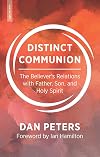
This is a brilliant book - cogent, well written and betraying a very well read author. Most Reformed ministers know about John Owen and his advocacy of communion with all three persons of the Trinity but this book builds on that and explores the whole subject with some panache. Besides Owen, he explores Goodwin and Durham (with whom he is less than pleased) and the pulpit prayers of C H Spurgeon, which are held up to us as exemplars. The final chapter considers whether we should pray to the Holy Spirit, something I have not seen dealt with anywhere else, despite it being an obvious question. This is in the Christian Focus Mentor series and so is intended for ministers and Bible college students but I believe many more could benefit from this well written tome. My only very slight disappointment was the distracting and unnecessary use of the generic feminine pronoun.

Jews Don’t Count by David Baddiel
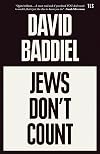
Antisemitism is a fascinating subject. When I saw this book in a secondhand shop I immediately bought it and have now read it. (David Baddiel lives in this area, as do many Jews). Baddiel's simple point is that antisemitism is not taken seriously enough and tends to be placed lower in the hierarchy of racisms. He also points out the fundamental inconsistency in the way most people think of Jewish people. From the time I was converted I was encouraged to love the Jewish people and have tried never to be antisemitic or racist towards anyone but if I am honest, I am guilty. This book helped me to see this again. More than once Baddiel quotes people defending Jews and I think fine, no problem, only to find him pointing out the subtle racism hidden in the quote. One could try and dismiss that as being pernickety but I think there is a genuine issue. It is also interesting, as a Christian (as perseuted as Jews if not more) to see his take on things. (One other thing is that without excusing Jeremy Corbyn, he does appear to explain what happened).

New Murals 1


Back here in London I notice there is a new piece of art work at JW3 on the Finchley Road.

10 Christmas Songs Written by Jewish Writers


  1. Rockin’ Around the Christmas Tree Johnny Marks (also Rudolph the Red-Nosed Reindeer and Run Rudolph Run)
  2. It’s the Most Wonderful Time of the Year Edward Pola and George Wyle (born Sidney Edward Pollacsek and Bernard Weissman)
  3. Let It Snow! Let It Snow! Let It Snow! Sammy Cahn (born Cohen) and Jule Styne (born Julius Kerwin Stein)
  4. Santa Baby Joan Javits and Philip Springer
  5. Silver Bells Jay Livingston (born Jacob Harold Levison) and Ray Evans
  6. Winter Wonderland Richard B Smith and Felix Bernard (born Bernhardt)
  7. White Christmas Irving Berlin (born Israel Baline)
  8. The Christmas Song (Chestnuts Roasting on an Open Fire) Mel Torme
  9. Have Yourself A Merry Little Christmas Ralph Blane and Hugh Martin
  10. Santa Clause Is Coming To Town Fred Coots and Haven Gillespie
(also Do you hear what I hear? by Noël Regney and Gloria Shayne and Getting ready for Christmas Day Paul Simon. At a stretch Do they know it's Christmas? Midge Ure and Bob Geldof who had a Jewish grandfather).

Multicultural London


We have commented before on the joys of multi-culturalism. I was aware of it the other day when I had breakfast in the American chain McDonald's. I chose my breakfast in Welsh, as you can these days. I chose a bagel (an invention of Polish Jews). I added bacon (something first known to the Chinese and copied by the Romans from the middle east and no doubt first served in a bagel by New Yorkers). I was served by a lady in a hijab (an Arabic item worn by many Muslim women).

Midweek Meeting June 13 2018 Plus


We had only a prayer meeting (as they say) last night as we had already met the night before with Philip Amos, newly begun with CWI, who spoke to us about reaching our Jewish neighbours. Both meetings were a blessing. As has often been observed giving the meeting over almost entirely to prayer gave it a freshness that we sometimes lack. The talk about reaching Jews followed on from last week's meeting about reaching Muslims. Barnet is both about 15% Jewish and 15% Muslim. It is one of the factors that makes our work here so challenging.

Anti-Semitism


Anti-Semitism is in the news again. I step towards the subject gingerly as I would guess it is the easiest thing in the world to fall into. (I find myself in danger of falling into it regularly on the roads near here. There are many rude drivers about in this part of London. Some of them are Jews, which is sometimes obvious, but the moment I start thinking rude Jewish driver I think I am in danger).
All I wanted to share was an anecdote from my youth that I go back to from time to time. Where I grew up, as far as I am aware, there were no Jewish people (people of colour were an utter novelty, one or two in a school of 1700 was the norm; the boy from Yorkshire and the boy from London stood out like sore thumbs, even the girl from Neath did).
In the sixth form, Friday afternoon was rounded off with a thing called symposium (none of us had any idea it meant drinking party!). A visiting speaker would be invited to address the sixth form and although I remember very little of it (apart from a man who appeared to be saying Aber-ustwyth rather than Aberistwith and the time our music teacher briefly mentioned Jan Akkerman) I think they were informative and interesting times.
Anyway, one afternoon a Jewish lady came and spoke to us. Again, I remember little she said but I do recall that she managed to turn the whole room (most of whom, if not all, had never met anyone Jewish) against her.
It was during the question time when one of the girls asked about what Jews call marrying out. This lady must have been quite orthodox and quite sensibly argued it was best for marriage to take place within the faith. This did not phase me because by then I had long held the view that Christians should marry Christians and this view was little different. Besides, as a good evangelical I had picked up that Jews are special and we are to love them as well as everyone else. (I was such a bad case that when a man came to our church and said he was Welsh and Jewish and so twice blessed I took him quite seriously!).
The rest of the sixth form did not tend to this view. That had picked up the Austenesque idea that marriage is for love and no other question needs to be considered. And so first the girls and then practically the whole room turned against this poor woman who, I think, had begun to alienate people by her sheer enthusiasm and commitment to a way of life we knew little about.
If kids from South Wales with no previous can become antisemitic in the course of an afternoon no wonder there is so much of it about. Not that there is any excuse, just simply a need to take care.

Things seen (and heard)

So I'm taking a coffee, as I do, and in come a man and his son (about 12) and sit on one of the sofas. The father orders something but the main topic is getting a speech onto the laptop. The speech has been written but the father wants to do some tweeking, quite a lot of tweeking as it turns out. I assumed the father was Eastern European at first but I guess he was Israeli. The speech is for the boy's Barmitzvah and not only is there no secrecy or diffidence on the man's part, he is quite brazen not only about getting the son to completely rearrange the speech but to include whole sections he dictates, including one where the son has to say how blessed he is to have such brilliant great grandparents, grandparents and, you guessed it, parents too! What I liked best was the son's complete co-operation - not a murmur of complaint and yet no meek acceptance either, really - just a "this is a rite of passage I have to go through. This too will pass."

Three Short Novels

I have recently read three short novels. The first I found on my book shelves, one I bought in an independent bookshop (Daunt's in Hampstead) and the most recent I got from a charity shop in Golders Green for a pound.
A kestrel for a knave by Barry Hines was published in 1968. Set in a mining area (only ever referred to as "the City") it tells of Billy Casper, a young working class boy troubled at home and at school, who only finds solace when he finds and trains a kestrel whom he names "Kes". The book was made into a film Kes which I have never seen and is a favourite for often used in Key Stage 4 kids doing GCSE English. The book is so named because of a poem found in the Boke of St Albans. In medieval England, the only bird a knave was legally allowed to keep was a kestrel. Someone told me the main character is based in part on his own brother, by now an expert on birds of prey. It was nice to be taken back to my own childhood in much of the description. The book is fairly well written but smacks of a writing class approach that describes everything in careful detail, leaving nothing to the imagination and striking similes and metaphors that pall in the end. (One kid perceptively wrote "Everything are just so hard to understand esp with the fact that the book is overflows with similes and metaphors. Too much of something is never too good.)
The Bookshop by Penelope Fitzgerald was written ten years later and deals with a much more middle class setting in East Anglia in 1959. A much less sad book, it was an easier read and a much more mature literary approach. Some witty little phrases lurk such as this - "She was in appearance small, wispy, and wiry, somewhat insignificant from the front view, and totally so from behind". It was Booker shortlisted. Good stuff and worth the money.
If I had to rank these three I would put the Isaac Bashevis Singer first. This was published in 1983. The Penitent was originally published in instalments in The Jewish Daily Forward (1973) with the Yiddish title of Der Baal Tshuve. The English translation was made by Joseph Singer for Farrar Straus & Giroux. It tells the story of Joseph Shapiro, emigrating from Poland in 1939 and from USSR in 1945 to the USA in 1947, where he becomes rich and involved with consumerism and lust. He decides to leave everything, including his job, his wife and his lover, and finally expatriate to Israel, where he wonders about the traditional values of Jewish culture. For any serious Christian, it is  a fascinating way to consider worldliness and related subjects. It is full of interesting quotations. For example “A soldier who serves an emperor has to have a uniform, and this also applies to a soldier who serves the Almighty."
All three novelists are no longer living.

Retro Album "of the week" 50 - Lamb

We've not managed to get our 52 in within the year so we will finish the series with this one. This is Lamb by Lamb and it came out in 1973. It was an album I bought a little later in my local Christian Bookshop in the days when I was trying to listen to more "Christian music". I made the purchase on the basis of how the album looked, having no other knowledge of the band. I did like it, although I was painfully aware of the inadequacies evident in several places. Lamb it turns out was a two man combo, Joel Chernoff (lead singer/songwriter) and Rick “Levi” Coghill (producer/guitarist).
Both would call themselves Messianic Jews and the flavour of the music is contemporary Jewish with plenty of Hebrew words sprinkled here and there. Lamb have apparently sold over 600,000 albums, having produced 14 recordings. I never got beyond this album and I currently have only the best of the tracks on my ipod. HaTeeshKach, BaruchHaShem and DraChaiCha have Hebrew titles. The other tracks are The Judge, The Sacrifice Lamb, Time is running out, The Least I could do and The night is far spent. So not only very Jewish but pre-millennial too. The singing can be a bit languid at points.

Elie Wiesel - Night

We are all aware of the twentieth century Holocaust and the way it affected the Jews in particular. I am currently going with the family through the story of Corrie Ten Boom using a children's book. I remember reading the book Hiding Place many years ago and seeing the film. I have also seen Schindler's List of course. Humanists as well as Christians played their part. I have visited the Ann Frank House museum in Amsterdam but never actually read the diary. I must do so.
I'm sure there are many books on the subject. I recently became aware of Night by Elie Wiesel, a sober and brief telling of one boy's story beginning in Hungary. I think it was the editors who got it down to the size it is and they are to be praised for that. The result is a lean, spare and gripping piece that hold you and horrifies you. Not matter how many times you go over the story, it is extremely difficult to take in. How those without a thoroughgoing doctrine of total depravity can do it I do not know. Night was first published in 1960 and was followed by two other books - Dawn and The Accident. Wiesel called Night his deposition rather than a novel.

Bragg on the Talmud

Today's In our time on Radio 4 with Melvyn Bragg was an interesting one. It was on the Jewish Talmud. Details can be found here.

Saturday, Lord's Day October 5 and 6 2013

Well, what a good weekend. First, on Saturday afternoon we celebrated my thirtieth anniversary at the church and what I thought was the 150th anniversary of the founding of the work (1863) but turned out to be the 148th anniversary (1865). I gave a power point presentation of the church's history then we had a cuppa and then my fellow elder Robert Strivens preached from Philippians 1:1. After that there was a cake and another cuppa but no speeches. It was really good to see so many there.

The next day it was communion in the morning followed by a harvest sermon from me on James 5:7. In the evening we had a visiting speaker all the way from Haifa, Israel, Shmuel Aweida. Shmuel is Arab and pastors a congregation of Christian Arabs and Jews. he spoke from Acts 10 and very briefly but winsomely argued the case for taking the gospel to the Jews. Again we had a good number of people present and another cuppa! It was a privilege to meet Shmuel and his (Norwegian) wife Bjorg. What an excellent weekend.


More from the census

Norwich had the highest proportion of people reporting no religion with 42.5 %, closely followed by Brighton and Hove with 42.4 %.
Some local authorities in Wales also reported some of the highest levels of no religion. Caerphilly had the largest percentage point increase since 2001 of 16.7 to 41.0 %! Blaenau Gwent, Rhondda Cynon Taf and Torfaen also saw large increases of no religion with 16.0, 15.5 and 15.4 percentage points respectively.
In London, the boroughs of Newham, Harrow, Brent and Redbridge had the lowest proportions of the population reporting no religion. Other areas under 15 % included Slough in the South East (with many Hindus and Sikhs) and Knowsley, Blackburn with Darwen, Copeland, Ribble Valley and St Helens in the North West.
Tower Hamlets has the most Muslims (34.5 %) Harrow has the most Hindus (25.3 %) Slough has the most Sikhs (10.6 %) Barnet has the most Jews (15.2 %) Rushmoor in Hampshire has the most Buddhists (3.3 %).

Noachide laws

In a letter from a man seeking to witness to Jews that I read recently he say that in conversation with a Jew he was asked if he kept the Noachide laws. He explains
"The seven Noachide laws prohibit the worship of other gods, blaspheming the name of God, cursing judges, committing murder, incest and adultery, theft, and eating flesh with blood in it. A number of scholars have concluded that the regulations for Gentile believers laid down by the Council of Jerusalem in Acts 15:19,20 are very similar to the Noachide laws."

Good Jews Week

Providentially we have had two Jewish people speaking at the church in the last few days about the work of the gospel among their people. First Andreea came to our midweek meeting to speak about the work she has been involved in over the last 18 months adn then yesterday evening David Zadok was with us speaking about the work of HaGefen publishing and preaching from Psalm 121. Living as we do in an area that is 15% Jewish it was good to be reminded to pray and to know that many Jewish people are showing an interest in these things and coming to know Messiah for themselves in many cases too. For more info check these sites here and here.

Le Chambon-sur-Lignon

I did not know the story of Le Chambon-sur-Lignon.

Apparently during the Holocaust in France, in a tiny mountain Huguenot village 350 miles from Paris called Le Chambon-sur-lignon, 5,000 Jews, mostly children, found shelter with 5,000 Christians, almost the entire population of the village.

Defying the French government which was collaborating with the Nazis, the villagers of Le Chambon hid Jews in their homes for years. They provided the refugees with forged identification, provided education for the children, ration cards, and sent them to safety in Switzerland.

The Chambonnaise were descendants of the Huguenots, the first Protestants in Catholic France. Having endured persecution in France they were able to understand the plight of the Jews.

Under the leadership of a young French pastor, Andre Trocme, the people of Le Chambon felt it their duty to help people in need, never considering their actions heroic or dangerous. ...

More here

Book Buys February

Book buying in February included five freebies thanks to The Times who were giving away 10 Penguin paperbacks free. I didn't get the all but did get A Clockwork Orange, The Day of the Triffids, Breakfast at Tiffany’s, The Great Gatsby and Nineteen Eighty-Four. I was sorry to miss Out of Africa, Mrs Dalloway and Animal Farm.
I also made an impulse buy rushing through Tesco's one day and spotting Hugo Hamilton's The Sailor in the Wardrobe for just £3. I really enjoyed his The Speckled people.
I also bought 10 copies of Richard Gibson's collection of Jewish testimonies The unusual suspects to sell in church.
At the Affinity Conference I bought the first volume of Douglas Kelly's Systematic Theology, a book of essays on Worldliness edited by C J Mahaney, which I have almost finished, addresses from a previous conference The Forgotten Christ and Iain D Campbell's little book The seven wonders of the world.

Pre-millennialists

While I was in Oxford the other day I was encouraged to see a man witnessing to a nice young couple (Michael and Iona) in the main street. Michael is a student at Oxford but thinks he hasn't got soul. So much for modern education.
Having admired John Thistlewaite's bold witness I was immediately brought back to earth with a bump as firstly he was from Worcester not Oxford and had come up for the day, which is so often the case with street evangelists. It's not wrong, it just makes me wonder why.
The other thing was his raptures (unintentional pun) over some pre-millennialist scheme he'd been sold and that he was eager for me to hear about. I told him I was a minister and pretty much a-mill (although I'm quite eclectic and basically believe everything is getting better - and worse). I tried to explain why I think the Devil is now bound but he couldn't see it. So John went from hero to zero in about 10 minutes with me. There we are.
Then this morning a minister I know (Martin S) who is mildly Calvinistic and pretty pre-mill 'phoned to ask me about the availability of pastoral training. Although he was keen to avoid anything to a-mill he didn't try to argue me into his pre-mill view but took our difference as a given. That seemed a better approach to me.
Last Wednesday I also met a very pro-modern Israel Jewish believer who goes door to door in our church's name. Again we are miles apart on some of these eschatological issues but we can work together. Once more, a better pattern surely?

Hats Y

We see plenty of these round here. They are called by various names but Yarmulkah is the one I know best (plus Kippah). More here.

חנוכה

It is currently Hannukah (חנוכה) here in Golders Green and surrounds (Dec 16-23). Wikipedia describes the Festival of Lights or Rededication here as an 8-day Jewish holiday observed in Jewish homes by the kindling of lights on each night of the festival - one the first, two the second, etc. This relatively minor feast is an inter-testamental one. Hannukah means 'dedication' and marks the re-dedication of the Temple after its desecration under Antiochus IV. It is calimed that a miracles occurred so that oil was miraculously provided for the menorah.
The main thing is the lighting of lights on a menorah. There is a large public one here in Golders Green. Wikipedia also talks about Hanukkah food and games. Under food it mentions potato cakes known as latkes in Yidish. The Ashkenazis in particular eat these as there is a custom of eating foods fried or baked in oil, preferably olive oil, in light of the supposed miracle. Many Sephardic families (as well as Polish Ashkenazim and Israelis) customarily eat all kinds of doughnuts deep-fried in oil.
As for games the dreidel or sevivon (a four-sided spinning top) is popular. Each side
has a different Hebrew letter - נ [Nun] ג [Gimel] ה [He] ש [Shin]. These letters are an acronym for the Hebrew, נס גדול היה שם, Nes Gadol Haya Sham - A great miracle happened there (the miracle of the oil). The dreidel is used for a sort of gambling game after the lighting of the Hanukkah menorah, to keep children interested during the short time the candles are burning.
Hanukkah gelt is often given to children. The amount is usually in small coins, although grandparents or others may give larger sums as an official Hanukkah gift. In more recent times chocolate gelt has become popular. Gifts can be given so that Jewish children do not feel they are missing out on Christmas.
Wikipedia also says that in recent years, a Christmas/Hanukkah amalgum has emerged - dubbed 'Chrismukkah' - celebrated by some mixed-fatih families, particularly in the US. A decorated tree has come to be called a 'Hanukkah bush'. Other Jews (tongue-in cheek) wish each other 'happy cholidays'.
I didn't spot anything on Hannukah there but this is a good site for Christians keen to reach Jews.