The similar phrase 'Worldly Christianity' is one used by Bonhoeffer. It's J Gresham Machen that I want to line up most closely with. See his Christianity and culture here. Having done commentaries on Proverbs (Heavenly Wisdom) and Song of Songs (Heavenly Love), a matching title for Ecclesiastes would be Heavenly Worldliness. For my stance on worldliness, see 3 posts here.

Bristol

I made me a long promised trip to Bristol Baptist College yesterday. I set out nice and early in the sunshine and headed along the familiar route west. My grandmother (nee Hazleton) was born in Bristol and I still have relatives there but I don't know the city at all and have rarely been there. My AA directions were fine and I found the way across to the college easily enough. It is in leafy Clifton near Clifton College. This is not the building that I visited as a teenager on a "Greek class outing" to see the Tyndale Testament. That was sold to the British Library (1994) and they are now in premises new to them. Not an over large building, it has lecture rooms, offices, library, chapel, etc but no accommodation (I think). The students are down now but some youth ministry students were still around.
The purpose of my visit was to consult the Benjamin Beddome materials they have (see my Beddome blog for more on that). The librarian Shirley Shire was very helpful. It was good too to meet honorary archivist Roger Hayden, author of several items on Baptist history including his book Continuity and Change: Evangelical Calvinism among 18th century Baptist Ministers trained at Bristol Baptist Academy, 1690-1791. I was glad to meet him and chat a little and buy a signed copy.
I had to pay for the privilege but given what I was getting plus lunch, free parking and what I saved on the postage with the Hayden book I was quids in except for the petrol to get there. I'll probably need to go again but it was good to see what is actually there.

AHOCIA 100 Objects 15


We've probably jumped a little here but I want to get on with this series

A hundred sermons

Readers may be interested to know that there are now one hundred of my sermons on my Preached Sermons blog. This includes a series on Ezekiel and one on Job almost complete - just four sermons to add. Most of my sermons are on computer and so to put them up is usually the work of only 10-15 minutes (checking, reformatting and removing my illustration, application and similar personal prompts). I hope to have the last four sermons on Job up soon. Anyone contemplating a series on Ezekiel or Job would benefit I feel from a look at least. I'm not sure what to put up next. I have lots of material.

LTS End of Term


It was good to be at the LTS end of term today in Finchley, a little later than usual in the month as the final term has now been extended. It was good to hear the principal's report from Robert Stivens and to hear the leaving students speak. There were 11 leaving. As one of my sons pointed out, they looked like a football team the way they were set out on the programme (4-4-2 formation) with Bernard Every in goal. Mainly from the UK, there were also one from France, two from South Africa and three from East Asia (Korea, Burma, Malaysia). A former solicitor, plumber, bankworker and engineers were in the diverse group. James Muldoon from Reading spoke - a Bible Study of 1 Peter 5:1-4. It was a great joy to sing the final Charles Wesley hymn "Give me the faith which can remove". All this was followed by the traditional tea on the lawn in the lovely sunshine. Numbers semed a little down but there were well over a hundred present.

Woody Allen

Woody Allen has a new film so there was an interview in the Times yesterday. As ever, Allen comes over as a cautiously optimistic humanist. He knows we can't escape the fact of death and so copes with the idea as best he can, distancing it for the idea of judgement. When tackled about his morality he offers no defence for his actions but clearly feels his conscience has been squared. The following quotations struck me.

"God forbid the people who have bad luck, or even neutral luck, because even the luckiest, the most beautiful and brilliant, what have they got? A minuscule, meaningless life span in the grand scheme of things."
*
"Ageing, death: these things intrude upon you. When you get out of bed you find, ‘Oh God my back hurts’ and ‘Oh God I’ve got a pain in the back of my neck’. You start to feel your age: it finds you. You’re aware of death your whole life, constantly sweeping it under the rug and eventually it happens — you just have to hope as painlessly as possible. I once said in a movie that the nicest thing you could wish for is to say goodnight to your loved one, say ‘We’ll go to the museum tomorrow’, then never wake up again."
*
"You reach a certain age and you come to the conclusion that greatness is not in you. You aspired to greatness when you were younger. but either through lack of industry or lack of discipline or simply lack of genius you didn’t achieve greatness. The years go by and you realise: ‘I’m this mid-level guy.’ I did the best I could.
"It’s not hard to accept. I didn’t compromise or sell out, but I’ve never achieved what I hoped to."

Brian Clough

So another football book finished. This time on Brian Clough the football manager, chiefly with Derby then Nottingham Forest. The book is full of expletives (that was Clough's style) and some will avoid it for that reason. If you know about Clough at all, however, it is a well written summary of those glory years from someone who had countless interviews with him and knew him well over a long period. Clearly a flawed character, Clough was also a genius in his own chosen area of expertise. As a Christian pastor, it was hard not to draw vague but interesting parallels between football management and the pastorate. From that standpoint the book is full of warnings, I guess.
Otherwise it is an interesting whole life story of a great man with many faults, keen to be liked but no compromiser, a man who had a way with words (as the collection below shows).

"If God had wanted us to play football in the clouds, he'd have put grass up there." On the importance of passing to feet.
"I wouldn't say I was the best manager in the business. But I was in the top one." Looking back at his success.
"Rome wasn't built in a day. But I wasn't on that particular job." On getting things done.
"On occasions I have been big headed. I think most people are when they get in the limelight. I call myself Big Head just to remind myself not to be." Old Big 'Ead explains his nickname.
"The ugliest player I ever signed was Kenny Burns." A Clough complement for a talented player.
"Stand up straight, get your shoulders back and get your hair cut." Advice for John McGovern at Hartlepool.
"Take your hands out of your pockets." More advice, this time for a young Trevor Francis as he receives an award from the Master Manager.
"I only ever hit Roy the once. He got up so I couldn't have hit him very hard." On dealing with Roy Keane.
"Walk on water? I know most people out there will be saying that instead of walking on it, I should have taken more of it with my drinks. They are absolutely right." Reflecting on his drink problem.
"Don't send me flowers when I'm dead. If you like me, send them while I'm alive." After the operation which saved his life.
"We talk about it for twenty minutes and then we decide I was right." On dealing with a player who disagrees.
"I'm sure the England selectors thought if they took me on and gave me the job, I'd want to run the show. They were shrewd, because that's exactly what I would have done." On not getting the England manager's job.
"You don't want roast beef and Yorkshire every night and twice on Sunday." On too much football on television.
"I'm not saying he's pale and thin, but the maid in our hotel room pulled back the sheets and remade the bed without realising he was still in it." Referring to former Forest player Brian Rice.
"I want no epitaphs of profound history and all that type of thing. I contributed - I would hope they would say that, and I would hope somebody liked me," On how he would like to be remembered.
More quotes at Brianclough.com.

RRC by RSC


There was a meeting of the TSG reading group at the John Owen Centre yesterday. Mostyn Roberts of Welwyn was in the chair and we were looking at R Scott Clark's book Recovering the Reformed Confession. A group of six Reformed Baptist ministers, we were generally appreciative of the book (which is written for an American, chiefly Presbyterian audience) but far from sure that he's got it all right. What Professor Clark seeks to do in the book is to show where Reformed theology, piety and practice is going wrong.
As a professor of historical theology he knows his history well and gives many a fascinating insight. He is also scholarly and well read - though he knows it and that could be off putting.

I particularly appreciated his explanation of archetypal and ectypal theology (143-145) and of the various forms of confessional subscription that have prevailed down the years (Chapter 5).
He begins negatively by criticising QIRC and QIRE (the quest for illegitimate religious certainty and experience). In his sights are certain creationists, reconstructionist/theonomists and the federal vision people plus any form of pietism or revivalism. Jonathan Edwards, Dr Lloyd-Jones and most post-17th Century Christians are gunned down at this point. It is quite a blood bath.
Positively, he calls for a recapturing of the Creator/creature categorical distinction and a return to the confessions. Chapter 6 The joy of being confessional gives further arguments. The final chapters are on worship and the second service. It has an index which is helpful.
We really enjoyed discussing such an interesting book. One fun moment - when Jeremy Walker spoke quite unconsciously of standing in Clark's shoes - would we wear any other?
Next it's an old book, the Marrow, in September, and I'm leading. Clark's Heidelblog is here. You can find a long review by John Frame here.

Sherwood Screen Test

An article very similar to this one should be appearing in the July Evangelical Times.
If you are in the habit of sitting down of an evening to watch a DVD with family or friends then you may have come across one or more films produced by an American group called Sherwood Pictures (not to be confused with Sherwood Films, a quite different Edinburgh based entity). Three feature-length films have appeared so far – Flywheel (2003), Facing the Giants (2006) and Fireproof (2009). The third of these films features actor Kirk Cameron, a former atheist who made his name on TV in the comedy Growing pains (1985-1992) but is now working with the American evangelist Ray Comfort. The films' subtitles give some idea of the themes – “In every man's life there is a turning point”; “With God all things are possible” and “Never leave your partner behind”.
The films have been moderately successful. Each has been novelised. They are now available in a three box set with many extra features including Bible studies. A further film (Courageous) is expected next year. Whether you came across them by accident or design, you will have been pleased to sit through a heart warming evening's entertainment without having it sullied by some of the nonsense that can so often creep into the average film on general distribution today. (Having said that, do note that the second film is a PG probably owing to some of the themes, such as infertility).
The first film (Flywheel – a flywheel is a car part that is meant to serve as a little background parable) is a sort of modern version of the story of the New Testament character Zaccheus. The next film (Facing the Giants) makes college level American football the background with the focus on the coach, his failing team and the greater issues he has to face. The third film (Fireproof) is set in a small town fire station with the emphasis on how a man's marriage is saved, as well as the man himself.
It is not difficult to commend such films when they are so pleasant and so wholesome. Although they are clearly low budget films (Flywheel was made for $20,000, Fireproof for $500,000, whereas an average Hollywood film today costs over $100 million to make) the production values are high, the story lines decent, the tone engaging, the acting mostly of a good standard and the action fairly well paced, though the dialogue is sometimes rather poor. The projects are evidently bathed in prayer and executed with great integrity. There are some concerns, however.
The films are the brainchild of two brothers, Alex and Stephen Kendrick. Both are pastors on the staff of a large and prosperous Southern Baptist Church with many ministries, in Albany, Georgia - Sherwood Baptist Church. They say that the first film was prompted by a survey from the George Barna organisation suggesting that movies and television shows are more influential in American culture than the church. In light of that, says Alex Kendrick, they “decided as a church to step out in faith and produce a full-length feature film”. However, even if what Barna suggest is true (which is rather debatable) it is far from being clear that this is the right response. Certainly, it is hard to see how a local church has any New Testament mandate for such an activity.
Theologically, the church appears to be very much an evangelical one, of the Warren Wiersbe sort perhaps. In the first film the danger of preaching a health and wealth gospel is just about side stepped but all three films present conversion as something that happens quickly and definitely and perhaps betrays signs of a rather mechanical and decisionistic mentality.
Of course, the whole problem of how certain things are presented on screen is a major headache. Kirk Cameron is apparently unwilling to do on screen kissing. He is reported to have said that “In Fireproof, there is a romantic and touching scene where he (the character) kisses his wife. Because I have a commitment not to kiss any other woman, my wife Chelsea came in to the set and wore the dress my character’s wife wore. We shot the scene in silhouette, so when I kiss my wife, I’m actually kissing my wife and honouring our marriage.” One admires such thought through commitment but wonders what on earth the Christian actors are doing when they are supposed to be praying in a film – something that happens quite often in these films and that you almost never see in others. Are they praying or simply pretending to pray? Given that private prayer is to be a private matter, surely it would be better to avoid such scenes anyway?
If you are one for watching DVDs, these films will give you a few relaxing and thought provoking hours. If you look further into them through the internet (sherwoodpictures.com) or the enhanced DVDs, you will discover the ministry tools that Sherwood Baptist Church are making available to churches and believers for evangelisation, strengthening marriages and similar goals. Some will want to make us of such tools and one can see how in the context of an active local church they may prove very useful. Others will see such an approach as a distraction and not something they want to use as a tool.
D L Moody is said to have answered a critic of his evangelistic methods once by saying that he preferred his own way of doing things to the other man's way of not doing them. One is slow then to criticise what is clearly a sincere attempt to win the lost and to help God's people.

Love Remembered


Another youtube video - the beautiful "Love Remembered" from Focus 3, with footage from the 1996 film Romeo and Juliet.

Sul y tadau 2010


It was father's day yesterday so it was nice to get cards and presents from my boys including a nice little hamper of things I like - maltina, fudge, coffee, nuts, ambrosia rice, etc.

Deryn Du


My son Rhodri and his wife Sibyl are back in London, which is great. Inspired by Julie Fowlis he has done this Welsh version of Paul McCartney's Blackbird. Mwynhewch.

Julie Fowlis at Union Chapel

Went with Rhodri to see Julie Fowlis and her band last night at the Union Chapel in Islington. Great set of now familiar tunes. This is a much larger (and more expensive) venue than the Irish Centre where I saw them last six months ago (before the baby). Around 250 of us in pews this time I guess. The bonus features this time were a bodhran solo from Martin O'Neill (something I'd not only not seen before but had not realised was entirely possible) and an opportunity to meet the lovely Julie herself and her charming husband Eamon. Great evening.

Bobby Moore


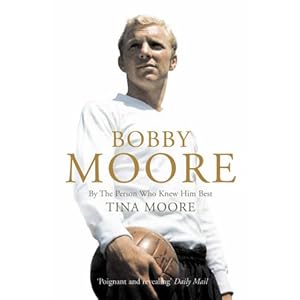
We're all mad on football at the moment. The Times is giving away football books at certain stores this week. The first was on Bobby Moore by his first wife Tina. I read it straight through. It's more about Tina than Bobby but gives you the main (sometimes surprising) facts. It's quite a sad book in some ways - not just because Moore's managerial career was quite unsuccessful and he died young but also because of his adultery and drunkenness and the shallowness and superficiality here. Tina seems to remember what she was wearing on every major occasion of her life with Bobby and there is lots of name dropping (lost on anyone not sure of who was who in the sixties). For someone of my vintage, nevertheless, it's a fascinating read and a reminder of the sorts of things that dominate the minds of most.

Presbyterianism made simple


Continuing to sort I just came across this chart of Presbyterian Family Connections. Non-presbyterians may find it confusing. Presbyterians may have some surprises. The document can be accessed here.